Guests who enjoy traditional rusks
For them, a dry, crunchy slice is an essential part of coffee time. If you prefer a crumbly biscuit, don’t treat rusks and Digestives as the same type of baked snack.


Choose rusks if you’d like to serve a dry, crunchy slice with your Sunday coffee; Digestive biscuits are a better fit if you prefer a crumbly biscuit. Whether a wholemeal option or a product labelled ‘no added sugar’ is suitable depends on the ingredients, nutritional information and allergen details on the specific pack – not just the product name.
For them, a dry, crunchy slice is an essential part of coffee time. If you prefer a crumbly biscuit, don’t treat rusks and Digestives as the same type of baked snack.
They look at the stated wholegrain content and fibre per 100 g, rather than assuming a particular recipe from the name ‘Digestive’.
If guests need to avoid certain ingredients or the sugar content matters when choosing, check the nutritional information, ingredients list and any ‘may contain’ statements on the pack you’ll actually be serving.
First, decide whether you’d prefer a crunchy rusk or a crumbly Digestive biscuit. Then compare the information that matters for your coffee table within the type of baked snack you’ve chosen.
| Criteria | What to check | Who it matters to |
|---|---|---|
| Texture and how it’s served | Tell rusk slices apart from Digestive biscuits. Brandt describes its rusks as crunchy, while McVitie’s describes its Digestives as crunchy and crumbly. | If I want a dry slice with my coffee, I’ll look for something different from a crumbly biscuit. Around 45% of consumers put their preferred texture and serving style first. |
| Wholegrain and fibre | Compare the stated wholegrain content and fibre using the same measurement. For Brandt Wholemeal Rusks, REWE lists 74% wholemeal wheat flour and 8.5 g of fibre per 100 g; for McVitie’s Digestive The Original, REWE lists 3.7 g of fibre per 100 g. | What matters more to me is what the pack actually says about a wholemeal option, rather than what the baked snack is called. Wholegrain and nutritional information are the main concern for around 33% of consumers. |
| Sugar and ingredients | Check the sugar content per 100 g, the ingredients and any ‘may contain’ statements. REWE lists 4.5 g of sugar per 100 g for Brandt Original Rusks with no added sugar; this figure doesn’t automatically apply to other Brandt varieties. | When I choose baked snacks for guests, I want to check the sugar content and identify any ingredients that may be relevant to them. This check takes priority for around 22% of consumers. |
You can’t infer any effect on digestion from the name. The nutritional information for McVitie’s Digestive The Original, as described by REWE, lists 21.3 g of fat and 15.1 g of sugar per 100 g.
Compare the ingredients and nutritional information for the types of baked snack you’re actually considering, rather than choosing based on the name.
The wholemeal flour listed for Brandt Wholemeal Rusks is wheat flour. So the wholegrain content doesn’t tell you whether a guest can tolerate the product.
If someone has an allergy or intolerance, check the full ingredients and allergen information on the pack you buy, including any ‘may contain’ statements.
REWE still lists 4.5 g of sugar per 100 g for Brandt Original Rusks with no added sugar. The claim on the front of the pack doesn’t replace the sugar entry in the nutrition table.
Check the sugar content per 100 g for the specific variety; don’t assume the figure applies to a differently labelled rusk.
Moisture can affect the texture you want from dry baked snacks. Rusks need to be stored in a dry place to keep them at their best.
Follow the storage instructions on the pack and keep any opened baked snacks away from moisture. If the best-before date has passed, the Federal Office of Consumer Protection and Food Safety recommends checking the food before eating it.
These brands represent different types of baked snack and specific product varieties. Information about one variety doesn’t automatically apply to a brand’s entire range.
Brandt offers traditional rusks, as well as separately labelled varieties for shoppers who want to stick with rusk slices.
The brand describes its Digestives as crunchy, crumbly biscuits made with wheat and wholemeal wheat flour, and suggests serving them with coffee or tea.
Burger is another rusk brand to consider if you’re looking for traditional rusk slices rather than Digestive biscuits for your coffee table.
This selection includes different types of rusks: a wholemeal variety, a variety labelled ‘no added sugar’ and a classic rusk in a twin pack. If you’d rather have a crumbly Digestive biscuit, don’t use this selection of rusks alone to judge that type of baked snack.
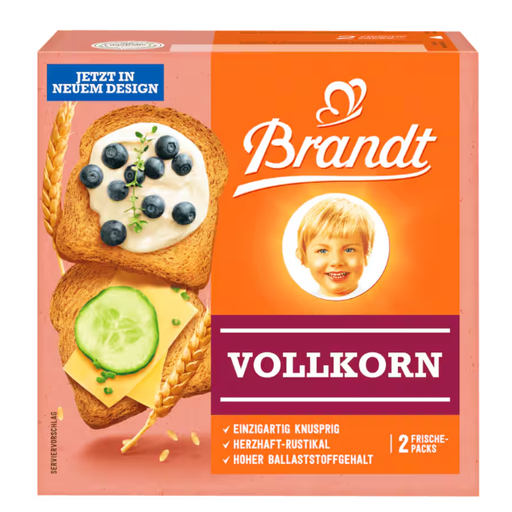 Image unavailable
For a coffee table where you want rusk slices with a stated wholegrain content. For this Brandt wholemeal variety, REWE lists 74% wholemeal wheat flour and 8.5 g of fibre per 100 g. If you have an allergy, check the information on the pack delivered.
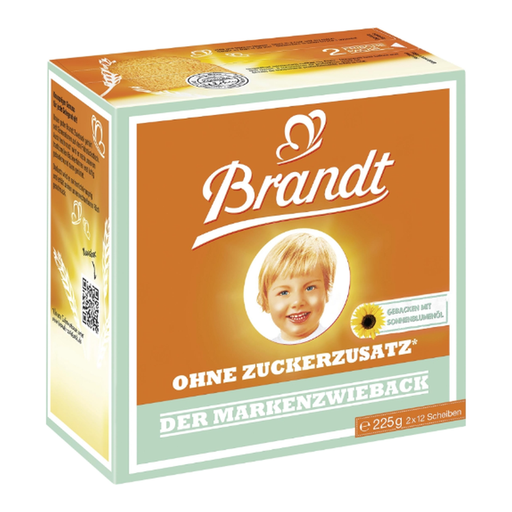 Image unavailable
For shoppers looking for rusks labelled ‘no added sugar’. Check the information on this pack for the actual sugar content per 100 g and for allergen details; figures for other Brandt rusk varieties don’t necessarily apply.
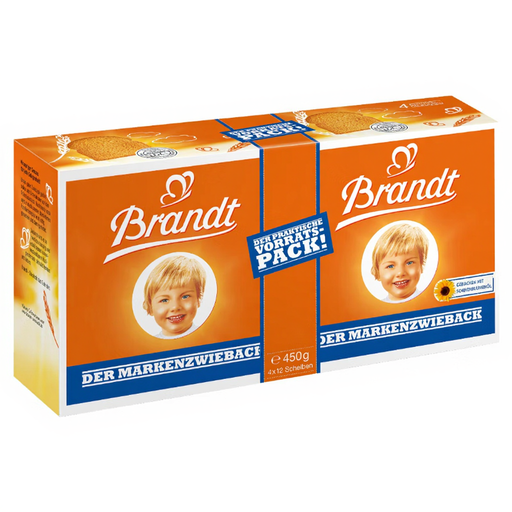 Image unavailable
For a coffee table where you want traditional rusk slices in two 225 g packs. If guests need to avoid certain ingredients, check the full ingredients and allergen information on both packs before serving.
No. You can’t infer any effect on digestion from the product name alone. When choosing Digestive biscuits or rusks, compare the ingredients and nutritional information for the specific products rather than assuming the name indicates an effect.
A dry, crunchy rusk is a good fit if you want to give it just a quick dip. McVitie’s, meanwhile, describes its Digestives as crunchy, crumbly biscuits and also suggests serving them with coffee or tea. So your choice mainly comes down to the texture you prefer.
Before serving, read the ingredients and allergen information on the pack you actually bought. The rusks and Digestive varieties described here contain wheat; other ingredients and possible traces vary by product.
Store rusks and Digestive biscuits according to the instructions on their respective packs, and keep opened dry baked snacks away from moisture. If the best-before date has passed, the Federal Office of Consumer Protection and Food Safety recommends checking the food; the date alone doesn’t mean it has gone off straight away.