For a quick coffee break
You want a dry, crisp slice to enjoy plain or with a topping. As EDEKA explains in its food glossary, rusks are sliced after the first bake and then toasted again.


If you fancy a plain, dry slice or one with a topping alongside your morning coffee, classic or wholemeal rusks are a good choice. If you prefer a crumbly, slightly sweet biscuit, try a Digestive. When comparing wholegrain content, sugar, fat and allergens, check the specific pack rather than relying on the product name alone.
You want a dry, crisp slice to enjoy plain or with a topping. As EDEKA explains in its food glossary, rusks are sliced after the first bake and then toasted again.
You check wholegrain content, fibre and sugar per 100 g, or are looking specifically for an option with no added sugar. It’s worth checking the ingredients list and nutritional information on each individual pack.
You’d rather have a crumbly, slightly sweet biscuit than a slice of rusk. McVitie’s describes Digestives Original as a snack to enjoy with coffee or tea.
First, decide whether you’d prefer a dry rusk or a crumbly biscuit. Then compare only the features that really matter for your coffee break.
| Criteria | What to check | Who it matters to |
|---|---|---|
| Type of baked treat | Whether you’d like dry rusks or a crumbly biscuit; for rusks, also check the slice size. | If I’m only having a quick coffee, I want a crisp slice that works well with a topping too. For around 27% of consumers, this convenient type of baked treat is the priority. |
| Wholegrain and sugar | Wholegrain content in the ingredients list, plus fibre and sugar per 100 g; if needed, look for the “no added sugar” claim. | I’d rather be able to compare the ingredients and nutritional values of my chosen option than choose based on the product name alone. Around 37% of consumers prioritise wholegrain or sugar information. |
| Biscuit texture | Whether the product description identifies it as a crumbly Digestive biscuit rather than a rusk; also check fat and sugar per 100 g. | With my coffee, I specifically want a slightly sweet, crumbly biscuit, not a slice to add a topping to. This preference is the most important criterion for around 18% of consumers. |
| Ingredients and allergens | Highlighted allergens, precautionary “may contain” statements and, if needed, an explicit lactose-free label on the current pack. | If I need to avoid certain ingredients, the labelling on each individual option determines my choice. This check is a priority for around 18% of consumers. |
The name is no substitute for comparing products. REWE lists 21.3 g of fat and 15.1 g of sugar per 100 g for McVitie’s Digestive The Original. These figures apply to this product, not to every Digestive biscuit.
Compare fat, sugar and fibre per 100 g on the packs you’re actually choosing between.
“Lactose-free”, “wholegrain” and “no added sugar” describe different properties. For example, REWE lists ingredients including wheat flour and barley malt extract for Brandt Markenzwieback laktosefrei.
If you have specific dietary requirements, check the ingredients list, highlighted allergens and precautionary “may contain” statements for each individual option.
The information on the pack is especially important when choosing an option if you need to avoid certain ingredients or allergens.
Check the labelling on the product you’ve actually bought before eating it.
These examples show a range of rusks and biscuits. For an accurate comparison, check the information for each specific product.
Rusks in options designed to meet different preferences, including wholegrain, lactose-free and no added sugar.
Wholegrain rusks for anyone looking for an unsweetened option.
Digestive biscuits as an alternative to dry rusks with your coffee.
Classic rusks as another type of baked treat to compare.
These two rusk options are worth considering for your coffee break if you’d prefer a dry slice to a Digestive biscuit. The product names distinguish between wholegrain and an option labelled “No Added Sugar”.
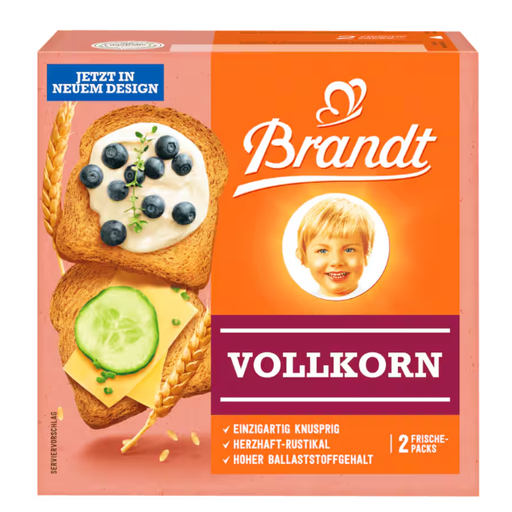 No image available
A rusk option for your coffee break if you’re looking for a dry slice labelled as wholegrain. For the specific pack, compare the ingredients and nutritional information, particularly the sugar per 100 g.
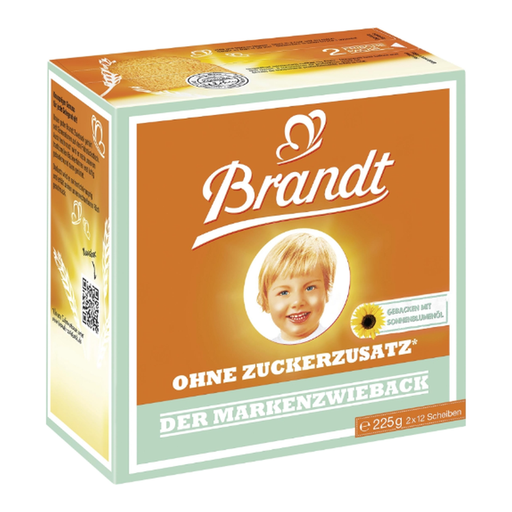 No image available
A rusk option for your coffee break if you’re specifically looking for the “No Added Sugar” claim. Check the sugar per 100 g, ingredients and allergens on the pack; the claim alone doesn’t tell you about these other properties.
No. A Digestive is a biscuit; as EDEKA explains, rusks are sliced after the first bake and then toasted again. Choose based on the type of baked treat you’d prefer and, if needed, compare the nutritional information for the specific products.
As well as the “no added sugar” claim, check the ingredients list and the sugar per 100 g. REWE lists 4.5 g of sugar per 100 g for Brandt Markenzwieback ohne Zuckerzusatz; this figure applies to that product, not to other options.
“Lactose-free” doesn’t mean gluten-free. REWE lists wheat flour and barley malt extract among the ingredients of Brandt Markenzwieback laktosefrei. If you need to avoid cereals containing gluten, check the ingredients and look for an explicit claim on the pack that meets your needs.
Start with the ingredients list and nutritional information, particularly sugar, fat and fibre per 100 g, and check the allergen labelling if needed. The Federal Ministry of Agriculture, Food and Home Affairs also gives the ingredients list and best-before date as examples of information that must be provided on food labels.
Store opened rusks in a dry place and keep them as airtight as possible. Follow any additional storage instructions on the pack.