Occasional hosts
If rusks only make it onto your table on some Sundays, separate smaller portions could be a good choice. Look for an explicit statement that the rusks come in portion packs; the number of slices in the pack alone isn’t enough.


For occasional guests or lunchboxes, individually wrapped twin packs are worth considering. However, a description such as “2 × 12 slices” does not confirm that the rusks are individually wrapped. If you regularly lay on a larger coffee spread, you could choose packs divided into smaller quantities. If you have specific dietary requirements, check the ingredients and information for the exact variant.
If rusks only make it onto your table on some Sundays, separate smaller portions could be a good choice. Look for an explicit statement that the rusks come in portion packs; the number of slices in the pack alone isn’t enough.
If your guests need gluten-free or lactose-free rusks, for example, make sure the variant you choose is labelled accordingly. Check the ingredients list and any may-contain information, as well as the wording on the front of the pack.
If you regularly serve coffee, a larger pack or multipack may suit your needs. Check how the quantity is divided within the pack: multiple packs are not the same as individually wrapped portions.
First, decide whether you want unopened slices to stay sealed in individual portions. You can then narrow down your options by serving style, ingredient requirements and pack size.
| Criteria | What to check | Who it matters to |
|---|---|---|
| Individual portions | Look for “individually wrapped” and check how many slices are in each portion pack. “2 × 12 slices” alone doesn’t confirm that the portions are individually wrapped. | If you only take out a few slices for guests or a lunchbox, you may want the remaining portions to stay sealed. Around 40% of consumers prioritise this portion protection. |
| Serving style | Choose between classic slices for toppings and smaller snack-sized formats; check the ingredients for the variety you choose. | For your coffee table, you may want to decide whether to serve the rusks plain or with a topping. The right format is the top priority for around 30% of consumers. |
| Ingredients and allergens | Check each required property individually, then read the ingredients list, highlighted allergens and may-contain information on the specific pack. | If you need to avoid a particular ingredient, the labelling on the exact variant you choose matters more than the portion format. Around 20% of consumers put this requirement first. |
| Pack size | Compare the total weight and how it is divided into packs with how much you expect to use; check the storage instructions. | If you use rusks regularly, you may want to choose an amount that suits your household. Around 10% of consumers prioritise planning their supplies. |
Dividing a pack into larger quantities keeps the unopened packs separate. It doesn’t mean you can take out individual twin packs.
Only count on having individual portions if the pack or product description explicitly says that the rusks come in individually wrapped portion packs.
These three claims refer to different properties. A variant labelled with one of them won’t automatically answer questions about other ingredients or possible traces.
Check the specific property you need for the product in question, then read the current ingredients list and any may-contain information.
The range includes classic rusks and varieties for different ingredient preferences. For separate portions, the Brandt rusks format described by HELLMA, with 50 twin packs, is one specific example.
An option to consider if you’re specifically looking for gluten-free rusks: REWE describes Schär Gluten Free Zwieback as gluten-free and lactose-free.
A household option for planning your supplies: EDEKA describes a 450-g pack of rusks divided into three 150-g portions.
These Brandt varieties include wholemeal rusks, a no added sugar option and a multipack for your coffee table or store cupboard. If individual portion packs are important to you, check how each product is packed.
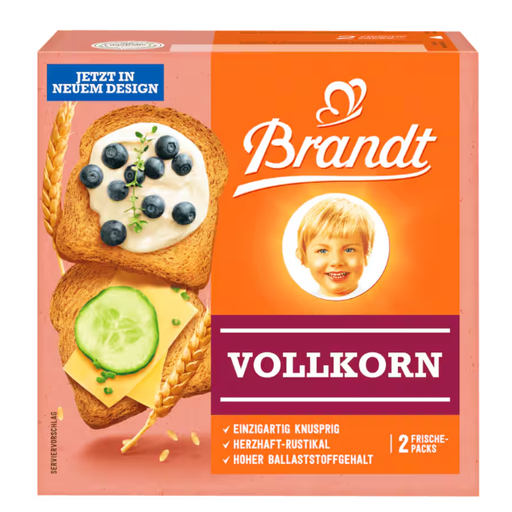 Image unavailable
A wholemeal option to serve with coffee; the pack contains 225 g.
If you only want to take out a few slices at a time, check before buying whether and how the pack is divided inside. If you have specific ingredient requirements, check the current pack labelling.
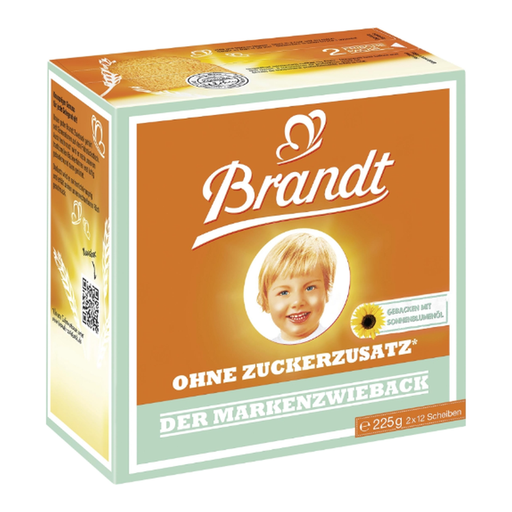 Image unavailable
For anyone looking for wholemeal rusks specifically labelled “no added sugar” to enjoy with coffee; the pack contains 225 g.
“No added sugar” doesn’t automatically mean “sugar-free”. If needed, compare the ingredients and nutritional information per 100 g, and check how the pack is divided separately.
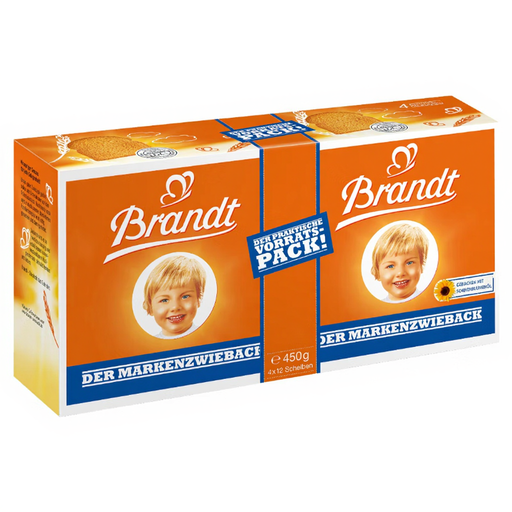 Image unavailable
A multipack for households that regularly serve rusks with coffee or like to keep some in the cupboard; it contains two 225-g packs.
The multipack alone doesn’t tell you whether the portions are individually wrapped. Check the inner packaging and, if you have specific ingredient requirements, the current labelling.
Look for an explicit statement that the rusks come in individual portion packs, and check how many slices each pack contains. HELLMA describes the Brandt format as “50 × 2” packs, each with two individually wrapped slices. By contrast, “2 × 12 slices” doesn’t automatically mean twelve individually wrapped twin packs.
You can open one pack at a time and leave the rest sealed. Check the specific pack for storage instructions and the best-before date.
No. “No added sugar” doesn’t automatically mean “sugar-free”. If the sugar content matters to your choice, compare the nutritional information per 100 g on the specific pack.
If you have a specific ingredient requirement, you should also read the current labelling on the pack. Check the ingredients list, highlighted allergens and any may-contain information for the variant you’re actually using.