Coffee-break snackers watching their sugar intake
You want something crunchy with your coffee and would prefer to avoid added sugar. To do that, distinguish the claim on the front of the pack from the sugar value in the nutrition information.


If you want to avoid added sugar with your afternoon coffee, rusks labelled ‘no added sugar’ are a natural place to start. Still, compare ‘of which sugars’ and energy per 100 g: the claim does not mean ‘sugar-free’, and the right choice also depends on portion size, ingredients and allergens.
You want something crunchy with your coffee and would prefer to avoid added sugar. To do that, distinguish the claim on the front of the pack from the sugar value in the nutrition information.
You buy rusks for several breaks and want to compare the sugar, energy, ingredients and pack size of different options on a like-for-like basis.
Before serving or taking rusks with you, check for cereals containing gluten, soya and other allergen information. A lower sugar value does not answer these questions.
Start with the sugar claim you want, then compare the nutrition information per 100 g. Finally, check the actual portion size and ingredient labelling.
| Criterion | What to check when buying | Who it matters to |
|---|---|---|
| Added and total sugars | Compare the ingredients list, as well as ‘of which sugars’ and energy per 100 g. ‘No added sugar’ does not replace checking the nutrition information. | I want to avoid added sugar with my coffee without confusing the claim on the pack with the total sugar content. Around 50% of consumers prioritise this. |
| Portion size | Check the pack size and number of pieces; use nutrition information per portion as an additional guide only if the portion is specified. | For a short break, I want to choose an amount that’s easy to take with me or share. Portion size is the top priority for around 30% of consumers. |
| Ingredients and allergens | Read the ingredients, highlighted allergens and any ‘may contain’ information on the specific pack. | Before I serve or eat rusks, the ingredients and allergen information need to meet the relevant requirements. Around 20% of consumers put this first. |
The claim does not describe the total sugar content. Müller lists 4.5 g of sugar per 100 g for Brandt branded rusks with no added sugar.
Alongside the claim on the front of the pack, compare the ‘of which sugars’ figure per 100 g and read the ingredients list.
A small format tells you about portion size, not the recipe. Flavours within the same product range can differ too.
Choose a format to suit the portion you want, then check the sugar, energy and ingredients for that exact option.
ALDI SÜD notes that its GOLDÄHREN rusks may come from different suppliers, so nutrition values can vary.
Compare the information on the pack you’re actually buying, especially if you’re choosing the same option again.
Brandt offers its branded rusks with no added sugar in a 225 g pack.
REWE’s rusks range includes different options, giving you a starting point for comparing labels.
The classic GUT&GÜNSTIG rusks in a 450 g pack make a useful product to compare.
GOLDÄHREN rusks are a classic 450 g product for comparing the declared nutrition values.
This selection features a wholemeal rusk option labelled ‘no added sugar’ for your coffee break. Check its sugar value and ingredients on the specific pack; values for other Brandt options may not apply to it.
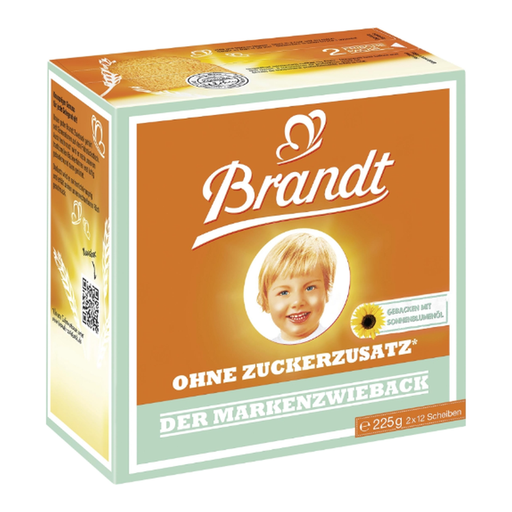 No image available
An option for your coffee break if you’re looking for a wholemeal variety with no added sugar.
Pack size: 225 g. Check ‘of which sugars’ and energy per 100 g on the pack for this option; the ‘no added sugar’ claim does not describe these values.
The product description lists wheat as an ingredient. If ingredients or allergens are important to your choice, read the full labelling on the specific pack.
No. Rusks labelled this way can still contain sugar: Müller lists 4.5 g per 100 g for Brandt branded rusks with no added sugar. So be sure to check ‘of which sugars’ in the nutrition information too.
No, the claims describe different things. If you want to compare the sugar content of two types of rusks, compare their ‘of which sugars’ values per 100 g rather than assuming ‘no added sugar’ means less sugar than another product.
First compare the sugar and energy values per 100 g, so the pack size doesn’t skew the comparison. Then consider how much you’d like to eat during a coffee break; per-portion information can help if it’s shown on the pack.
No, the sugar claim tells you nothing about gluten or other allergens. Müller lists wheat and soya, as well as possible traces of other allergens, for Brandt branded rusks with no added sugar. If you have specific requirements, always check the labelling for the particular option.