If you want to avoid added sugar at tea time, look for rusks labelled ‘no added sugar’. If you’re looking for a stated comparison with an original product, an option with ‘30% less sugar’ may suit you. Neither claim means ‘sugar-free’, so also check the ‘of which sugars’ value per 100 g, the ingredients and, if needed, the allergens listed on the specific pack.
Which rusks are right for you at tea time?
If you want to avoid added sugar
For you, the ‘no added sugar’ label is the key thing to look for. REWE lists Brandt rusks and a mini version under this label. To see whether the overall sugar content suits you too, check the nutritional information on the specific pack.
If you’re looking for lactose-free rusks
You need an explicitly lactose-free option and want to check its sugar content too. MÜLLER stocks Brandt lactose-free rusks labelled ‘30% less sugar than Original Brandt rusks’. They also contain wheat and soya, so bear this in mind.
If you’re stocking up for tea time
Compare pack sizes, ingredients and the ‘of which sugars’ value per 100 g, rather than choosing on the basis of the front of the pack alone. If you’re planning to shop at a particular branch, check availability there too.
What to look for when buying
First, decide whether you want to avoid added sugar or compare the sugar content with an original product. Then check the allergen information and choose a pack size that suits you.
| What to check |
How to check it |
Who it matters to |
| Sugar claim |
Tell the difference between ‘no added sugar’ and ‘30% less sugar’, and check the ‘of which sugars’ value per 100 g. |
If I want to avoid added sugar, a general claim about less sugar isn’t enough for me. Around 46% of consumers put this requirement first. |
| Lactose and allergens |
Check the current ingredients and allergen information. ‘Lactose-free’ does not mean wheat-free or soya-free. |
If I need lactose-free rusks, the specific product must also meet my other requirements for ingredients. Around 36% of consumers put this check first. |
| Pack size and where you shop |
Compare pack sizes and storage instructions. If shopping in store, check local availability. |
Whether I’m having tea at home or want a small portion on the go, I want to choose the right pack size without making an unnecessary trip to a branch. Around 18% of consumers prioritise pack size and where they shop. |
Common rusks-buying mistakes
-
Assuming ‘no added sugar’ means ‘sugar-free’
Rusks with no added sugar can still contain sugars that occur naturally in the ingredients. So this claim alone won’t tell you the total sugar content.
Also check the ‘of which sugars’ value per 100 g on the pack.
-
Assuming ‘less sugar’ means fewer calories overall
This claim refers to the sugar content compared with another product. It doesn’t, on its own, tell you the nutritional value of your portion at tea time.
Compare the nutritional information per 100 g and consider how many rusks you actually put on your plate.
-
Assuming ‘lactose-free’ covers all allergens
According to the product information, the Brandt lactose-free rusks sold by MÜLLER contain wheat and soya. Being lactose-free doesn’t tell you whether these ingredients are present.
If you have specific requirements, check the allergen information on the current pack.
-
Assuming a product listed online is available in store
EDEKA notes that GUT&GÜNSTIG rusks may not be available in every store. A product listing therefore doesn’t guarantee that your local branch stocks it.
Check availability at your chosen store before making a special trip to buy it.
If the option you want isn’t available there, you may need to make an extra trip.
Useful brands to help you choose
Brandt
REWE lists Brandt rusks with no added sugar, as well as a mini version. MÜLLER also stocks Brandt lactose-free rusks labelled ‘30% less sugar than Original Brandt rusks’.
- The options listed differ in their sugar claims, lactose-free status and pack size.
- ‘No added sugar’ and ‘30% less sugar’ are not the same claim. According to MÜLLER, the lactose-free product still contains sugar, wheat and soya.
GUT&GÜNSTIG
EDEKA stocks classic GUT&GÜNSTIG rusks in a 450-g pack.
- EDEKA states that this product contains 12.4 g of sugar per 100 g and provides ingredient and allergen information.
- This product isn’t labelled ‘no added sugar’ or ‘reduced sugar’. EDEKA notes that it may not be available in every store.
GOLDÄHREN
ALDI SÜD stocks GOLDÄHREN rusks as a classic option in a 450-g pack.
- ALDI SÜD states that the product shown contains 14 g of sugar per 100 g.
- ALDI SÜD notes that products may vary depending on the supplier. So compare the nutritional information on the pack you’re planning to buy.
Rusks at Joybuy: no added sugar
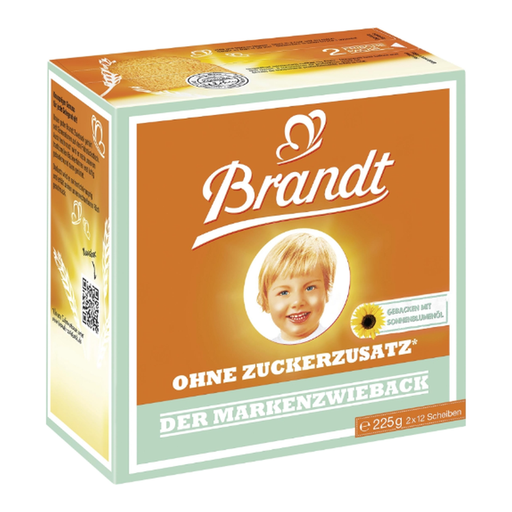
If you’re choosing based on added sugar, Brandt wholemeal rusks labelled ‘no added sugar’ are an option. If you’re looking for lactose-free rusks or a stated comparison with an original product instead, check those requirements separately.
 No image available
Brandt wholemeal rusks with no added sugar, 225 g
If you’re choosing rusks for tea time based on the ‘no added sugar’ label, this 225-g option meets your search criteria.
This doesn’t automatically mean ‘sugar-free’. Before buying, check the ‘of which sugars’ value per 100 g, along with the ingredients and allergens on the current pack if needed.
View at Joybuy
Frequently asked questions
Are rusks with no added sugar also sugar-free?
No, the two claims don’t mean the same thing. As Lebensmittelklarheit explains, a product with no added sugar may still contain naturally occurring sugars. You’ll find the total sugar content under ‘of which sugars’ in the nutritional information.
What are the ‘30% less sugar’ in Brandt lactose-free rusks compared with?
According to MÜLLER, the comparison is with Original Brandt rusks. When choosing between different products, it’s also helpful to compare the ‘of which sugars’ value per 100 g. This comparison doesn’t mean that the lactose-free rusks are sugar-free.
Are Brandt lactose-free rusks also wheat-free or soya-free?
No. MÜLLER’s product information lists wheat and soya as ingredients in Brandt lactose-free rusks. If you have an allergy, always check the information on the specific pack.
How should I store rusks for another tea time?
Store rusks in a dry place, ideally in an airtight container. EDEKA says they can be stored this way for around a year. Also check the best-before date and storage instructions on your pack.
Can I buy rusks listed online at every branch?
Not necessarily. EDEKA notes that GUT&GÜNSTIG rusks may not be available in every store. If you want to buy a particular product, check availability at your chosen branch.


