What to look for when buying
If you share a biscuit tin, first check that the ingredients are suitable for everyone who’ll be eating them. Then consider how much you get through and how the pack is divided to decide whether a larger pack would be practical.
| What to consider |
What to check |
Who it matters to |
| Pack size and portions |
Compare the net weight and portion sizes: Brandt offers a 450 g family pack, while EDEKA’s GUT&GÜNSTIG pack contains 450 g in total, divided into 3 × 150 g portions. |
If several people regularly help themselves, I want to have enough rusks without opening too much at once. Around 42% of consumers put having a good supply first. |
| Ingredients and allergens |
Read the ingredients list and allergen information on the specific pack; check precautionary ‘may contain’ statements too, if needed. |
If I share the biscuit tin with someone who needs to avoid certain ingredients, finding a suitable recipe comes before pack size. For around 33% of consumers, checking the ingredients is the top priority. |
| Type of rusk |
Check the required labelling and pack size separately: Schär labels its 175 g rusks gluten-free, while REWE labels Brandt’s 225 g rusks lactose-free. |
For tea time, I may be looking for a specifically labelled speciality option rather than a family-size pack. This preference is a priority for around 25% of consumers. |
Rusks at Joybuy
Here you’ll find a Brandt twin pack for a larger tea-time supply, as well as a smaller wholemeal option if you need less. For both products, check the labelling on the specific pack if the ingredients or allergens are important to your choice.
 No image available
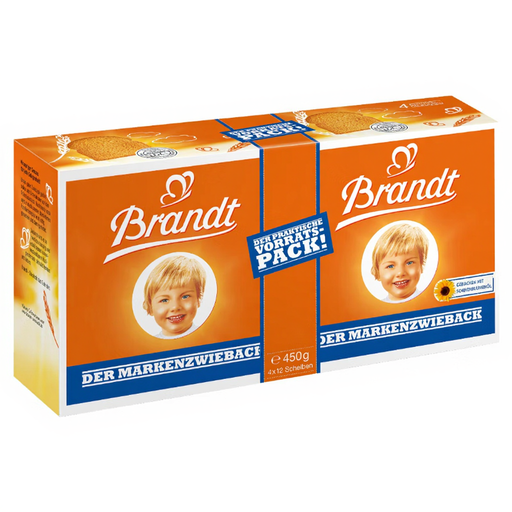
Brandt rusks twin pack, 2 × 225 g
A good option for a biscuit tin that’s regularly topped up, if two 225 g packs suit how much you get through.
Check the ingredients and allergen information on the specific pack before buying. Pack size alone doesn’t tell you whether the product is suitable for everyone who’ll be eating it.
View at Joybuy
 No image available
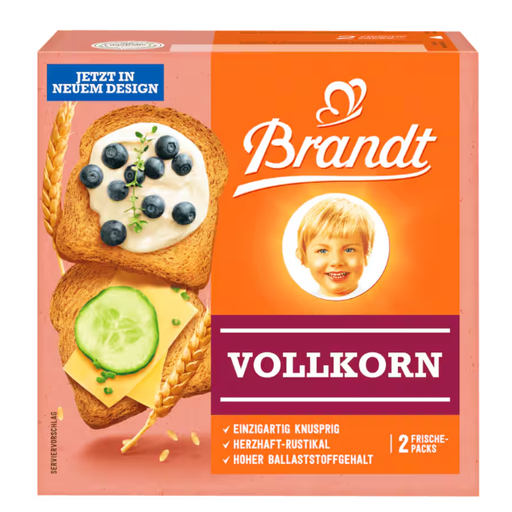
Brandt wholemeal rusks, 225 g
This 225 g pack could suit you if you’re looking for a smaller quantity or wholemeal rusks.
If you’re choosing rusks for a shared biscuit tin, check the ingredients and any ‘may contain’ information on the specific pack.
View at Joybuy
Frequently asked questions
What size pack of rusks is right for a family biscuit tin that’s used regularly?
A 400–450 g pack could suit a household where several people eat rusks regularly. Brandt offers a 450 g family pack, Burger offers a 400 g pack, and EDEKA divides its 450 g GUT&GÜNSTIG pack into 3 × 150 g portions. The key thing is how quickly your household gets through an opened pack.
Can I put classic rusks in a shared biscuit tin without checking the ingredients?
No. If anyone sharing them needs to avoid certain ingredients, check the labelling on the specific pack. The classic options featured here from Brandt, GUT&GÜNSTIG and Burger contain wheat; Brandt and GUT&GÜNSTIG also list barley. Schär specifically labels its 175 g rusks gluten-free and wheat-free.
Is ‘no added dairy ingredients’ enough if you have a milk allergy?
No, this doesn’t rule out possible traces of milk. Burger says no egg or dairy ingredients are added to its 400 g rusks, but notes that they may contain traces of milk. If you have an allergy, check both the ingredients list and any ‘may contain’ information on the specific pack.
Are lactose-free rusks also gluten-free?
Not necessarily: Brandt’s lactose-free rusks sold by REWE contain wheat flour and barley malt extract. If you need a gluten-free product, check for this separately from the lactose information.
Why should I check the ingredients on the pack before eating the rusks?
The labelling on the product you actually receive is what matters. Before adding the rusks to a shared biscuit tin, check the ingredients, highlighted allergens and any ‘may contain’ information against your requirements.


