Anyone organising an easy coffee break
If you want to offer something with coffee or tea without cutlery or an elaborate buffet, you can serve rusks by the slice. Whether multipacks make serving easier depends on the product you choose.


For an easy meeting break, rusks are a good choice if you want to serve individual slices with coffee or tea. Digestive biscuits are more suitable if the group specifically wants a sweet biscuit with wholemeal ingredients. For both types of product, check that the ingredients, allergens and pack format are right for your group and how you plan to serve them.
If you want to offer something with coffee or tea without cutlery or an elaborate buffet, you can serve rusks by the slice. Whether multipacks make serving easier depends on the product you choose.
If ingredients or allergens are important to attendees, check the labelling on the specific pack. For example, a product labelled lactose-free does not necessarily answer questions about wheat or soya.
If your group specifically wants a sweet, crunchy biscuit rather than rusks, you could consider Digestive biscuits. The McVitie’s Digestive The Original, as described by REWE, contains wholemeal wheat flour.
First decide whether rusk slices or biscuits are a better fit for your break. Then compare the specific pack by checking its ingredients, nutritional information and serving format.
| What matters | What to check when buying | Who it matters to |
|---|---|---|
| Easy to serve | Slice size and whether the pack is divided into smaller packs; Brandt says a slice of its classic Brandt Markenzwieback weighs around 9.4 g. | If you want to offer individual pieces during a short break without any preparation, the serving format matters. Around 37% of consumers would put this first. |
| Ingredients and allergens | The ingredients list, highlighted allergens and any may-contain warnings on the specific pack; don’t assume that a lactose-free label applies to other ingredients. | If several people with different dietary requirements are attending, you’ll want to know the exact recipe before serving. This would be the main priority for around 27% of consumers. |
| Wholemeal option | Check that wholemeal ingredients are listed, and compare fibre and other nutritional information per 100 g. | If you want to choose wholemeal rusks rather than the classic variety, you’ll need information about the specific product. Around 18% of consumers would prioritise wholemeal. |
| Biscuits rather than rusks | Check the product type, ingredients and nutritional information per 100 g; with Digestive biscuits in particular, don’t assume the name indicates a particular effect. | If your group specifically expects biscuits, you won’t want to plan rusks as a like-for-like alternative. Around 18% of consumers would prioritise having a biscuit. |
The product name doesn’t tell you about the ingredients or nutritional information, nor does it prove that the biscuit aids digestion. REWE describes McVitie’s Digestive The Original as a wheat biscuit containing wholemeal ingredients, with 21.3 g of fat per 100 g.
Choose between biscuits and rusks based on the kind of snack you want, then compare the information for the specific products.
The Brandt Markenzwieback laktosefrei listed by REWE contains wheat flour, barley malt extract and soya lecithin; it may also contain traces of egg.
Check the ingredients and allergen information on the current pack for your attendees, rather than relying on a single product label.
EDEKA notes that the product information for GUT&GÜNSTIG rusks may differ from the packaging and that the product may not be available in every store.
Check availability before the meeting and read the labelling on the pack you actually buy.
Brandt offers classic rusks, as well as varieties labelled wholemeal and lactose-free.
The pack of rusks described by EDEKA contains 3 × 150 g.
The Digestive The Original described by REWE is a wheat biscuit containing wholemeal ingredients, making it a different kind of snack from rusks.
This selection includes classic and wholemeal rusks for a meeting break. Before serving, check the pack format and the ingredients of the variety you actually buy.
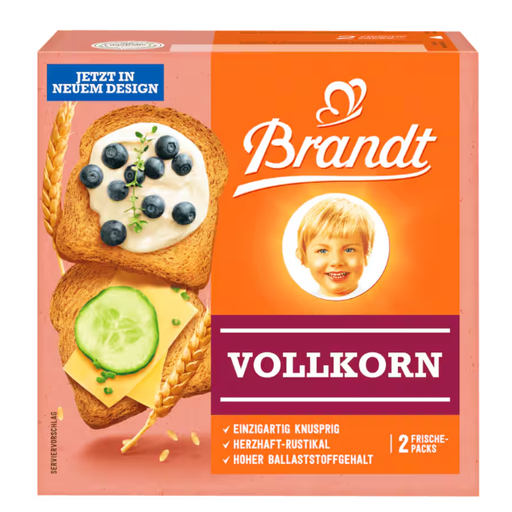 Image unavailable
A wholemeal rusk option for a break where you want to serve slices of rusk. Check that the pack format suits the way you plan to serve them, and read the ingredients and allergen information before serving.
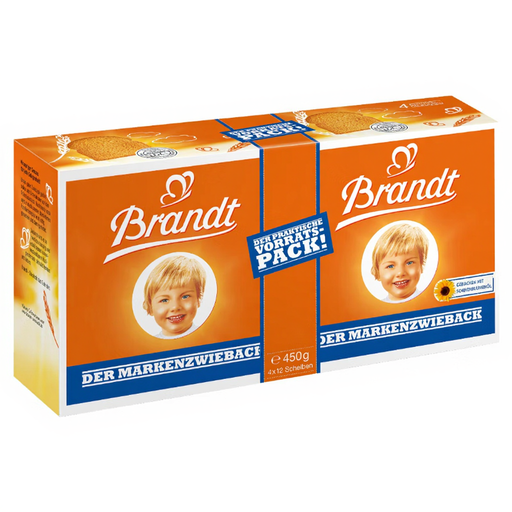 Image unavailable
Classic rusks for a meeting break where a double pack is handy. The 2 × 225 g refers to the pack configuration, not individually sealed portions. If that matters, check the packaging, along with the ingredients and allergens.
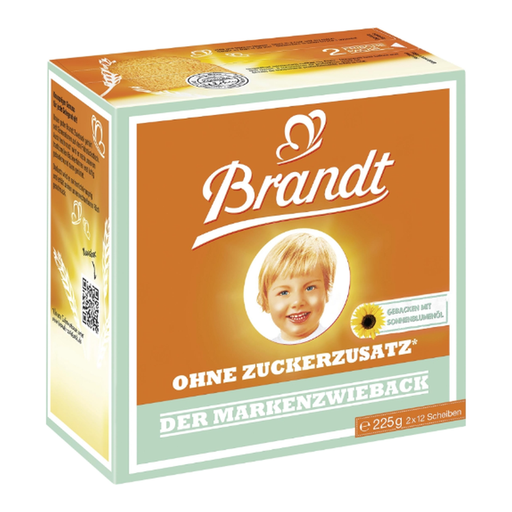 Image unavailable
Another wholemeal rusk option for a coffee break. If the exact recipe is important to your choice, check the ingredients, nutritional information and allergen warnings on the pack. It’s also worth checking in advance whether the product comes in individual portion packs.
No, the name alone doesn’t prove any such effect. For a meeting snack, you can think of the McVitie’s Digestive The Original described by REWE as a wheat biscuit containing wholemeal ingredients. Check the labelling on the specific product for its ingredients and nutritional information.
Check the ingredients list and highlighted allergens on the relevant pack, as well as any separate warnings about possible traces. If you’re choosing snacks for several people, the general terms “rusks” or “Digestive” aren’t enough.
No, you can’t assume that from “lactose-free”. REWE lists wheat flour, barley malt extract and soya lecithin in Brandt Markenzwieback laktosefrei; check the current packaging before serving.
Follow the storage instructions on the relevant pack. REWE specifically says to store Feiny Digestive biscuits in a dry place, away from heat. For other biscuits or rusks, check their own labelling.