A coffee morning for fans of classic rusks
If you’d like to serve rusks plain, with a topping or for dunking, you could start with a classic variety – as long as its ingredients are suitable for all your guests.


For a coffee morning with no particular ingredient requirements, classic rusks are an obvious choice to enjoy plain, spread with a topping or dunked in your coffee. If guests need to avoid certain ingredients, the label on the specific variety takes priority; wholemeal and ‘no added sugar’ describe other product features and don’t replace checking the label. Choose a pack size that suits the number of slices you’ll need for this and future coffee get-togethers.
If you’d like to serve rusks plain, with a topping or for dunking, you could start with a classic variety – as long as its ingredients are suitable for all your guests.
If gluten, wheat or lactose needs to be avoided, check the label on the specific variety. Schär describes its rusks as gluten-free, wheat-free and lactose-free; check separately for any other ingredients or ‘may contain’ statements relevant to your guests.
If you’re looking for wholemeal rusks or a variety labelled ‘no added sugar’, choose the specific product and compare its ingredients and nutritional information. These descriptions don’t apply to every product from a brand.
First, find out which ingredients your guests need to avoid. Then choose the variety and pack size to suit everyone’s preferences around the table.
| What to consider | What to check | Who it matters most to |
|---|---|---|
| Ingredients and allergens | Read the ingredients list, check any highlighted allergens and look for ‘may contain’ statements on the specific variety. | If I need to exclude certain ingredients for a guest, I can’t rely on the word ‘rusk’ alone. Around 33% of consumers put clear ingredient labelling first. |
| Classic variety to enjoy with coffee | Choose a classic variety and check that its ingredients suit everyone at your get-together. | I want to serve slices my guests can enjoy plain, with a topping or dunked in their coffee. For around 27% of consumers, this classic way of enjoying rusks is the priority. |
| Wholemeal or no added sugar | Compare the exact variety name, ingredients and nutritional information per 100 g. | I’m looking specifically for a wholemeal option or a variety with no added sugar for my coffee table, without assuming it has any other particular qualities. Around 20% of consumers prioritise this type of recipe. |
| Quantity and storage | Check the net weight, whether the pack contains individual portions and the storage instructions, and compare these with the number of guests and how much you’ll use later. | If there are rusks left over after the get-together, I want to be able to store the opened pack sensibly. For around 20% of consumers, pack size is a priority. |
The term doesn’t tell you which ingredients or allergens a particular variety of rusks contains. Brandt lists wheat, barley, milk and soya among the ingredients in its classic branded rusks.
Check the name of the specific variety and, if you have particular requirements, read its ingredients list and allergen information.
The description alone doesn’t tell you the total sugar content or whether the product contains allergens.
Compare the nutritional information per 100 g and read the ingredients list for the variety you’ve chosen.
For a small get-together, it’s also worth thinking about what you’ll do with any slices left once the pack is open.
Choose a quantity to suit the number of guests and follow the storage instructions on the pack.
ÖKO-TEST reported on a test of 21 rusk products. A result for one product tested doesn’t automatically describe other varieties from the same brand.
Use test results as an additional guide, and check the information for the variety you’re actually planning to buy.
Brandt offers classic rusks and other varieties, including wholemeal rusks and different pack sizes.
Schär describes its rusks as gluten-free, wheat-free and lactose-free.
REWE’s rusk range includes Praum varieties with classic, wholemeal and organic spelt options.
This selection includes Brandt rusks for a classic coffee morning, as well as varieties labelled wholemeal or ‘no added sugar’. If your guests have specific ingredient requirements, check the label on the individual pack.
 No image available
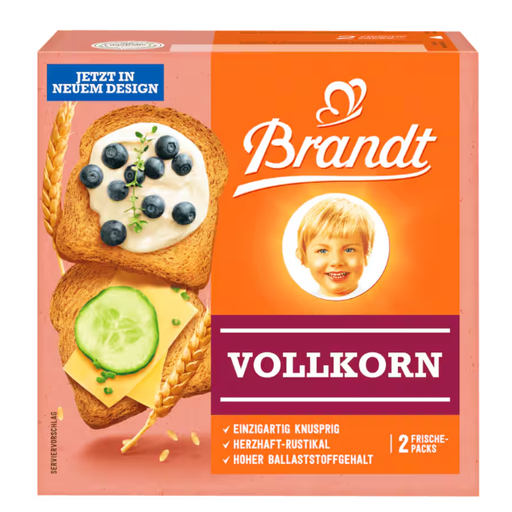
An option if you’re specifically looking for wholemeal rusks to serve with coffee.
Pack size: 225 g. If you have ingredient requirements, check the allergen and ‘may contain’ information on the specific pack.
 No image available
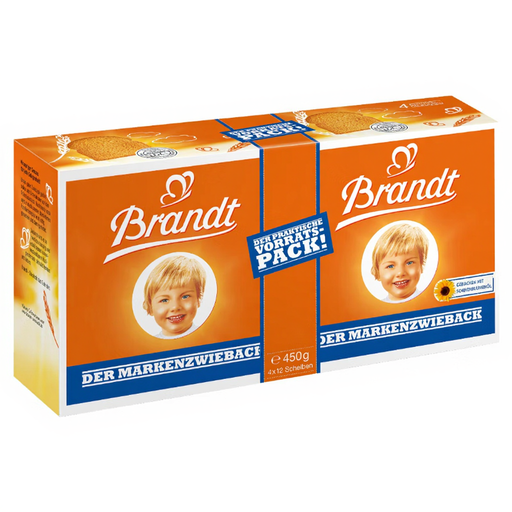
For a coffee morning with classic rusks or for several get-togethers, provided the ingredients suit your guests.
Twin pack with 2 × 225 g. Check the ingredients and allergen information on the packs before serving.
No image available
For coffee mornings when you specifically want a wholemeal variety labelled ‘no added sugar’.
Pack size: 225 g. The description doesn’t replace checking the nutritional information, ingredients and allergens.
No. Brandt lists wheat, barley, milk and soya in its classic branded rusks. If guests need to avoid certain ingredients, check the information for the variety you plan to serve rather than assuming it’s suitable based on the product category.
Schär’s rusks are labelled gluten-free and wheat-free and, according to the manufacturer, contain ingredients including maize starch and rice flour. Brandt’s classic branded rusks, on the other hand, contain wheat and barley. If you have other requirements, check the remaining ingredients and any ‘may contain’ information even for gluten-free rusks.
Yes, especially if your choice depends on ingredients or allergens. Before serving, read the information on the pack you actually receive and check that it meets your guests’ requirements.
Follow the storage instructions on the pack. EDEKA24 advises storing Brandt branded rusks in a cool, dry place; if the pack has been opened, also follow its instructions for resealing it.