If you’re interested in wholemeal
If you’d like wholemeal rusks with your coffee, check the fibre content per 100 g. The figures apply to the specific variety, not to every rusk made by a particular brand.


For your coffee break, the best way to choose rusks is to focus on the quality that matters most to you: wholemeal, a recipe with no added sugar, an explicitly labelled lactose-free option or organic vegan spelt rusks. Check the ingredients list and nutritional information for the specific product. No added sugar does not mean sugar-free, spelt is not gluten-free, and the word “Digestive” does not imply a digestive benefit.
If you’d like wholemeal rusks with your coffee, check the fibre content per 100 g. The figures apply to the specific variety, not to every rusk made by a particular brand.
Whether you’re looking for no added sugar, a lactose-free product or a vegan option, each label answers a different question. If you need to avoid particular ingredients or allergens, check the current packaging to make sure it meets your requirements.
Look for products labelled as plant-based and unsweetened if that’s what you’re after. Bear in mind that spelt is a type of wheat, so it isn’t a gluten-free alternative.
First decide what matters most for your coffee break: a wholemeal recipe, a particular ingredient attribute or classic rusks. Then compare the information for each variety, rather than treating the different labels as interchangeable.
| What to consider | What to check | Who it matters most to |
|---|---|---|
| Wholemeal and fibre | The wholemeal content in the ingredients list and the fibre per 100 g for the specific variety. | If you want wholemeal rusks with your coffee, check the stated fibre content rather than relying on the product name alone. This is the top priority for around 42% of consumers. |
| Recipe and dietary requirements | The stated product attribute, as well as the ingredients, allergens and, where relevant, “of which sugars” per 100 g. | If added sugar, lactose or particular ingredients are key to my choice, I need labelling that matches that specific requirement. Around 33% of consumers prioritise this kind of recipe consideration. |
| Classic rusks | Whether the variety suits how you want to eat it, plain or with a topping; also compare the ingredients and nutritional information. | For a simple coffee break, I want classic rusks without assuming they have any particular health benefit. This is the main reason for choosing them for around 25% of consumers. |
Product information shows why it’s important to tell these varieties apart. REWE lists 8.5 g of fibre per 100 g for Brandt Wholemeal Rusks. For Brandt Original Rusks with no added sugar, REWE still lists 4.5 g of sugar per 100 g. Each figure applies to a specific variety, so it’s still worth comparing the current packaging.
A search term alone doesn’t prove that rusks have any particular effect. The European Commission maintains a register of health claims for food, along with the conditions for using them.
Choose rusks for your coffee break based on their recipe and nutritional information. If a product advertises a specific health benefit, check the exact claim and the conditions for using it rather than inferring a benefit from the word “Digestive”.
The ingredients list and the “of which sugars” line answer different questions. REWE lists 4.5 g of sugar per 100 g for Brandt Original Rusks with no added sugar.
Check both details for the variety you’re planning to buy. You can only assess the sugar content per slice using the serving information on the specific pack.
Alnatura describes spelt in its own spelt rusks as a type of wheat. The lactose-free Brandt Original Rusks described by REWE still contain wheat, barley malt extract and soya lecithin.
If you need to follow a gluten-free diet or avoid certain allergens, check the current ingredients list and any precautionary allergen information. A single label won’t cover every requirement.
Wholemeal, lactose-free and no-added-sugar varieties can differ in their ingredients and nutritional information. A brand name or similar-looking pack isn’t a reliable way to identify the recipe you need.
Check the full variety name, pack size and product information for the option you’ve chosen.
These brands offer options with different recipes. The attributes listed apply to the products described, not to a brand’s entire range.
Brandt offers wholemeal rusks, as well as varieties with no added sugar and a lactose-free label.
According to Alnatura, its spelt rusks are an unsweetened, vegan organic option.
Sommer describes its wholemeal rusks as an unsweetened, plant-based organic and Demeter option.
Naturata offers unsweetened organic spelt rusks, which the manufacturer describes as vegan.
This selection includes wholemeal rusks, a variety labelled as having no added sugar and classic rusks. What matters most is finding a recipe and pack information that suit your coffee break.
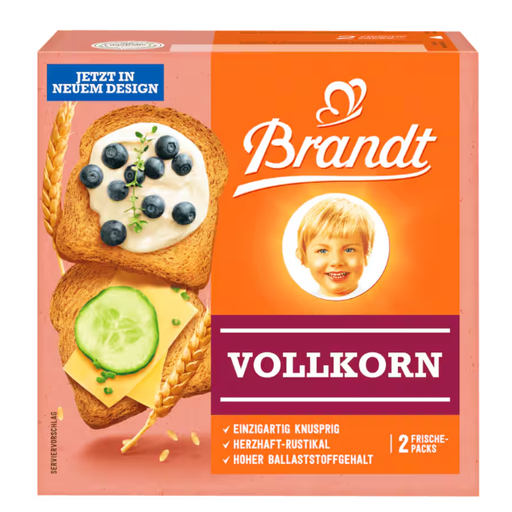 No image available
A good choice if you’re specifically looking for wholemeal rusks to enjoy with your coffee.
If you’re comparing fibre content, check the amount per 100 g on the current pack; it isn’t given in the variety name alone.
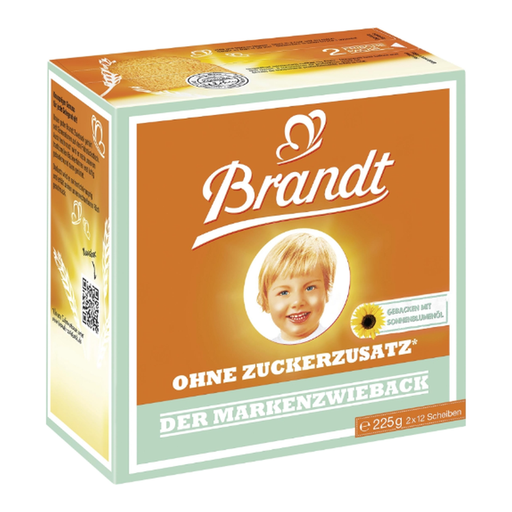 No image available
This variety may suit you if you’re looking for wholemeal rusks labelled “no added sugar”.
Before buying, check the ingredients, allergens and “of which sugars” per 100 g on the specific pack. The label doesn’t mean the product is sugar-free.
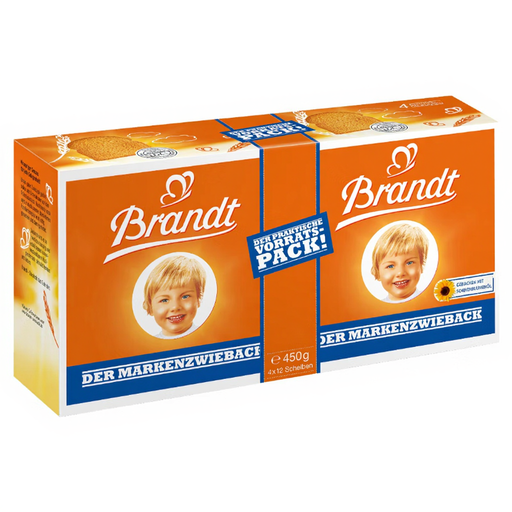 No image available
Classic rusks for your coffee break if none of the special recipes mentioned is your main buying consideration.
The twin pack contains 2 × 225 g. If you have specific requirements for ingredients or nutritional values, check the information for this variety.
The word “Digestive” alone doesn’t mean rusks have a digestive benefit. If a food is advertised as having a specific health benefit, the exact claim and the conditions for using it matter. The European Commission maintains a register of health claims.
No, the two labels don’t mean the same thing. REWE lists 4.5 g of sugar per 100 g for Brandt Original Rusks with no added sugar. As well as checking the ingredients list, read the “of which sugars” line in the nutritional information for the specific pack.
No, spelt is a type of wheat and contains gluten. Alnatura makes this clear on its spelt rusks. If you need a gluten-free product, look for one labelled accordingly and check the current ingredients list.