Tea drinkers who like to top their rusks
If you fancy a crisp slice with your tea, either plain or with a sweet or savoury topping, classic rusks could be just the thing. Brandt describes these ways to enjoy its branded rusks.


Rusks are a good choice for teatime if you fancy a crisp slice to enjoy plain or topped with something; Digestive biscuits are another option if you prefer a biscuit made with wholegrain. For the specific products featured here, Brandt lists 5.2 g of fat per 100 g for its branded rusks, while REWE gives 21.3 g per 100 g for McVitie’s The Original. If you need to avoid gluten or lactose, check the labelling for the specific variety, as well as the ingredients and any ‘may contain’ information.
If you fancy a crisp slice with your tea, either plain or with a sweet or savoury topping, classic rusks could be just the thing. Brandt describes these ways to enjoy its branded rusks.
If you prefer a biscuit rather than a rusk with your tea, you could choose a classic Digestive. REWE lists McVitie’s The Original as a wheat biscuit made with 16% wholemeal wheat flour; the nutritional information applies to this variety.
If you need an alternative with the relevant labelling, it’s also important to check for other allergens. REWE labels Schär Landtaler Digestive as gluten- and lactose-free; the product contains soya and may contain traces of lupin and egg.
First, decide whether you’d prefer a rusk you can top or a biscuit to enjoy with your tea. If you need to avoid certain ingredients, check the labelling on the specific pack before thinking about flavour.
| Criteria | What to check | Who should pay particular attention |
|---|---|---|
| Type of biscuit for tea | Think about whether you’d like to enjoy rusks plain or with a topping, or would prefer a Digestive biscuit with your tea. | If I’m looking for something to top, I’ll choose differently than if I want a biscuit to enjoy with my tea. Around 45% of shoppers put their preferred type of biscuit first. |
| Ingredients and allergens | Read the ingredients list, allergen information and any ‘may contain’ warnings for the specific variety. | If I need to avoid gluten or lactose, the labelling determines which varieties are suitable in the first place. For around 33% of shoppers, this check comes first. |
| Nutritional information | Compare fat, sugar and salt per 100 g; also check the stated serving size if relevant. | If I’m choosing between rusks and biscuits based on their nutritional information, the product name alone isn’t enough. Around 22% of shoppers put comparing nutritional information first. |
The product name alone doesn’t prove that it has any effect on digestion. The European Commission lists health claims for food, together with their conditions, in a register.
Choose a biscuit based on its ingredients, nutritional information and how you plan to enjoy it, rather than assuming its name promises a particular effect.
According to REWE, Schär Landtaler Digestive, which is labelled gluten-free, contains soya and may contain traces of lupin and egg. The labelling also doesn’t tell you whether the variety contains less fat.
Check all the ingredients and ‘may contain’ information that are relevant to you, as well as the nutritional information on the specific pack.
Nutritional values can vary between specific varieties: Brandt lists 5.2 g of fat per 100 g for its branded rusks, while REWE gives 21.3 g per 100 g for McVitie’s The Original.
Compare the nutritional information per 100 g for each product, then decide separately which type of biscuit you prefer with your tea.
Brandt branded rusks are an example of a classic rusk for teatime, rather than a Digestive biscuit.
McVitie’s Digestive The Original is a classic Digestive biscuit made with wholegrain.
Schär Landtaler Digestive is a biscuit variety specifically labelled gluten- and lactose-free.
This selection features a rusk for shoppers who would prefer a slice rather than a Digestive biscuit with their tea.
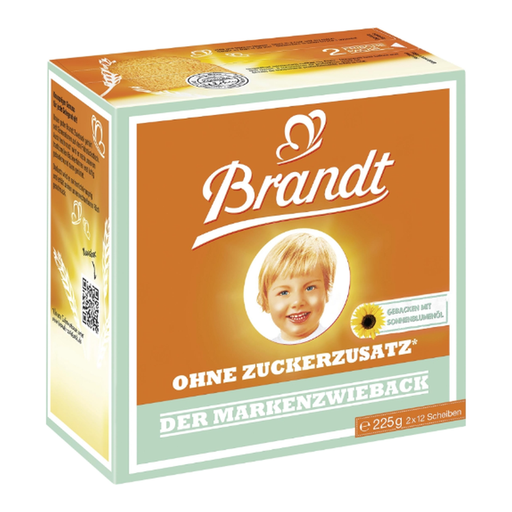 No image available
This variety could be a good choice if you’d prefer rusks to a Digestive biscuit with your tea. To help you decide, compare the ingredients and nutritional information per 100 g on the pack; ‘no added sugar’ doesn’t mean ‘sugar-free’.
No, the name alone doesn’t prove that it aids digestion. The European Commission lists authorised and unauthorised health claims for food in a register. When choosing a biscuit, the information on the specific product is what matters.
Look for the gluten-free labelling, and also read the ingredients and ‘may contain’ information on the specific pack. REWE labels Schär Landtaler Digestive as gluten-free and wheat-free; the variety contains soya and may contain traces of lupin and egg.
Ingredients and warnings can vary between rusk and biscuit varieties. The Federal Ministry of Agriculture, Food and Home Affairs explains that the 14 main causes of food allergies and intolerances must be declared. So check the labelling on the product you’re actually planning to buy.
Follow the storage instructions on the specific pack. REWE recommends storing Feiny Biscuits Digestive in a dry place away from heat; other varieties may have different storage instructions on the pack.