
Lieferung heute & morgen

Qualitätsgarantie

Willkommens-Angebote freischalten: KOSTENLOSE Lieferung | Bis zu 80 % RABATT | Kostenlose 30-Tage-JoyPlus-Testphase
App herunterladen
Choosing the right leisure battery is crucial for freedom and comfort when camping. An inadequate power supply can quickly limit a trip. Many RV owners invest in a high-performance Lithium Iron Phosphate (LiFePO4) battery but encounter unexpected problems. This guide highlights the most common pitfalls and explains which technical parameters truly matter, enabling you to make an informed decision for a self-sufficient power supply.
A high amp-hour (Ah) rating alone is no guarantee of satisfaction. Certain weaknesses in design or specifications can severely compromise functionality.
To avoid these mistakes, you should carefully examine three core technical parameters. These determine the performance and longevity of your off-grid power supply in the RV.
Capacity, specified in amp-hours (Ah), describes how long a battery can supply a certain current. However, the total energy reserve is more accurately represented in watt-hours (Wh), which is calculated by multiplying the nominal voltage (e.g., 12.8V) by the capacity (Ah). For true self-sufficiency that allows for the operation of household appliances over several days without recharging, high values are necessary. For example, a 12V 640Ah LiFePO4 battery offers an enormous energy reserve of approximately 8192 Wh (8.19 kWh) and serves as a powerful off-grid storage solution.
The BMS is the brain of the battery. It protects the cells from overvoltage, undervoltage, overcurrent, short circuits, and overheating. A crucial value is the maximum continuous discharge current, specified in amperes (A). A battery with a 250A BMS is capable of continuously delivering a high output of over 3000 watts. This is a fundamental requirement for operating powerful inverters that supply 230V appliances like coffee machines, air conditioners, or power tools.
The longevity of a lithium iron phosphate battery depends heavily on the quality of the cells used and the integrated protection mechanisms. High-quality batteries use automotive-grade A cells, which are designed for a high cycle life (often over 6000 cycles at 80% depth of discharge). This corresponds to a potential lifespan of over 10 years. Integrated low-temperature protection, which automatically stops charging below 0°C (32°F), is essential for year-round use in colder climates.
The right equipment depends on individual usage patterns. Here are some product recommendations tailored to specific camper profiles.
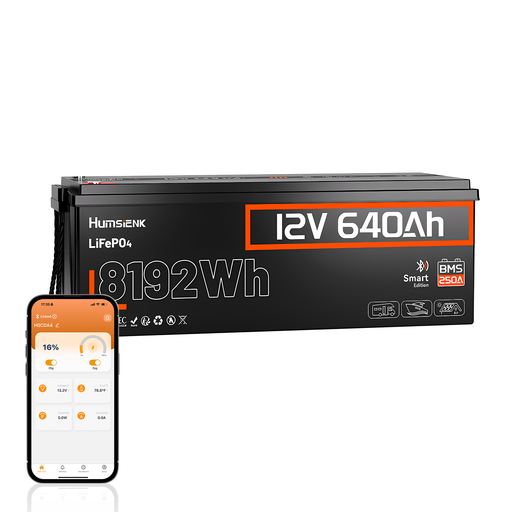
Why This Fits Their Persona: Ideal for full-time campers or off-grid system owners who want an uncompromising, centralized energy solution. This single battery replaces a bank of six 100Ah batteries and powers the entire system, including air conditioning and heating.
The powerful 250A BMS prevents shutdowns under heavy load. The integrated low-temperature cut-off protects the cells in winter. The single-block design avoids the chaos and potential failure points of a parallel connection.
Enormous energy reserve of 8.19 kWh in a compact housing. Allows for the simultaneous operation of multiple high-draw appliances and provides full control over battery status via Bluetooth.

Why This Fits Their Persona: A useful addition for campers who value practical self-sufficiency. Ideal for preparing firewood, clearing a campsite, or small woodworking tasks without needing a 230V power source.
Avoids dependence on external power or manual tools for basic tasks at the campsite. The battery-powered function ensures maximum flexibility.
Lightweight, compact, and safe to handle. Comes with two batteries and a replacement chain, allowing for longer, uninterrupted use.
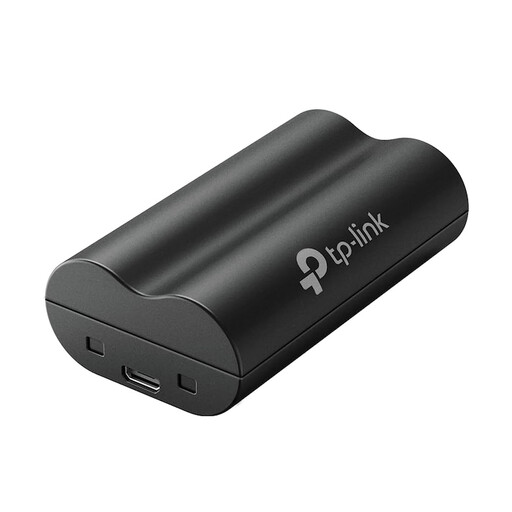
Why This Fits Their Persona: For campers who want to monitor their vehicle and equipment with mobile security cameras (e.g., from Tapo). This battery pack ensures that the cameras remain operational even during extended periods without a power connection.
Prevents security gaps caused by dead camera batteries. A quickly swappable spare battery ensures uninterrupted surveillance, providing peace of mind when away from the vehicle.
High capacity of 6700 mAh for long runtimes. The battery is specifically designed for compatible Tapo devices and can be swapped in seconds to minimize downtime.
We have compiled a complete, up-to-date list of products that fully meet these strict selection criteria and safety regulations.
A LiFePO4 battery offers several key advantages:
A BMS with a high continuous discharge current of 250A is essential for campers who want to run energy-intensive 230V appliances via an inverter. This includes air conditioners (high startup current!), induction cooktops, coffee machines, electric kettles, or powerful tools. A weaker BMS would cut off the power supply during these peak loads, even if the battery capacity is sufficient.
No, directly charging standard LiFePO4 cells at temperatures below 0°C (32°F) leads to an irreversible chemical reaction known as "lithium plating," which permanently damages the cell. Therefore, it is crucial to look for a battery with integrated low-temperature protection. This feature automatically stops the charging process as soon as the cell temperature drops below freezing, thus protecting your investment.