
Lieferung heute & morgen

Qualitätsgarantie

Willkommens-Angebote freischalten: KOSTENLOSE Lieferung | Bis zu 80 % RABATT | Kostenlose 30-Tage-JoyPlus-Testphase
App herunterladen
An RV trip promises freedom and adventure. To ensure the journey remains safe, correct tire pressure is crucial. A tire pressure monitoring system (TPMS) continuously monitors the condition of your tires and can warn you of dangerous situations, such as a sudden loss of pressure. However, the market offers a vast array of systems whose quality varies dramatically. Before you make a decision, it's important to recognize common product defects and exaggerated marketing claims.
As your Joybuy Product Recommendation Officer, I'll help you understand the essential features and make an informed choice. This guide focuses on the technical specifications that are critical for reliable performance.
Many products on the market have weaknesses that severely limit their usefulness. Pay special attention to these three points to avoid a poor investment:
To avoid the problems mentioned above, you should check three core technical parameters before buying. These largely determine the reliability and real-world usability of a system for your vehicle.
For RVs, and especially for combinations with caravans or trailers, the range of the radio signal is the most important factor. The transmission usually occurs on the 433.92 MHz frequency.
There are two basic types of tire pressure sensors, and you should weigh their pros and cons:
For the in-vehicle display, a solar-powered tire pressure monitoring system has proven to be practical. The display powers itself via an integrated solar panel and only rarely needs charging with a USB cable.
A reliable system should have high precision. A maximum deviation of ±0.1 Bar (approx. 1.5 PSI) is a good benchmark. The alert functions are just as important. A good TPMS should have at least the following warnings:
Based on the criteria mentioned, we have identified products that are suitable for different user groups and their specific requirements.
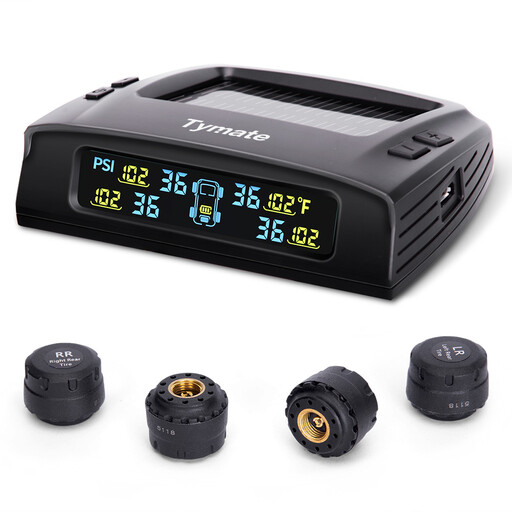
Why This Fits Their Persona: Ideal for owners of standard RVs who are looking for a straightforward and reliable retrofit solution. The installation requires no workshop and the system is ready to use out of the box.
This system combines external sensors for easy installation with a solar-powered display. According to the manufacturer, it offers 5 alarm modes, including a high-temperature warning, thus avoiding the pitfalls of inadequate monitoring and complex maintenance.
According to the brand, the pressure detection accuracy has an error range of less than 2 PSI (approx. 0.14 Bar). The color LCD display automatically adjusts its brightness to the ambient light.
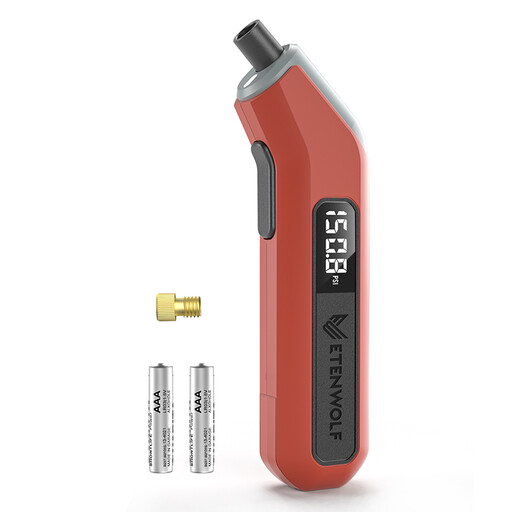
Why This Fits Their Persona: For RV owners who prefer not to have a permanent installation but want to perform an exact manual check before every trip. This tool is a supplement, not a permanent monitoring system.
Instead of relying on potentially inaccurate permanent sensors, this digital gauge provides a precise and reliable measurement on demand. It bypasses the trap of inaccurate readings by emphasizing a deliberate, manual check.
The device features a bright LED display for good readability and comes with a Presta valve adapter, making it versatile. The measuring range up to 200 PSI is sufficient for most RV tires.
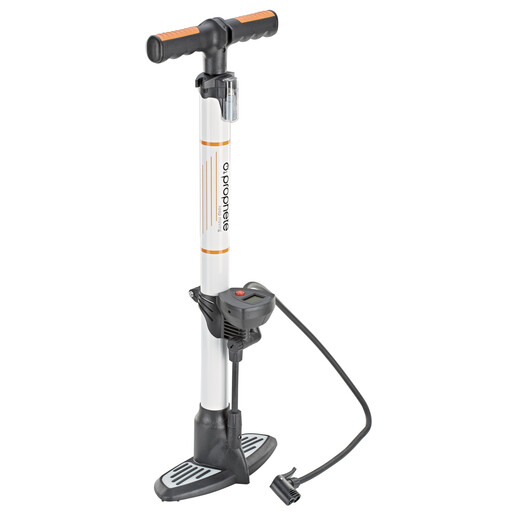
Why This Fits Their Persona: Perfect for home use to ensure all tires have the exact right pressure before a trip begins. This tool is intended for preparation and maintenance in the home garage.
Instead of relying on the small compressors at gas stations, this floor pump with a digital manometer allows for precise pressure adjustment. It solves the problem of inaccurate measurements at the source by enabling controlled inflation.
The universal dual head is compatible with all common valve types. The digital manometer allows for an exact pressure display in Bar, PSI, KPA, or KG/CM?. The maximum pressure of 7 Bar (100 PSI) is suitable for many RV and van tires.
We have compiled a complete, up-to-date list of products that fully meet these strict selection criteria and German safety regulations.
The battery life depends on the sensor type. For external sensors, which often use a replaceable coin cell battery (e.g., CR1632), the lifespan is typically one to two years. Internal sensors have built-in batteries that, due to their size and less frequent transmission, can often last five years or longer; however, their replacement requires a visit to a professional garage.
Yes, retrofitting is possible in many cases. Systems with external sensors are designed for self-installation: the sensors are simply screwed onto the valve stems and the display is placed in the cockpit. The installation usually takes only a few minutes. Systems with internal sensors, on the other hand, require tire removal and should be installed by a professional garage.
Many TPMS are expandable and can also monitor the tires of a trailer. Be sure to choose a system that is either designed for a higher number of sensors from the outset or can be expanded with additional sensors. For long rigs (over approx. 8 meters total length), a signal booster (repeater) is strongly recommended to ensure a stable connection to all sensors.