
Lieferung heute & morgen

Qualitätsgarantie

Willkommens-Angebote freischalten: KOSTENLOSE Lieferung | Bis zu 80 % RABATT | Kostenlose 30-Tage-JoyPlus-Testphase
App herunterladen
For RV owners, safety on long journeys is paramount. Correct tire pressure is a crucial factor that is often underestimated. A tire pressure monitoring system (TPMS) for your RV continuously monitors the condition of your tires and can warn you of dangerous situations, such as a sudden loss of pressure. However, the market for aftermarket systems is confusing, and not every product delivers on its promises. Before you make a decision, you should be aware of the most common pitfalls that can lead to a bad buy.
Choosing a suitable system can be complicated. Many products are equipped with tempting features that prove inadequate in practice. Pay special attention to these three points to avoid a poor investment.
To avoid the problems mentioned above, you should base your selection on objective technical criteria. A careful review of these three core parameters ensures that you get a reliable and durable system for tire pressure and temperature monitoring.
The most important parameter is the supported pressure measurement range. Check the tire pressure recommended by the vehicle manufacturer for your RV or truck.
When retrofitting an RV TPMS, external sensor tire pressure monitoring systems are the most practical solution. They are simply screwed onto the valves and do not require tire removal. Pay attention to the following points:
The display unit in the cockpit should have a flexible power supply. A solar-powered tire pressure monitor is particularly convenient, as it eliminates the need for charging cables and allows the device to operate autonomously. For vehicles longer than 7 meters or when using a trailer, a signal booster (repeater) is essential to ensure stable and reliable data transmission.
Based on the criteria above, we have identified a few models that represent a smart choice for specific user groups and their vehicles.
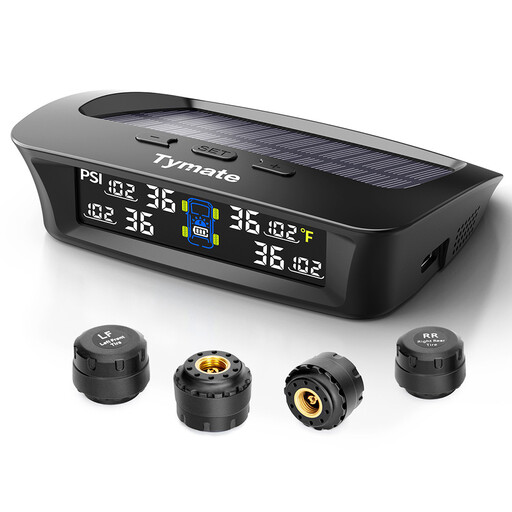
Why This Fits Their Persona: Ideal for owners of camper vans or smaller semi-integrated motorhomes whose tire pressure is in the range of up to 6 Bar (87 PSI). The simple installation and solar-powered display make it a hassle-free retrofit solution for safety-conscious beginners.
The clearly defined pressure range up to 87 PSI prevents a bad buy for unsuitable vehicles. The sensor batteries (type CR1632) are replaceable, thus avoiding the hidden costs trap.
Solar-powered display for wireless operation and easy installation of external sensors without a trip to the workshop.
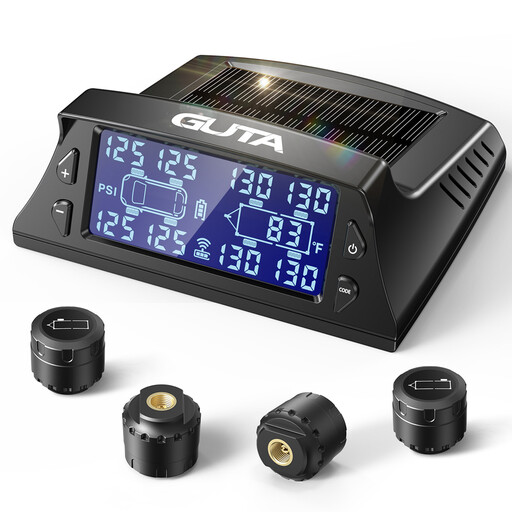
Why This Fits Their Persona: Specifically designed for drivers of heavy vehicles. Anyone driving a large, fully integrated motorhome, an over-cab model, or a light truck needs to monitor high pressures, which this system reliably covers.
Solves the core problem of an insufficient pressure range by covering up to 13 Bar (188 PSI). The long-lasting CR2032 batteries (approx. 4-year lifespan according to the manufacturer) minimize maintenance effort.
Very wide pressure measurement range, suitable even for the most demanding tires on recreational and commercial vehicles.
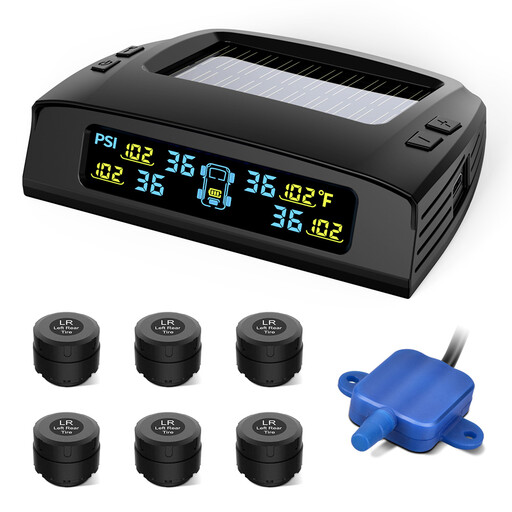
Why This Fits Their Persona: This set is designed for drivers who travel with an RV and an additional trailer (e.g., for boats, motorcycles, or as a caravan). It provides enough sensors for the entire rig and the necessary technology for a stable connection.
The included repeater (signal booster) proactively solves the problem of unstable signal transmission on long vehicle combinations. This ensures all tires, including those on the trailer, are reliably monitored.
All-in-one solution for rigs, with 6 sensors and a signal booster included. No additional components are required for operation.
We have compiled a complete, up-to-date list of products that fully meet these strict selection criteria and German safety regulations.
1. How accurate is an aftermarket TPMS for RVs? Most aftermarket systems specify a measurement accuracy of about ±0.1 Bar (approx. 1.5 PSI). This precision is perfectly adequate for its intended purpose, which is the early detection of slow pressure loss or significant deviations from the target pressure. It is advisable to check the manufacturer's specifications in the product data sheet.
2. Do I have to retrofit a TPMS to my RV? While TPMS has been mandatory for newly registered passenger cars since November 2014, this does not apply across the board to all RVs, especially older models or those based on commercial vehicle chassis. Regardless of the legal requirements, however, retrofitting is a highly recommended safety measure that significantly reduces the risk of tire-related breakdowns or accidents.
3. How long do the batteries in the external sensors last? The battery life varies depending on the model and frequency of use. Lifespans between one and four years are common. A crucial selection criterion should always be that the batteries (often standard button cells like CR1632 or CR2032) can be easily and inexpensively replaced by the user. Models with permanently installed batteries should be avoided.