Real rye bread isn’t gluten-free: rye contains gluten, as explained by the German Coeliac Society. If your baby needs to follow a gluten-free diet, choose a bread alternative that is labelled gluten-free and contains no rye. For baby-led weaning, you’ll also need to consider whether your baby is ready for complementary foods, whether the bread is suitable to serve, and how it fits into a varied diet.
Who needs to think carefully about bread choices?
Families who need to follow a gluten-free diet for medical reasons
If your baby needs to eat gluten-free, a rye-like name is no guide to whether a bread is suitable. Check that the bread is labelled “gluten-free” and look at its ingredients. The German Coeliac Society lists rye among the cereals that contain gluten.
Parents who want to offer bread as finger food
Bread is only suitable once your baby is ready for complementary foods and can pick up and swallow solid food. The Gesund ins Leben network and the BIÖG point out that it can be harder to ensure adequate nutrient intake when a baby is offered only solid foods.
Families looking for an alternative to rye bread
If you enjoy hearty bread but need to avoid rye, compare the ingredients and texture of gluten-free breads. An alternative made with different ingredients won’t taste the same as rye bread.
What should you look for when buying bread?
If gluten-free food is required, that comes before taste and bread style. Then check whether the specific product suits your baby’s stage of development and the rest of their complementary diet.
| Criteria |
What to check when buying |
Who it matters most to |
| Gluten-free |
Look for the “gluten-free” label and check the ingredients for rye and any other allergens relevant to your family. According to Lebensmittelklarheit, the product must contain no more than 20 mg of gluten per kg of food when sold to carry this claim. |
If my baby needs to eat gluten-free, the desire for a rye-bread taste mustn’t dictate my choice. Around 50% of consumers prioritise this when choosing bread. |
| Complementary foods and texture |
Check that your baby is ready for complementary foods and that the bread is soft and suitable for them to eat. For packaged bread, also read the nutritional information, especially the salt per 100 g. |
If I want to offer bread as finger food, I need to know whether my baby can pick it up and swallow it, and how it fits in with their other meals. Around 30% of consumers put this question first. |
| Everyday bread style |
Compare the ingredients, product type and preparation needed. Don’t assume that a dark colour or rustic name means the bread contains rye. |
I’m looking for a replacement for the sort of bread we usually eat, and I need to accept differences in taste, texture or preparation. Around 20% of consumers prioritise this. |
Common misconceptions
-
Assuming dark bread is gluten-free rye bread
The colour of a loaf and names such as “country loaf” don’t tell you whether it contains rye or is gluten-free. Real rye bread contains gluten, as explained by the German Coeliac Society.
If gluten-free food is required, check the label and the full ingredients list for the specific product rather than judging by appearance.
-
Assuming gluten-free means suitable as finger food
The gluten-free label doesn’t tell you whether the texture and form are right for your baby’s stage of development. Salt and other ingredients also vary from one bread to another.
Before serving bread, check that your baby is ready for complementary foods and that the texture is suitable. For packaged products, read the ingredients and nutritional information too. Bread should be one part of your baby’s complementary diet, not its only foundation.
-
Making bread the mainstay of a diet made up only of solid foods
The Gesund ins Leben network points out that it can be harder to ensure adequate nutrient intake when a baby is offered only solid foods.
According to the BIÖG, baby-led weaning can complement puréed meals. If you’re planning to offer only solid foods or have medical dietary requirements to follow, discuss your baby’s nutritional needs with your paediatrician or a qualified dietitian.
Brands to consider
The ranges mentioned here include different types of gluten-free bread. Whether a particular product is suitable for your baby depends on its labelling, ingredients, nutritional information and texture.
Schär
Schär’s German range includes gluten-free sliced loaves and country-style breads.
- Several types of bread make it easy to compare ingredients and product styles.
- Schär states that Meisterbäckers Classic contains 0.99 g of salt per 100 g. This figure and the other ingredients should be assessed for that specific product, not treated as features of every bread from the brand.
Schnitzer
Schnitzer offers gluten-free breads made with a range of recipes, including products containing oats and seeds.
- You can compare the ingredients used in each type of bread.
- For bread containing seeds, the specific ingredients list is just as important as the texture of the portion you serve.
Alnavit
Alnavit offers gluten-free breads and rolls made with a variety of ingredients.
- The range includes different product types to compare as alternatives to rye bread.
- The gluten-free label alone doesn’t tell you whether the ingredients, salt content and texture of a particular product are right for your baby.
A bread alternative baking mix at Joybuy
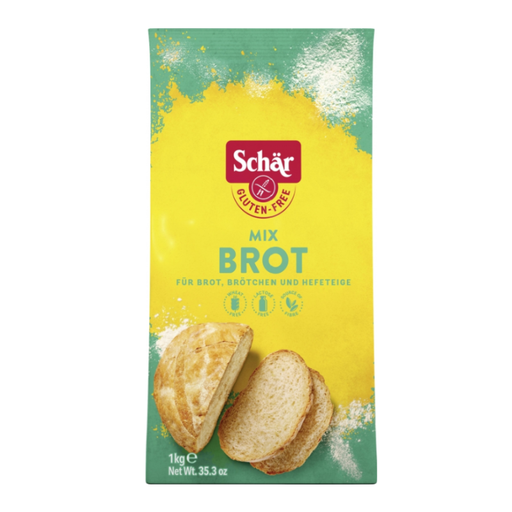
If you’d like to bake your own bread, here’s a baking mix labelled gluten-free. It isn’t a ready-made rye bread, so check the packaging and the texture of the baked loaf separately before offering it to your baby.
 No image available
Schär gluten-free bread baking mix, 1 kg
An option if you’d like to bake a bread alternative at home. The mix isn’t ready to eat. If your baby needs to follow a gluten-free diet for medical reasons, check the label and ingredients on the packaging. Before serving the baked bread as finger food, make sure its texture is right for your baby’s stage of development.
View at Joybuy
Frequently asked questions
Can real rye bread be gluten-free?
No. According to the German Coeliac Society, rye is one of the cereals that contain gluten. If gluten-free food is required, you’ll need a bread alternative that is labelled gluten-free and contains no rye.
How can I tell if bread is gluten-free?
Look for the “gluten-free” label and read the ingredients list for the specific product. Lebensmittelklarheit explains that, for a product to carry this claim when sold, it must contain no more than 20 mg of gluten per kg of food. A dark appearance or rye-like name isn’t a substitute for the label.
When can I offer bread as finger food?
Only once your baby is ready for complementary foods and can pick up and swallow solid food. Also check that the specific type and texture of bread you’re offering are right for your baby’s stage of development.
Is gluten-free bread enough for a complementary meal?
Bread alone isn’t a substitute for a varied complementary diet. The Gesund ins Leben network points out that it can be harder to ensure adequate nutrient intake when a baby is offered only solid foods. The BIÖG also describes baby-led weaning as a way to complement puréed meals.
What should I ask about bread sold loose?
Ask for allergen information about the specific bread before buying it. Lebensmittelklarheit points out that allergen information must also be provided for unpackaged foods. If a gluten-free diet is medically necessary, also ask specifically whether the bread on offer is labelled gluten-free.


