Conference organisers with a set catering quantity
When catering for a large number of guests, pack sizes and a portion format decided in advance make it easier to plan how much bread you’ll need.


For a conference buffet with limited set-up time, packaged rye bread is an obvious choice, provided the pack size and portion format suit the number of guests. Fresh bread needs to be served promptly, while frozen rye rolls require an oven and time to bake. Whichever option you choose, check the information on the bread you’re actually serving so you can provide accurate details to guests.
When catering for a large number of guests, pack sizes and a portion format decided in advance make it easier to plan how much bread you’ll need.
For short breaks, consider whether the bread can be served without any extra slicing or baking. Guests must still be able to access ingredient and allergen information. The German Chamber of Industry and Commerce also highlights this for catering businesses.
If you won’t know the final number of attendees until late on, you can put out a smaller quantity initially and keep some in reserve. ALDI Nord says sliced bread can be frozen in portions for later use.
First decide whether slices or individual rolls will work best for serving. You can then tailor the quantity, on-site preparation and information for guests to the specific type of bread.
Best when: you want to portion out packs in advance for a self-service buffet.
Bear in mind: Rye and wheat bread and wholemeal rye bread are different types of bread. The ingredients and portion format of the pack you choose are what matter.
Best when: you can buy the bread close to serving time and serve it promptly.
Bear in mind: Lidl’s description of its in-store bakery does not specify a particular rye bread, its ingredients or whether it is available in a particular store.
Best when: you want to serve individual rolls and have access to an oven.
Bear in mind: Allow time and staff capacity for baking. The product described by ALDI Nord was a special offer.
| Consideration | What to check when shopping | Who it matters most to |
|---|---|---|
| Planning quantities | Compare pack weight with the number of portions needed; treat rye and wheat bread and wholemeal rye bread as separate types. | If I’m catering for a large number of guests, I want to decide how much bread I need in advance without putting out more than necessary. This quantity planning is a priority for around 31% of consumers. |
| Quick serving | Check whether the bread is sliced or will need to be sliced or baked on site. | For a short conference break, I need bread that the available staff can serve quickly. Around 25% of consumers prioritise quick serving. |
| Ingredients and allergens | Read the label on the product you buy and keep the information available to guests when serving bread unpackaged. | If guests ask about ingredients, I need to be able to tell them about the bread actually being served. Clear information is the most important consideration for around 25% of consumers. |
| Flexible reserve | Plan smaller quantities to replenish the buffet; if you intend to store bread, check that it is suitable for freezing in portions. | If the number of guests varies, I want to be able to top up the bread rather than put it all out at the start. This flexibility takes priority for around 19% of consumers. |
These names refer to different types of bread and recipes. Pack size alone therefore doesn’t tell you whether two breads will meet the same buffet requirements.
Decide which type of bread and portion format you need, then compare the information for the specific products.
Rye is a gluten-containing grain. Depending on the product, other ingredients and precautionary allergen statements may also be relevant.
For guests who need to eat gluten-free, check the label on a separate alternative and keep it apart from the rye bread when serving.
In its 2024 guidance, the German Chamber of Industry and Commerce notes that catering businesses must make information about potential allergens in their products available to guests.
Record the details for the bread you’ll actually be serving before putting it out, and make them accessible to guests.
If you’re unsure how many guests will attend, bread left out in the open may dry out. Bread kept in reserve can instead be served as needed.
Put out a smaller quantity to start with. If you plan to freeze sliced bread for later, divide it into suitable portions and label the packaging.
Packaged wholemeal rye bread in a 500-g size.
Organic wholemeal rye bread in a 500-g pack.
Organic wholemeal rye bread with natural sourdough starter and wholemeal rye meal, according to EDEKA.
An in-store bakery range for bread you want to buy close to serving time.
Bauern-Schnitten sliced rye and wheat bread.
Organic wholemeal rye bread in a 375-g pack.
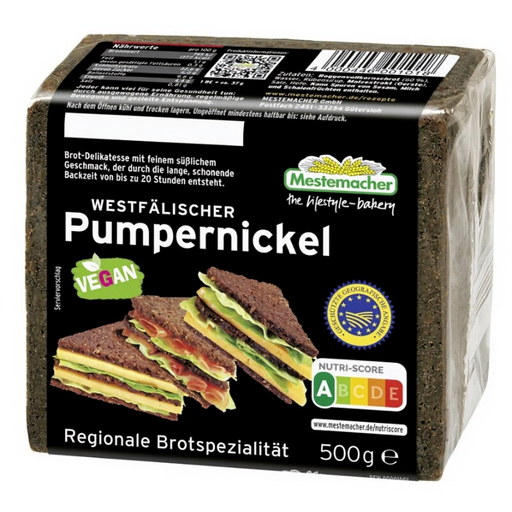
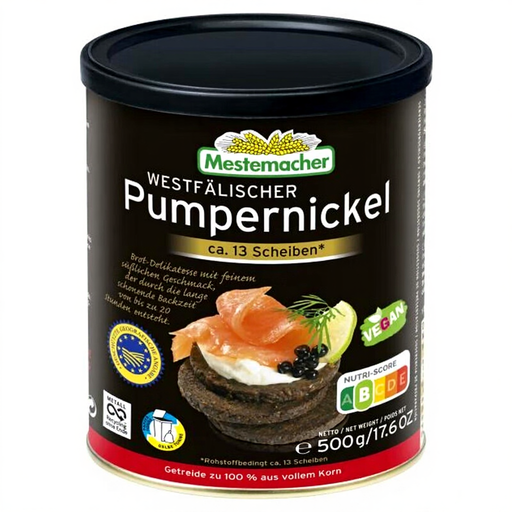
These two 500-g packs of pumpernickel are worth considering when planning to serve packaged rye bread. Check the pack you buy to make sure its portion format is suitable and to confirm the relevant allergen information.
 No image available
The 500-g pack is worth considering if you want to plan the amount of bread for your buffet in advance. Before serving, check the portion format and the ingredients and allergen information on the specific pack.
 No image available
This 500-g option is also worth considering when planning to serve packaged rye bread. For information to share with guests, refer to the ingredients and allergen details on the pack you actually buy.
No. Rye is a gluten-containing grain. If guests need to eat gluten-free, check the label on a separate alternative and plan to serve it separately.
For business catering, information about allergenic ingredients in unpackaged bread must be available to guests. The German Chamber of Industry and Commerce highlights this in its 2024 guidance on food labelling in the hospitality sector. Use the information for the products you actually serve.
Yes. Sliced bread can be frozen in portions so you can take out what you need. ALDI Nord recommends allowing bread to cool before freezing, then packing and dating the portions appropriately.
When serving the bread, refer to the label on the pack you actually bought. EDEKA expressly notes that information on a product page may differ from the details on the packaging.