Easter planners keeping an eye on pack size
You’re buying bread for breakfast, brunch or supper and want to match the pack size to the number of portions you’re planning.


For your Easter meal, choose the type of bread to suit how much you need and when you’re shopping. Wholegrain rye bread and rye blend bread are made to different recipes, while crispbread is a dry alternative rather than a soft loaf. If you’re buying bread for guests, check the ingredients and allergen information on the specific pack. How long bread stays fresh also depends on how you store it.
You’re buying bread for breakfast, brunch or supper and want to match the pack size to the number of portions you’re planning.
You’re specifically looking for wholegrain rye bread and check the product name and ingredients list rather than judging by its dark colour alone.
You’re shopping ahead of Easter and considering which bread will keep until mealtime, or whether crispbread would make a suitable dry alternative.
First, work out how much soft bread you’ll need for your meals and when you’ll be eating it. Then check the ingredients to decide whether wholegrain rye bread or rye blend bread is right for you. Crispbread is a different type of bread and can add another option.
| Criterion | What to check | Who it matters to |
|---|---|---|
| Pack size | Compare the pack weight with the number of portions you’ll need for your planned meals. | For breakfast and mealtimes, I want to buy enough slices without planning for much more bread than we’ll eat. Around 42% of consumers put choosing the right amount first. |
| Storage and type of bread | Plan when you’ll shop and eat the bread; store it in a dry place and freeze any leftovers in portions if needed. | If guests aren’t coming until Easter, the bread needs to be stored appropriately until then. For around 33% of consumers, planning ahead is the priority. |
| Ingredients and allergens | Check the wholegrain description and ingredients list; if you have allergies, check the labelling on the specific pack. | If you’re specifically looking for wholegrain rye or need to consider allergens when serving guests, take a closer look at the recipe. For around 25% of consumers, this is the most important buying requirement. |
These names refer to different recipes, so the ingredients and nutritional information for one product won’t necessarily apply to the other.
If wholegrain is important to you, check the product name and ingredients list. Don’t choose rye blend bread as wholegrain bread based on its dark colour alone.
Rye bread doesn’t stay fresh indefinitely. The Verbraucherzentrale gives rye bread a typical shelf life of four to six days.
Match the amount you buy to when you’ll eat it, and freeze the bread in portions if needed. If you can see mould, throw the whole loaf away.
Rye contains gluten. Other ingredients and possible traces vary from product to product, and wholegrain bread isn’t automatically suitable for everyone with an allergy.
For packaged bread, check the labelling on the specific pack. For loose bread, ask the bakery for its allergen information. According to the German Coeliac Society, conventional rye bread isn’t suitable for people with coeliac disease.
ALDI sells products including wholegrain rye bread and rye blend bread under the GOLDÄHREN brand. Availability depends on whether you’re in an ALDI Nord or ALDI SÜD area, and on the individual store.
REWE’s ja! range includes a 500-g pack of wholegrain rye bread for anyone looking for pre-sliced, packaged bread.
REWE Bio sells organic wholegrain rye bread in a 500-g pack. You can check the organic status and ingredients on the product label.
Lidl describes Unser Brot as a range of freshly baked products. This is a different way to shop from choosing packaged rye bread in advance.
EDEKA sells wholegrain rye crispbread under the GUT&GÜNSTIG brand. It’s a crunchy addition to a meal, not a like-for-like alternative to a soft rye loaf.
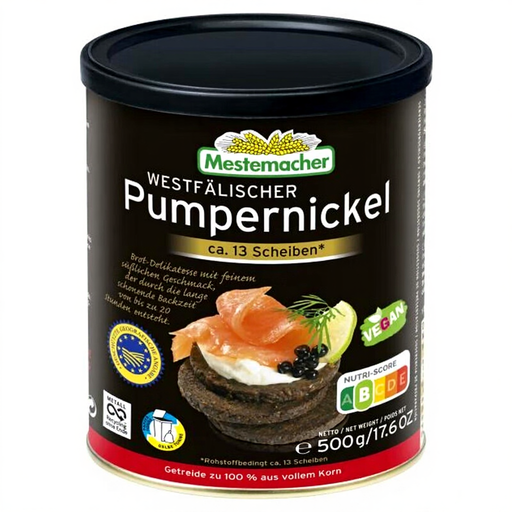
This pumpernickel bread is an option for your Easter meal if you’re planning to buy a 500-g pack. Check that the quantity and product information suit your guests’ needs.
 No image available
This 500-g pack is an option for an Easter meal if pumpernickel is one of the types of bread you’d like to serve.
Sesame is listed in the product information both as an ingredient and as a possible trace. If you have a sesame allergy, check the labelling on the specific pack.
No. Conventional rye bread isn’t suitable for people with coeliac disease: according to the German Coeliac Society, rye is a gluten-containing grain. If you need an alternative, look for a clear gluten-free label.
For packaged rye bread, read the ingredients list and allergen information on the specific pack. For loose bread, ask the bakery for its allergen information; details for a different bread aren’t enough to help you choose.
Store rye bread in a dry, dark place at room temperature, or freeze it in portions if needed. The Verbraucherzentrale gives rye bread a typical shelf life of four to six days; if you can see mould, throw the whole loaf away.