Households doing their first food shop
If you’re stocking up on food for the first time, it helps to work out how much bread you’ll need for your planned meals before choosing a pack.


For your first food shop, rye wholemeal bread is a good choice if you specifically want wholemeal; mixed rye bread isn’t automatically wholemeal. Choose a pack size that suits how much you’ll eat, and check the information on the specific pack if you have allergies.
If you’re stocking up on food for the first time, it helps to work out how much bread you’ll need for your planned meals before choosing a pack.
If you specifically want wholemeal bread, check the product name and compare the fibre content per 100 g in the nutritional information.
If you eat bread slowly, pack size and storage matter, so any opened slices don’t go off.
First, decide whether you want wholemeal bread and how much you’re likely to eat. Then think about how you’ll store any bread once the pack is open.
| Consideration | What to check when buying | Who it matters most to |
|---|---|---|
| How much to buy | Check the pack weight against the meals you have planned. | For my first shop, I want enough bread for my meals without buying more than I need. Getting the quantity right is a priority for around 42% of consumers. |
| Wholemeal | Look for the words “wholemeal bread” and compare the fibre content per 100 g. | I specifically want wholemeal bread and want to compare the nutritional information of different products. Wholemeal is the main consideration for around 33% of consumers. |
| Storage | Read the pack instructions and consider whether you can freeze slices in portions. | If I eat bread slowly, I want to stop any opened slices from going off. Storage is the priority for around 25% of consumers. |
The colour of bread isn’t a reliable way to tell whether it’s labelled as wholemeal. The German Nutrition Society points to the product description “wholemeal” as the key indicator.
Check the product description, ingredients list and fibre content per 100 g in the nutritional information.
A large pack isn’t right for every small household. The German Consumer Advice Centre says rye bread typically keeps for four to six days, although storage and the specific product make a difference.
Choose a pack size that suits you, or freeze slices in portions. If you see any mould, throw away the whole loaf.
Rye contains gluten, as the German Coeliac Society explains. Other ingredients and allergen warnings vary from one bread to another.
For packaged bread, read the information on the specific product. If you’re buying loose bread from an in-store bakery, ask to see the allergen information for that particular product before you buy.
ALDI Nord and ALDI SÜD sell packaged breads under the GOLDÄHREN brand, including products with different descriptions such as “Volles Korn” and “Bauernschnitten, Roggen”.
This organic rye wholemeal bread from ALDI SÜD’s own brand is described as a 375-g pack.
REWE sells a 500-g pack of rye wholemeal bread under its ja! brand.
The GUT&GÜNSTIG rye wholemeal bread described here comes in a 500-g pack.
According to Lidl Deutschland, “Unser Brot” is its own brand of bread and baked goods from the in-store bakery.
This selection features two packaged Mestemacher breads for your first food shop: Pumpernickel in a 500-g pack and walnut wholemeal bread in a 250-g pack. The right choice depends on how much you’ll eat and whether the ingredients in each type of bread suit you.
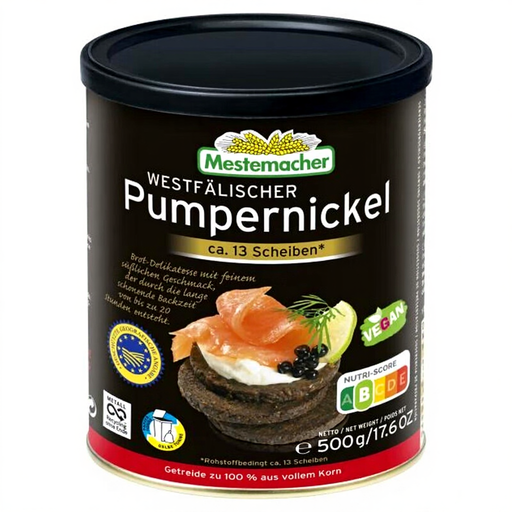 No image available
The 500-g pack could suit you if it matches how much bread you plan to eat. Check the ingredients and allergen information on the specific pack.
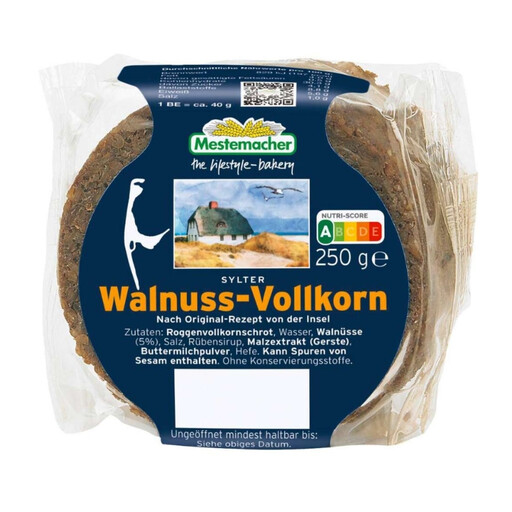 No image available
The 250-g pack is a good fit if you’re planning to keep a smaller amount in stock. The product name describes it as walnut wholemeal bread; check the full ingredients and allergen information on the pack.
Look for the description “rye wholemeal bread” rather than relying on the colour alone. The German Nutrition Society explains that the wholemeal description is what matters; the ingredients list and nutritional information can then help you compare specific products.
Yes, rye contains gluten. The German Coeliac Society specifically lists rye among the cereals that contain gluten, and a wholemeal description doesn’t change that.
Ask to see the allergen information for the specific unwrapped product before choosing it. If the information on the shelf isn’t clear, ask a member of staff about the ingredients and allergen information for that particular bread.
Follow the storage instructions on the pack. If you want to keep bread for longer, freeze slices in portions as needed. The German Consumer Advice Centre generally recommends storing bread at room temperature in a dry place away from light, but instructions for a specific product may differ. If you see any mould, throw away the whole loaf.