People who plan their lunches ahead
If you’re buying bread for several lunch breaks, clear wholegrain labelling, the fibre content and a pack size that suits how much you’ll eat can all help you choose.


If you’re preparing lunch for several days working from home and specifically want wholegrain, choose rye bread clearly labelled as wholegrain. Check the ingredients, fibre per 100 g and allergen information too. Mixed rye bread may work well for sandwiches, but it isn’t automatically wholegrain. Fresh bakery bread is a better choice if you plan to eat it soon and want to choose the specific variety in store.
If you’re buying bread for several lunch breaks, clear wholegrain labelling, the fibre content and a pack size that suits how much you’ll eat can all help you choose.
If toppings and easy preparation are your priorities, check the type of bread, its rye content and the size of the slices. Mixed rye bread isn’t the same as wholemeal rye bread.
If you’d like a fresh crust and plan to eat the bread soon, a bakery variety could be a good option. Check the specific variety and whether it’s available at your local store.
A good fit if: You’re specifically looking for wholegrain bread for several planned meals.
Consider: Its denser, more robust texture needs to suit your taste and chosen toppings.
A good fit if: You want bread for sandwiches and wholegrain isn’t your main priority.
Consider: Depending on the recipe, the bread may also contain wheat. Check the rye content and whether it’s labelled wholegrain separately.
A good fit if: You prefer a fresh crust and plan to eat the bread soon.
Consider: Ingredients and rye content vary by variety. If you’re planning several lunches, make sure you buy the right amount.
| Criterion | What to check | Who it matters to |
|---|---|---|
| Wholegrain and fibre | Look for clear wholegrain labelling and check the fibre per 100 g. | If I specifically want wholegrain for my bread-based meal, a dark colour alone isn’t enough to tell me. For around 33% of consumers, wholegrain would be the most important factor when buying. |
| Flavour and toppings | Compare the type of bread, stated rye content and slice size. | I want bread that’s easy to top and tastes good with my chosen filling. Around 27% of consumers would prioritise this. |
| Freshness and storage | Choose a pack size to suit how much you plan to eat; consider freezing portions if you need to keep the bread for longer. | I either want to eat fresh bread soon or plan several lunch breaks without another trip to the shops. For around 20% of consumers, this would be their top priority. |
| Ingredients and allergens | Read the current ingredients list, allergen information and nutritional values on the specific pack. | If I need to avoid certain ingredients, the labelling for the specific variety is what matters to me. Around 20% of consumers would consider ingredients and allergens their main reason for buying. |
The colour, seeds on the crust and rustic-sounding names don’t prove that a bread is wholegrain. The German Nutrition Society points out that it needs to be explicitly labelled “wholegrain”.
Look for this label, then compare the ingredients and fibre per 100 g.
Mixed rye bread may also contain wheat. For example, REWE states that its Urväter Schnitten contains 32% rye; wheat flour is also part of the recipe.
If the grain composition matters to you, compare the exact bread description, stated percentages and ingredients list.
Even bread bought for later can dry out or go mouldy. The consumer advice centre recommends storing bread appropriately; if you see mould, you should throw away the entire affected loaf.
Choose an amount that suits your planned lunches and freeze any slices you won’t need soon.
Rye contains gluten. Other ingredients and precautionary allergen statements depend on the individual bread; a brand or range name won’t tell you what you need to know.
If you need to avoid certain ingredients, read the current labelling on the specific pack.
A point of reference for clearly labelled wholegrain rye bread made with natural sourdough.
A point of reference for sliced mixed rye bread rather than wholegrain rye bread.
ALDI Nord and ALDI SÜD each stock their own wholegrain rye options.
A bakery range for people who want to buy fresh bread for their lunch break.
This selection includes two types of pumpernickel for bread-based meals, plus a walnut wholegrain bread as another option for sandwiches. The right choice depends on the type of bread you want and the information on the individual pack.
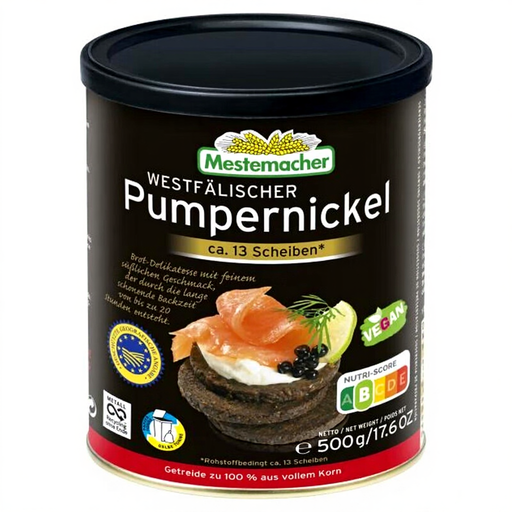 Image unavailable
A good choice for make-ahead lunches if pumpernickel goes well with your toppings. If you have allergies, check the current pack: information about sesame and milk isn’t consistent.
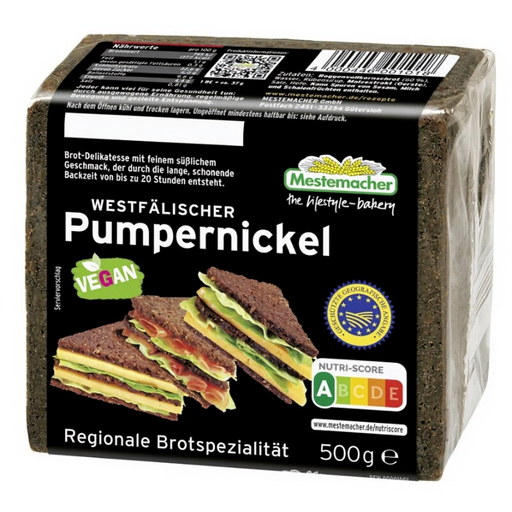 Image unavailable
For sandwiches if you’re after Westphalian pumpernickel. If wholegrain labelling is important to you, check the pack; rye contains gluten.
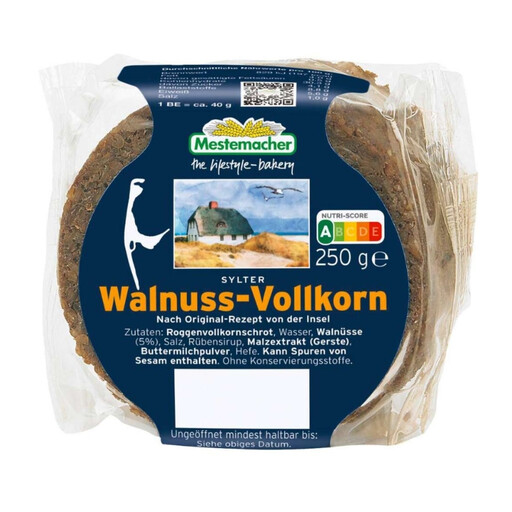 Image unavailable
A good option for a sandwich if you’d like bread with walnuts. Check the rye content, slice size and full allergen information on the pack.
Look for clear wholegrain labelling and read the ingredients list. A dark colour or seeds on the crust aren’t enough, as the German Nutrition Society also explains in its guidance on choosing wholegrain products.
No, rye contains gluten. If you need to avoid gluten or other ingredients, check the current packaging for the specific bread, including allergen information and precautionary statements.
Store bread somewhere dry and away from light, and freeze any slices you won’t eat soon. The consumer advice centre points out that breads with a high rye, wholegrain or cracked-grain content tend to stay fresh for longer; throw away the whole loaf if you can see mould.
It shows which ingredients are in the bread and the order in which they’re listed. According to the Federal Office of Consumer Protection and Food Safety, ingredients are listed in descending order by weight. To check the rye content, also look for a stated percentage.