For your first food shop, it’s worth choosing rye bread to suit the meal you have planned. Clearly labelled wholemeal bread is a good choice for regular meals, sourdough rye bread goes well with savoury toppings, and crispbread makes a crunchy addition. Then check the ingredients, nutritional information and allergens for the specific product, as well as its availability locally.
Which bread to choose for your needs
If wholegrain is a priority
If bread regularly features on your shopping list, look for an explicit wholemeal label and compare the fibre content per 100 g. According to the German Nutrition Society, a dark colour alone is not proof that bread is wholemeal.
If you’re planning a savoury meal
For cheese or spreads, look for a rye bread whose ingredients and sourdough content suit your taste. Crispbread is another option if you specifically want a crunchy base.
If you need to check ingredients and allergens carefully
The labelling on the individual loaf matters more than its general type. For packaged bread, read the label; for loose bread, ask for allergen information.
What to look for when buying
First decide whether you want bread for regular meals, to accompany a special savoury meal or as a crunchy addition. Then compare only products whose labelling matches what you’re looking for.
| What to consider |
What to check when buying |
Who it matters to |
| Wholegrain and fibre |
Look for the word “wholemeal” and compare the fibre content per 100 g. The German Nutrition Society says bread colour does not prove that it is wholemeal. |
When I buy bread regularly, I want to be able to identify wholemeal bread from its labelling, rather than guess from its colour. This is a top priority for around 33% of consumers. |
| Flavour to suit the meal |
Check the ingredients list and details of the rye and sourdough content. If choosing between a loaf and crispbread, consider their different textures too. |
For a special meal with savoury toppings, I look for a rye bread that suits my taste. This is a priority for around 25% of consumers. |
| Planning your first shop |
Check which varieties are available locally, the pack size and the best-before date. The range shown online may vary by location. |
On my first shop, I want to find a suitable pack without planning my meals around a particular product listing online. This is a priority for approximately 25% of consumers. |
| Ingredients and allergens |
Read the specific ingredients and allergen information; for loose bread, ask at the point of sale. Check any precautionary allergen statements for the product in question. |
If I need to avoid certain ingredients, I need clear information about the individual loaf before deciding. Checking ingredients and allergens is the main priority for around 17% of consumers. |
Common shopping misconceptions
-
Assuming dark bread is always wholemeal
Colour doesn’t reliably show whether wholemeal flour has been used. The German Nutrition Society highlights this point.
Look for an explicit wholemeal label and, for packaged products, compare the nutritional information per 100 g.
-
Judging allergens by the product name alone
Rye is a gluten-containing grain. Other allergenic ingredients and possible traces vary from product to product. According to the Bavarian State Office for Health and Food Safety, mandatory allergen labelling does not apply generally to unintended traces.
Read the label on the specific pack. If you’re buying loose bread, ask for allergen information before deciding.
-
Assuming an online listing guarantees in-store availability
The range and product details may vary by location and from the information on the actual pack. EDEKA explicitly notes that its online product information may differ from the packaging.
Check the variety available in store, its labelling and its best-before date.
-
Choosing “premium” without setting your own criteria
On its own, the term doesn’t tell you whether a bread meets your requirements for wholegrain, ingredients or texture.
Before you shop, decide whether your meal calls for labelled wholemeal bread, sourdough rye bread or a crunchy addition.
Brands and products to consider
REWE Regional
Ur-Eifeler rye bread is one example of a packaged rye bread marketed as a regional product in REWE’s range.
- For this 400-g loaf, REWE lists a rye content of 58%, along with the ingredients and nutritional information.
- The specific bread contains wheat gluten and barley malt, among other ingredients. Check the pack if these are relevant to your choice.
Harry
Harry rye bread, listed by REWE, can be compared with other packaged breads using its published ingredients and nutritional information.
- For this variety, REWE lists rye flour and natural sourdough, as well as 8 g of fibre per 100 g.
- The product may contain traces of sesame. Always check the specific pack when shopping.
NUR NUR NATUR
The ALDI SÜD brand offers packaged organic wholemeal rye bread for anyone specifically looking for a wholemeal option.
- For the listed bread, ALDI SÜD gives a pack size of 375 g and a fibre content of 9 g per 100 g.
- Check which product is available at your local store and read the current information on its packaging.
LIDL – Unser Brot
The in-store bakery is worth considering if you’d like to choose freshly baked bread for your planned meal.
- Lidl says its baked goods are freshly baked several times a day and that natural rye sourdough is used in some of its range.
- This description of the range doesn’t specify the rye content, ingredients or allergens of any individual loaf. Ask for the details at the point of sale.
Wendl GmbH Konditorei & Bäckerei
The bakery makes a rye bread called “Roggstar”, which you could look for at your local baker’s.
- Wendl describes the bread as robust and aromatic; this is the supplier’s own description of its flavour.
- If they’re important to your decision, ask for the ingredients and allergen information for the specific bread on offer.
Rye bread and crispbread at Joybuy
This selection includes two pumpernickel breads for topped meals and two rye crispbreads for a crunchy addition. Don’t compare bread and crispbread by the rye label alone: their different textures should suit the meal you have planned.
 No image available
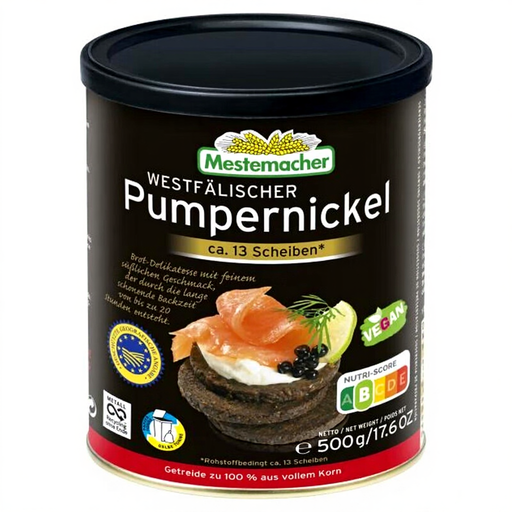
Mestemacher Westphalian Pumpernickel 500 g
A pumpernickel option if you’re planning savoury meals with toppings for your first bread shop.
Pack size: 500 g. If you have a milk allergy, check the labelling on the specific pack particularly carefully.
View at Joybuy
 No image available
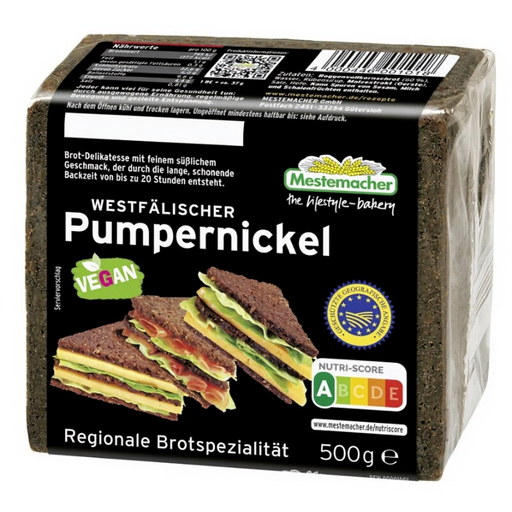
Mestemacher Traditional Westphalian Pumpernickel 500 g
A good option if you’re planning pumpernickel for topped bites or savoury snacks.
Pack size: 500 g. If you have an allergy, check the pack for information about possible traces of sesame and soya.
View at Joybuy
 No image available
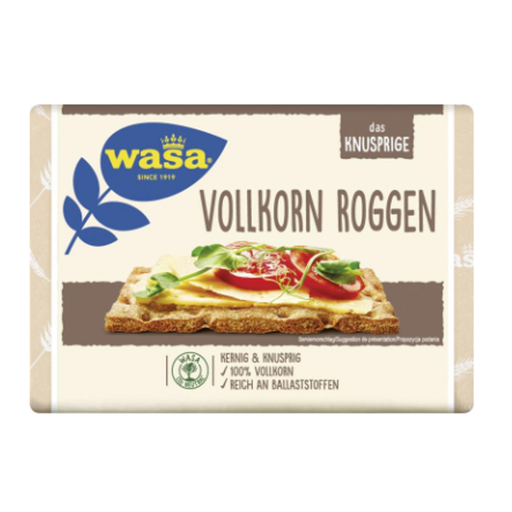
Wasa Whole Grain Rye crispbread 260 g
A crunchy wholegrain rye addition for light meals or savoury toppings.
Pack size: 260 g. Crispbread has a different texture from a loaf; if you have an allergy, check the pack for information about possible traces of milk and sesame.
View at Joybuy
 No image available
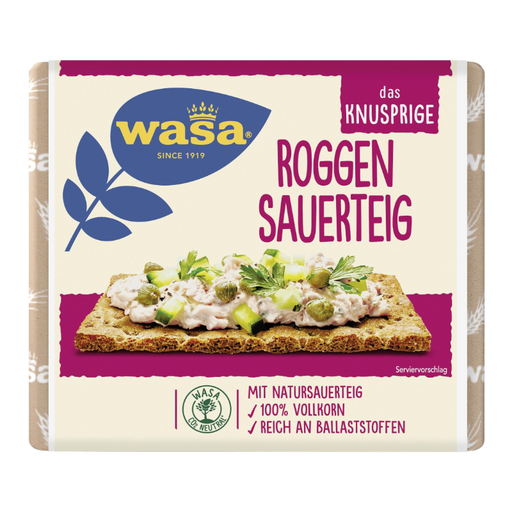
Wasa Sourdough Rye crispbread 235 g
A crunchy sourdough rye option if you’re planning small savoury meals rather than a topped loaf.
Pack size: 235 g. Read the ingredients and allergen information on the specific pack before buying.
View at Joybuy
Frequently asked questions
Is ordinary rye bread suitable for a gluten-free diet?
No. Ordinary rye bread is not gluten-free because rye contains gluten. Check the ingredients and allergen information for any food you choose instead.
How can I identify wholemeal bread when shopping?
Look for the explicit “wholemeal” label on the product. The German Nutrition Society points out that a dark colour alone is not a reliable indication that bread is wholemeal.
What should I check on packaged rye bread?
In particular, read the ingredients list, allergen information, best-before date and nutritional information on the pack. The Federal Ministry of Agriculture, Food and Home Affairs says that manufacturers must include an ingredients list and best-before date on packaged foods.
Is online information enough to check ingredients and allergens?
Use online information to help you shortlist products, then check the specific pack before buying. EDEKA notes that product information on its website may differ from the packaging. For loose bread, ask for allergen information at the point of sale.


