Planning hearty sandwiches
If you’re preparing several snacks for the week and want to add generous toppings, check the size and thickness of the slices, as well as whether any are broken, on the pack you’re buying.


For hearty sandwiches in your weekly shop, sliced wholemeal rye sourdough is a good place to start. You can’t tell from the bread’s name alone whether the slices are thick enough for generous toppings. Check the slices on the pack, then compare the ingredients and storage instructions with your plans for the week.
If you’re preparing several snacks for the week and want to add generous toppings, check the size and thickness of the slices, as well as whether any are broken, on the pack you’re buying.
If you’re specifically looking for wholemeal rye, check the ingredients list rather than just the front of the pack. REWE Bio and EDEKA Bio list rye wholemeal meal and natural sourdough in the ingredients for their wholemeal rye breads.
If you need a pack to last several days, check the storage instructions for after opening. The German Federal Centre for Nutrition notes that rye and wholemeal breads generally stay fresh for longer. Sliced bread still needs to be stored properly, and checked for visible signs of spoilage.
For hearty sandwiches, first check the slices themselves. Then compare the recipe, pack size and storage instructions with the days you plan to eat the bread.
| What to consider | What to check when buying | Who it matters to |
|---|---|---|
| Slices for hearty toppings | Check the side view of the pack, the visible thickness of the slices and whether any are broken. An explicitly stated slice thickness is useful when shopping online. | If I add plenty of toppings to a sandwich, I don’t want the slice to break as I put it together. That’s why around 36% of consumers put slice sturdiness first. |
| Stays fresh for several days | Check the best-before date, the condition of the pack and the storage instructions for after opening. You can freeze any slices you won’t need soon. | I want my bread to still be good to use later in the week. For around 29% of consumers, keeping fresh for several days is the priority. |
| Ingredients and allergens | Check the types of grain in the ingredients list, as well as highlighted allergens and any ‘may contain’ warnings on the pack you’re buying. | I want to buy wholemeal rye or need to avoid certain ingredients, so the words ‘rye bread’ aren’t enough. Around 21% of consumers prioritise ingredients and allergens. |
| Pack size and availability | Compare the pack weight and, where stated, the number of slices with what you need for the week. Check that it’s available at the shop you plan to visit. | I want to buy the right amount on my planned shop without relying on a particular range being stocked. For around 14% of consumers, this is the main consideration when planning their shop. |
Rye bread can be a mixed-grain loaf. The Lieken Urkorn Roggenbäcker listed by REWE contains wheat wholemeal flour and wheat protein as well as wholemeal rye flour.
If you’re looking for a recipe with a particularly high proportion of rye, compare the product name with the ingredients list.
Wholemeal rye and sourdough describe the recipe, not the thickness of the slices. The slice itself is what matters if you’re adding plenty of toppings.
Look at the slices in the pack or check whether the slice thickness is stated explicitly.
The German Federal Centre for Nutrition notes that sliced, packaged bread can be particularly prone to mould if stored somewhere warm and humid.
Follow the instructions on the pack, store the bread in a dry place and freeze any slices you won’t need soon. If you see mould, throw away the whole loaf.
Rye is a gluten-containing grain, as explained by the German Federal Ministry of Agriculture, Food and Home Affairs in its guidance on allergen labelling. An additional warning about possible traces of wheat does not change this.
If you need gluten-free food, don’t choose ordinary rye bread. Instead, check the labelling on a product that is explicitly intended to be gluten-free.
The Fränkisch-Vollkornbrot listed by REWE is a packaged wholemeal rye bread for shoppers looking for a rye-rich recipe.
The own-brand wholemeal rye bread is an option if you’re looking for rye wholemeal meal and natural sourdough in the ingredients list.
The wholemeal rye bread described is worth considering if the specific product is available at the shop you visit.
The Roggenbäcker listed by REWE is a wholemeal rye mixed-grain bread for shoppers who are happy to have wheat ingredients as well as rye.
The organic wholemeal rye bread listed by ALDI SÜD comes in a 375 g pack.
This selection features bread for hearty topped snacks. If you’re specifically looking for thickly sliced rye bread, check both the rye ingredients and the slice thickness on the pack you’re considering.
 No image available
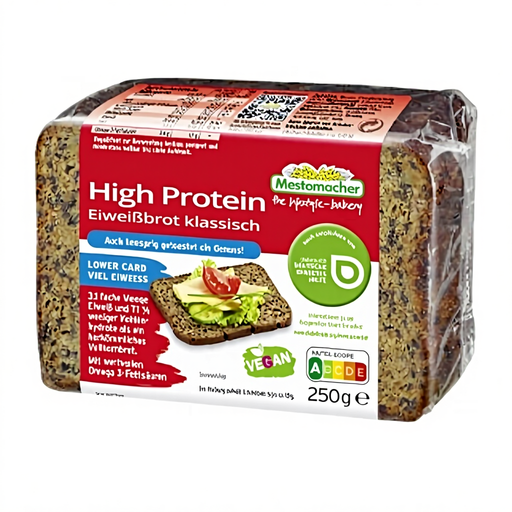
This bread could work for hearty topped snacks if the ingredients and slice size meet your needs. Check both on the pack you’re buying.
Pack size: 250 g.
The words ‘rye bread’ or ‘wholemeal’ alone don’t tell you how thick the slices are. Check the side view of the pack and the slices you can see, or look for an explicit statement about slice thickness when shopping online.
First, follow the storage instructions on the pack and keep the bread somewhere dry. For longer-term storage, the German Federal Centre for Nutrition recommends freezing fresh bread in portions, sliced. If you see mould, throw away the whole loaf.
No. Ordinary rye bread isn’t gluten-free: according to the German Federal Ministry of Agriculture, Food and Home Affairs, rye is a gluten-containing grain. If you need gluten-free food, look for products that are explicitly labelled as such.
Yes, if any of the ingredients listed could affect you, check the warnings on the pack you’re actually buying. The products described differ in their possible traces of wheat, sweet lupin, soya, sesame and tree nuts. Rye as a gluten-containing ingredient is a separate consideration.