Fans of large rye bread slices
You want to toast elongated slices without having to trim them, so you check the slot dimensions first. TÜV SÜD particularly recommends long-slot toasters for larger or elongated slices of bread.


Measure the length and thickness of your rye bread slices before choosing between a single long slot and a model with two long slots. A long-slot toaster is an obvious choice for elongated slices; two long slots can toast more bread at once when you have several guests, but they take up more worktop space. Check the stated capacity for long slices specifically – “four slices of toast” does not automatically mean that four long rye bread slices will fit.
You want to toast elongated slices without having to trim them, so you check the slot dimensions first. TÜV SÜD particularly recommends long-slot toasters for larger or elongated slices of bread.
You want to serve several portions in quick succession, so you compare how many slices of your bread will actually fit in one cycle. According to TÜV SÜD, models for four slices can save time if you regularly make toast for several people.
You only toast rye bread for visitors occasionally, and weigh up worktop space, cleaning and ease of use against extra capacity.
| Consideration | What to check when buying | Who is it particularly relevant to? |
|---|---|---|
| Slice fit | Compare the slot length and width with your own slices, and check the permitted thickness in the instruction manual. | If I want to toast elongated rye bread slices without trimming them, fit is essential. Around 36% of consumers would consider it their top buying priority. |
| Capacity for guests | Distinguish between the stated capacity for long slices and the capacity for standard toast, and consider how much worktop space it needs. | If you want several portions to be ready at around the same time, the actual capacity per cycle matters. Around 29% of consumers would put capacity for guests first. |
| Browning and controls | Check the browning control and stop button; keep an eye on the first cycle and adjust as needed. | If I toast different slices one after another, I want to control the browning and be able to stop the cycle if needed. Around 21% of consumers would name this level of control as their top priority. |
| Space and cleaning | Check the appliance dimensions and whether there’s a nearby socket where you plan to put it; look for a removable crumb tray. | If the toaster stays on the worktop even when I’m not having visitors, I need a suitable spot for it and an easy way to clear out the crumbs. Around 14% of consumers would prioritise space and cleaning. |
Capacity depends on the shape of the slices. For the Bueno Pro, WMF distinguishes between four standard slices of toast and two long slices of bread.
Check which capacity the manufacturer specifically states for long slices.
The Bueno Pro double long-slot toaster is designed for households that want to cater for elongated slices and several portions.
The AT 9341 is a double long-slot toaster that can toast several slices per cycle.
The PurShine HT 1610 is a long-slot model for elongated slices and smaller quantities.
The TA 3802 is a four-slice long-slot toaster with a removable bun warmer.
The products below include wide-slot models and two- and four-slice options, including long-slot toasters. Check your rye bread slice dimensions against the details for the specific appliance before planning its capacity for guests.
 No image available
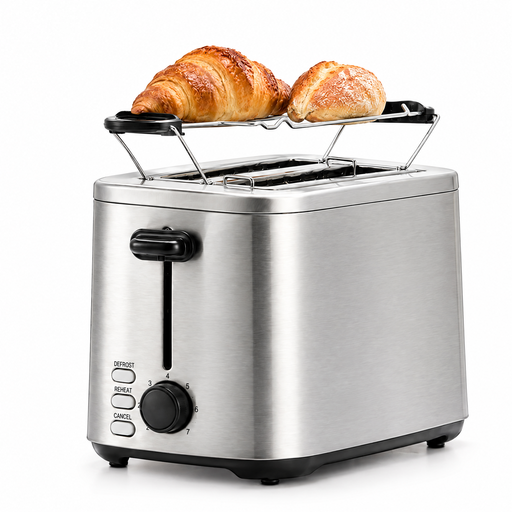
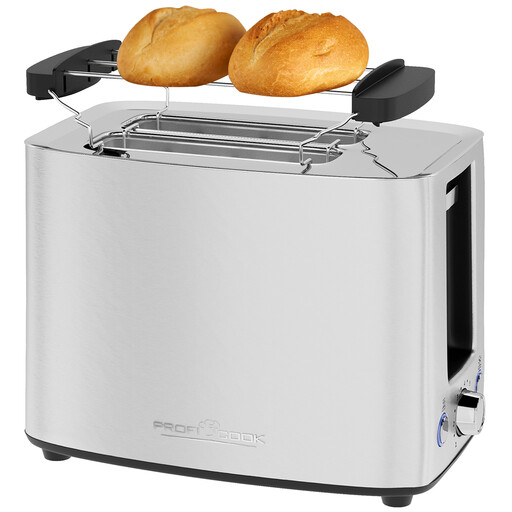
A good option if you want to toast thicker slices and use a rack as well.
The title lists 800 W and seven browning settings. The description mentions wide double slots, a removable crumb tray and a rack for warming rolls or croissants.
The casing is described as uncoated stainless steel.
 No image available
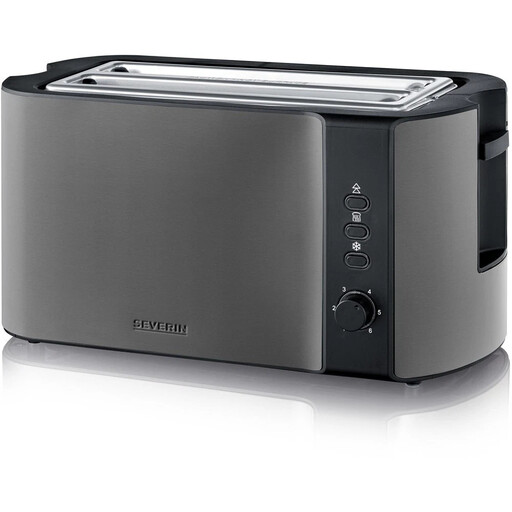
Could be suitable for making several portions per cycle, provided your slices fit in the long slots.
The product details list two long slots and capacity for up to four slices of bread. They also mention 1400 W, bread centring, adjustable browning, defrost and reheat functions, and a removable crumb tray.
 No image available
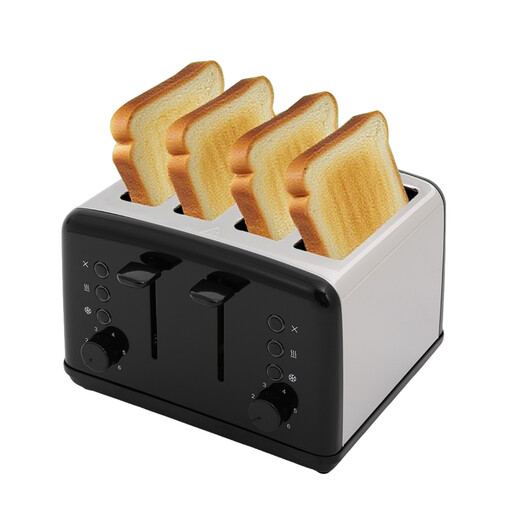
Could be a good fit if you want to toast several slices at once and the stated slot width suits your bread.
The product details list 36 mm-wide slots, six browning settings, and defrost, reheat and cancel functions. A removable crumb tray and high-lift lever are also mentioned.
The EU plug is specified for 220–240 V.
 No image available
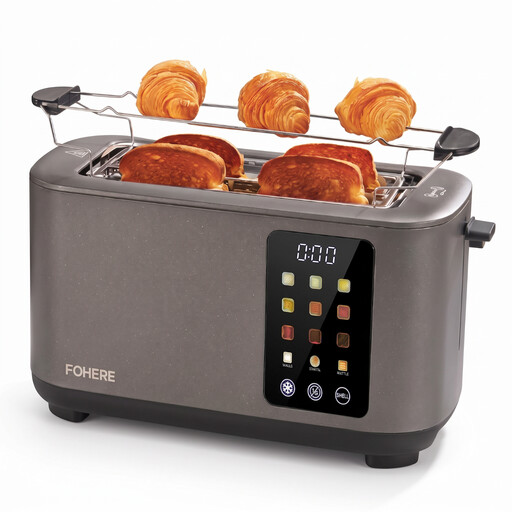
Could be worth considering for elongated slices and several portions; check whether your bread will actually fit.
The title lists long slots, capacity for four slices and 1400 W. The description mentions extra-wide slots, nine browning settings, three bread modes, defrost, reheat and stop functions, and a removable crumb tray.
A touchscreen with LCD display and a pull-out bun warmer are also listed.
 No image available
Could be a good fit if you toast thicker slices and usually only need to toast two at a time.
The product details list capacity for two slices and 40 mm-wide slots. They also specify continuously adjustable browning, a centring function, defrost and reheat functions, and quick stop.
A crumb tray, cable storage, non-slip feet and a removable bun warmer are also listed.
Not necessarily. For the Bueno Pro, WMF distinguishes between four standard slices of toast and two long slices of bread. Compare your slice dimensions with the details for the specific appliance.
Measure the length and thickness of your usual slices, then compare them with the slot dimensions and the model’s instruction manual. The manufacturer’s guidance on permitted slice thickness applies only to that specific appliance.
Start with a moderate browning setting and adjust subsequent cycles rather than toasting the bread heavily or letting it burn. The Verbraucherzentrale explains that acrylamide can form when foods high in carbohydrates are heated at high temperatures.
Unplug the toaster before cleaning and let it cool completely. For the AT 2591, Severin recommends emptying and replacing the crumb tray afterwards; follow the relevant instruction manual for other appliances.
No. TÜV SÜD describes the GS mark as voluntary. New mains-powered appliances covered by the relevant EU low-voltage regulations must meet their safety requirements and carry the CE marking; CE is not an independent GS test.