What should you look for when buying?
First decide whether wholegrain or a milder flavour matters more to you. Then check the exact recipe and choose a quantity that suits your lunches.
| What to consider |
What to check when buying |
Who it matters most to |
| Wholegrain and fibre |
Look for the term “wholemeal bread” and check the ingredients list. Compare fibre figures only when they use the same basis, such as per 100 g. |
If I specifically want my lunch bread to contain wholegrain, a dark colour isn’t enough. Around 37% of consumers make this their main priority. |
| Milder flavour |
For mixed-grain breads, compare the cereals listed and their order in the ingredients list. Don’t treat sourdough as proof of wholegrain content. |
A strong-tasting, dense slice would be left uneaten at my lunch; I’d rather ease into it with a mixed-grain loaf. For around 27% of consumers, this flavour compromise comes first. |
| Staying fresh for several days |
Choose a pack size and sliced or unsliced format that suit how much you’ll eat, and plan which portions you might freeze. |
I don’t eat a whole loaf every day and want to store the remaining slices sensibly. Planning ahead is the main priority for around 18% of consumers. |
| Ingredients and labelling |
Check the ingredients, highlighted allergens and nutritional information for the specific loaf. For unwrapped bread, ask about allergen information before buying. |
If the bread contains seeds, walnuts or different cereals, I need to know what’s in it before choosing. Around 18% of consumers give this check the highest priority. |
Notable brands and ranges
These examples show different types of bread and product details. When choosing, it’s the labelling on the individual loaf that matters, not just the brand.
REWE Beste Wahl / REWE Bio
REWE offers a variety of packaged breads under these ranges, including loaves made with rye and wheat.
- For its REWE Beste Wahl Balance bread, REWE lists wheat flour, rye sourdough, rye flour and seeds as ingredients. This makes it easier to check the recipe of this particular product than to judge it by its name.
- Don’t assume the ingredients in one REWE loaf apply to other products in these ranges. Check the current packaging, particularly if the product name and other details seem inconsistent.
EDEKA Bio
One product in this range is sold as EDEKA Bio wholemeal rye bread in a 500-g pack.
- For this product, EDEKA24 lists ingredients including natural sourdough made with cracked wholemeal rye, cracked wholemeal rye, water, salt and yeast.
- The product information mentions possible traces of nuts, sesame and soya. If you have allergies, always check the labelling on the specific pack.
NUR NUR NATUR (ALDI SÜD)
ALDI SÜD offers an organic wholemeal rye bread in this range in a 375-g pack.
- The name of this specific product makes its bread type clear, making it easier to compare with other wholemeal rye breads.
- To compare nutritional values, make sure they use the same basis. Check the nutrition table on the current packaging.
LIDL – Unser Brot
Lidl describes “Unser Brot” as a bakery range, with products baked fresh several times a day.
- The range may be a good option if you’re planning to eat the bread soon and freshly baked bread matters to you.
- Freshly baked doesn’t automatically mean wholemeal. Check the ingredients and allergen information for the bread you choose.
Rye bread and other bread options at Joybuy
The two pumpernickel products are a good fit if you’re looking for a more robust rye bread for your lunch break. The walnut wholegrain bread is another option if you want to check the ingredients and type of grain against your preferences; it isn’t the same as a mild rye and wheat loaf.
 No image available
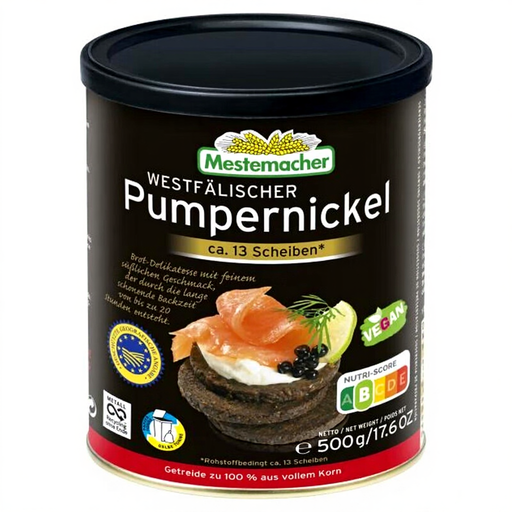
Mestemacher Westphalian Pumpernickel, 500 g
A good option if you’re specifically looking for pumpernickel rather than a mild mixed-grain loaf for lunch.
Pack size: 500 g. If you have a milk allergy, check the current packaging before buying, as the product information about milk varies.
View at Joybuy
 No image available
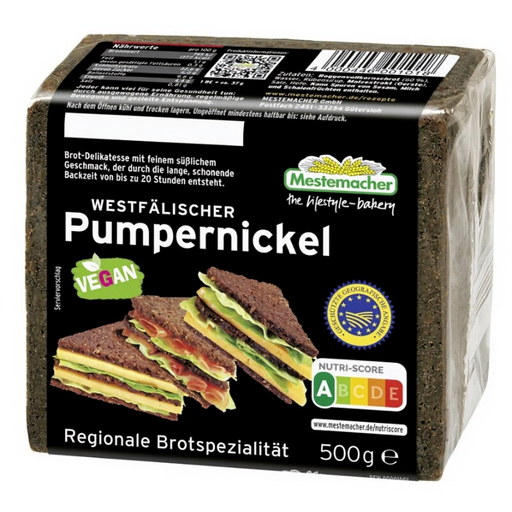
Mestemacher Traditional Westphalian Pumpernickel, 500 g
Worth considering for a pumpernickel lunch break if you’re not looking for a mild rye and wheat option.
Pack size: 500 g. If you have allergies, check the labelling on the current pack, particularly the information about cereals and possible traces.
View at Joybuy
 No image available
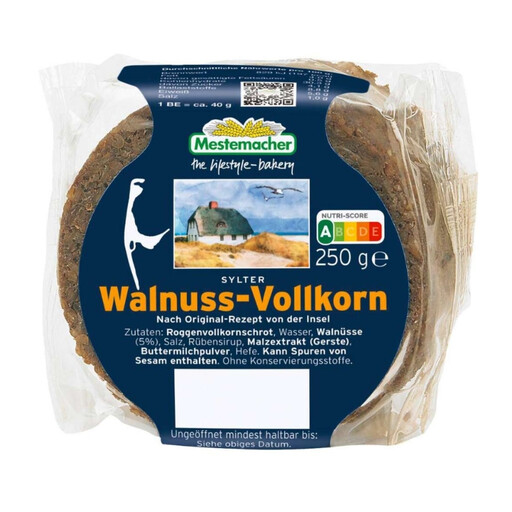
Mestemacher Sylt Walnut Wholegrain Bread, 250 g
A smaller wholegrain option with walnut in the product name, if you don’t want a 500-g pack for your lunches.
Pack size: 250 g. If you’re looking for a particular type of rye bread, check the cereals in the current ingredients list. If you have allergies, the allergen labelling matters too.
View at Joybuy
Questions about rye bread for your lunch break
How can I tell if bread is wholemeal?
Look for the term “wholemeal bread”, not the colour of the crumb. According to the German Nutrition Society, at least 90% of the grain used in wholemeal bread must be wholemeal flour or meal. Check the ingredients list for the specific product.
Is rye mixed-grain bread automatically wholemeal?
No. “Rye mixed-grain bread” and “wholemeal bread” describe different properties. The Wissensforum Backwaren defines rye mixed-grain bread as containing more than 50% but less than 90% rye flour. Check the name and ingredients list of the specific loaf to see whether it contains wholegrain ingredients.
How long does rye bread stay fresh for several lunches?
The consumer advice centre gives four to six days as a general guide for rye bread. How long an individual loaf stays fresh also depends on its recipe and how it’s stored, so choose a pack size that suits how quickly you plan to eat it.
How should I store rye bread, and what should I do if it goes mouldy?
Store bread at room temperature in a dry, dark place, such as a clean bread bin or bread crock. Freeze portions for later; if you can see mould, throw away the whole loaf.
What information can help me choose packaged bread?
Start with the product name and ingredients list, then check the allergens, nutritional information and best-before date. This lets you check the cereals and ingredients in a particular loaf instead of relying on terms such as “grain” or “balance” alone.


