Households keeping an eye on fibre
When choosing bread for your first shop, you can compare the wholemeal labelling and fibre content per 100 g. This lets you compare different breads on the same basis.


For your first shop, a product clearly labelled rye wholemeal bread is a good place to start. Then check the ingredients, nutritional information and allergen labelling on the pack. If you’re not keen on a coarse texture, look for finely milled wholemeal bread rather than ruling out wholemeal options altogether.
When choosing bread for your first shop, you can compare the wholemeal labelling and fibre content per 100 g. This lets you compare different breads on the same basis.
If you don’t enjoy coarse grains or visible seeds, you don’t have to rule out wholemeal bread. The Verbraucherzentrale (German consumer advice centre) notes that wholemeal bread can also be finely milled.
Rye is a gluten-containing grain. Other ingredients or ‘may contain’ warnings may also be relevant, depending on the product. Always check the labelling on the pack you buy.
For your first shop, it helps to follow a set order: first check the wholemeal labelling, then compare the nutritional information and ingredients, and finally choose a texture and pack size that suit you. If you have allergies, it’s especially important to check the current labelling on the pack.
| Criterion | What to check when buying | Who it matters most to |
|---|---|---|
| Wholemeal and fibre | Look for ‘rye wholemeal bread’ and compare the ingredients and fibre content per 100 g. According to the Verbraucherzentrale, at least 90% of the flour content in wholemeal bread must be wholemeal flour or wholemeal grain. | When buying bread for the first time, I want to be able to tell whether I’m buying wholemeal bread and how the fibre content compares. This is a priority for around 50% of consumers. |
| Texture | Check for references to wholemeal grain, a coarse texture or finely milled wholemeal; appearance alone doesn’t prove how much wholemeal it contains. | If I don’t like coarse pieces, I want to find a bread I’ll enjoy eating regularly without having to give up wholemeal. This texture question is a priority for around 30% of consumers. |
| Ingredients and allergens | Read the current ingredients and allergen labelling, including any ‘may contain’ warnings. Rye contains gluten; other information varies by product. | If I’m shopping for a household with allergies or a gluten-free diet, I need to check the labelling before considering other preferences. This is the main buying consideration for around 20% of consumers. |
Finely milled bread can still be wholemeal; conversely, visible grains and a dark crumb don’t prove that it is.
Check the product name first and then the ingredients list, rather than judging by colour.
The Bundeszentrum für Ernährung (German Federal Centre for Nutrition) notes that a rapid change to a much higher-fibre diet can cause discomfort.
If you don’t usually eat many high-fibre foods, you can start with smaller amounts and make the change gradually.
Rye contains gluten. Additional ingredients and ‘may contain’ warnings vary between products.
If you’re following a gluten-free diet, don’t choose rye bread. If you have other allergies, check the full labelling on the current pack.
Ingredient and product details can vary. EDEKA specifically notes that the packaging may differ from its product information.
Use the retailer’s website to narrow down your options, then check the ingredients, allergens and pack size again when you shop.
These product examples show which details you can compare when choosing packaged rye wholemeal bread. Each description refers to the product named, not the brand’s entire range.
Packaged rye wholemeal bread for comparing ingredients, nutritional information and pack size.
Rye wholemeal bread with natural sourdough in a 500-g pack.
Rye wholemeal bread for shoppers looking for a coarser texture.
Organic rye wholemeal bread in a smaller pack for a first try.
This selection includes two 500-g varieties of pumpernickel and a 250-g pack of walnut wholemeal bread. If you’re specifically looking for rye wholemeal bread, check the product name and ingredients on each pack.
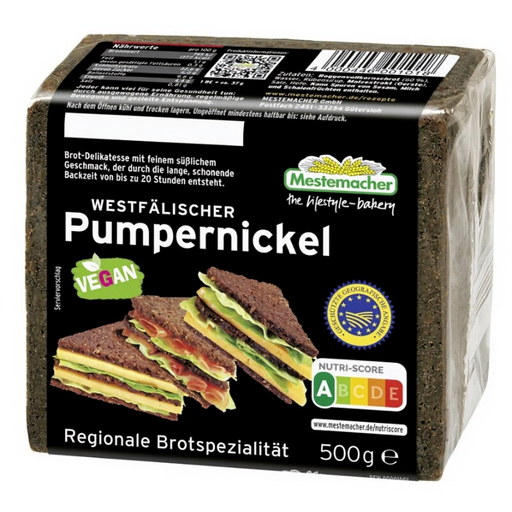 No image available
A 500-g pack of pumpernickel for your first bread shop. Before buying, compare the wholemeal labelling, ingredients and nutritional information on the pack with your own criteria.
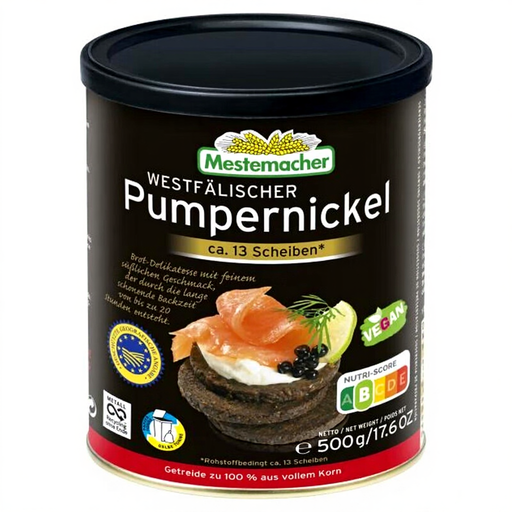 No image available
Another 500-g pack of pumpernickel for your first shop. Check the product name and ingredients, and, especially if you have allergies, the current allergen labelling on the pack.
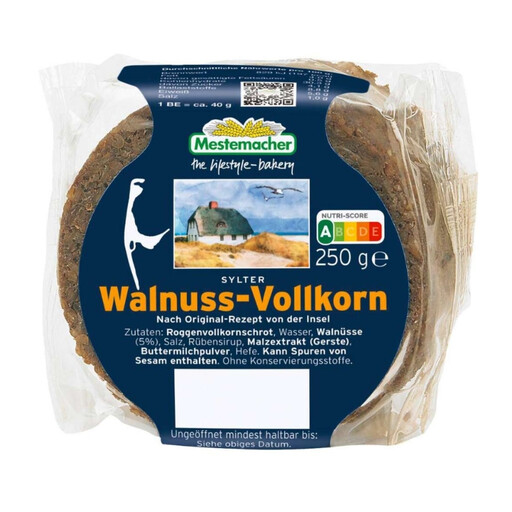 No image available
A smaller 250-g pack of wholemeal bread with walnuts. If you’re looking for rye wholemeal bread or need to take allergies into account, check the types of grain and the full labelling on the pack before buying.
Look for the explicit description ‘rye wholemeal bread’, then read the ingredients list. According to the Verbraucherzentrale, at least 90% of the flour content in wholemeal bread must be wholemeal flour or wholemeal grain; colour and visible grains aren’t enough to tell.
No. Rye is a gluten-containing grain. Rye wholemeal bread is therefore not suitable if you’re shopping for a gluten-free diet. Check the relevant pack for other allergens and ‘may contain’ warnings.
It’s better to make the change gradually than to increase your intake sharply all at once. The Bundeszentrum für Ernährung notes that a rapid increase in fibre can cause discomfort and recommends drinking enough fluids.
Retailer websites can help you narrow down your options, but you should check the current pack for ingredients and allergens. EDEKA specifically notes that product information shown online may differ from the packaging.