People with coeliac disease
For them, clear gluten-free labelling on the bread is essential. The German Coeliac Society lists rye as a gluten-containing grain, so the bread’s name and appearance aren’t enough to make a choice.


Ordinary rye bread is not a suitable gluten-free alternative for people with coeliac disease: rye contains gluten, as the German Coeliac Society explains. If you’re looking for a similar bread to go with savoury toppings, look for sliced bread or country-style bread explicitly labelled gluten-free. What matters is the information on the specific product, not the name ‘country bread’, its dark colour or the presence of sourdough as an ingredient.
For them, clear gluten-free labelling on the bread is essential. The German Coeliac Society lists rye as a gluten-containing grain, so the bread’s name and appearance aren’t enough to make a choice.
If you’re looking for bread to go with savoury toppings, you can choose a gluten-free sliced or country-style loaf based on the shape and ingredients you prefer. A similar use doesn’t mean the recipe or taste will be the same.
When you shop regularly, the specific product available in store matters. A product you’ve seen before may not be available in every supermarket, so always check the pack you’re buying now.
First, check that the specific bread is labelled gluten-free. Then you can choose based on its shape, ingredients and where you shop.
| Criteria | What to check when buying | Who it matters most to |
|---|---|---|
| Gluten-free labelling | Does the specific product say ‘gluten-free’? Check the ingredients list too, rather than assuming what grain it contains from the bread’s name. | If I’m choosing bread because I have coeliac disease, clear labelling is essential. I can’t rely on it simply looking like rye bread. This would be the top priority for around 50% of consumers. |
| Bread type and ingredients | Does sliced or country-style bread suit the way you want to use it? Compare the ingredients and, if fibre matters to you, check the nutritional information per 100 g. | For savoury toppings, once I’ve checked the gluten-free labelling, I want to find bread whose shape and ingredients suit what I’m eating. Around 30% of consumers would prioritise this kind of alternative. |
| Everyday shopping | Check what’s available where you shop, then check the labelling on the product on the shelf. | If I buy bread regularly at the supermarket, I need a practical way to shop without skipping the checks on each pack. This would be the main priority for around 20% of consumers. |
A dark colour, seeds or the name ‘country bread’ don’t rule out gluten-containing ingredients. Rye itself contains gluten.
If you have coeliac disease, choose only a product explicitly labelled gluten-free. Then consider which type of bread you’d like.
A retailer’s category or an app listing doesn’t replace checking the product currently on sale. Lebensmittelklarheit recommends checking the information on the food itself.
Read the pack and ingredients list before buying. For unpackaged goods, check the labelling directly with the retailer.
A loaf you saw on a previous shopping trip may not be on the shelf next time. ALDI SÜD, for example, points out that special-buy products are available for a limited time only.
Check the product actually on offer each time you shop. If you need bread regularly, consider arranging another source if necessary.
The brand’s Meisterbäckers Vital is a sliced bread labelled gluten-free, for anyone looking for a sliced alternative to rye bread.
The own-brand range includes a country-style loaf listed by REWE as gluten-free, in a 400 g pack.
Poensgen offers gluten-free baked goods. REWE lists a 400 g Poensgen country-style loaf as gluten-free.
This selection includes crispbread, bread rolls and a bread mix rather than a rye loaf. If you have coeliac disease, check the gluten-free labelling on the current pack of each product before buying. The product type then helps you decide whether you want something ready to eat or something you’ll need to prepare first.
 Image unavailable
A crispbread option if you’re looking for a base for toppings rather than a soft loaf. It isn’t rye bread, so check the labelling on the pack before buying.
 Image unavailable
For anyone who’d rather have individual bread rolls than a rye loaf. The rolls need to be kept frozen and baked before eating. Follow the preparation instructions and check the gluten-free labelling on the pack.
 Image unavailable
Another crispbread option for toppings, but not a soft country-style loaf or rye bread. If you’re after a hearty country-style loaf, compare the ingredients and check the pack’s gluten-free labelling before buying.
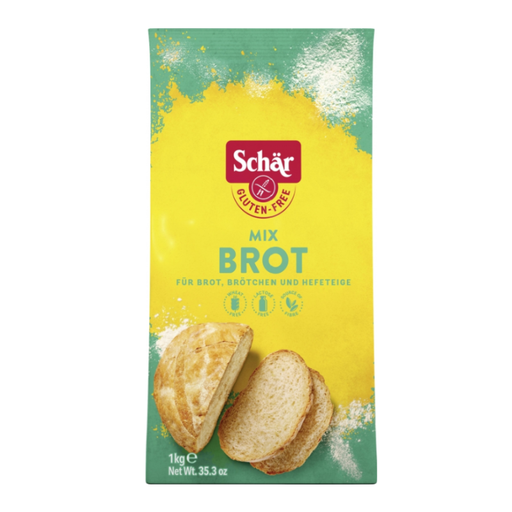 Image unavailable
For anyone who’d like to bake their own bread rather than buy a ready-to-eat product. You’ll need to add other ingredients and prepare the mix, so check the instructions on the pack and the gluten-free labelling of all the ingredients you use.
Ordinary bread made with rye isn’t a gluten-free alternative: according to the German Coeliac Society, rye is a gluten-containing grain. Instead, look for bread in your preferred style that’s explicitly labelled gluten-free.
The name alone doesn’t tell you whether it’s gluten-free. Country-style bread may still be an option if the specific product is explicitly labelled ‘gluten-free’; check its ingredients too.
As Lebensmittelklarheit explains, in Germany the label means that a food contains no more than 20 mg of gluten per kg. It doesn’t mean the gluten level is necessarily zero.
No. You should check the product you’re actually buying. Read the labelling on the pack or ask the retailer about unpackaged goods, rather than relying on an app listing alone.