
Lieferung heute & morgen

Qualitätsgarantie

Willkommens-Angebote freischalten: KOSTENLOSE Lieferung | Bis zu 80 % RABATT | Kostenlose 30-Tage-JoyPlus-Testphase
App herunterladen
The search for the right frying pan can quickly become overwhelming. Especially with ceramic pans, which are promoted as a healthy alternative, there are significant differences in quality and longevity. As your Joybuy Product Recommendation Officer, I'll help you identify the essential features and avoid making the wrong purchase, so you can find a pan that truly meets your cooking needs.
Before you make a decision, it's important to question common marketing claims. Many pans that seem impressive at first glance only reveal their weaknesses during daily use.
To make an informed decision, you should focus on three core technical features. These determine the performance, safety, and longevity of your new pan.
A high-quality ceramic-coated frying pan should be explicitly labelled as PFAS-free. This also includes the well-known compounds PFOA and PTFE. Modern ceramic coatings are often based on sol-gel technology and are purely mineral-based. Some manufacturers reinforce their coatings with particles like diamond or titanium to increase abrasion resistance and durability. Look for these details, as they are an indicator of a more robust surface. Such a healthy pan will not release harmful fumes, even at high temperatures.
Heat conductivity and distribution depend on the material of the pan's body. Aluminium, especially die-cast aluminium, is a commonly used material because it conducts heat quickly and evenly. A thicker base retains heat better and prevents warping. If you have an induction hob, an induction-compatible ceramic pan is essential. The base of the pan must contain a ferromagnetic layer for this to work. Look for the coil symbol on the packaging or in the product description.
The ability to move a pan from the hob directly into the oven significantly expands your cooking options. Check the maximum temperature resistance to ensure the pan is oven-safe. The handle material is the deciding factor here. Stainless steel handles often allow for high temperatures (e.g., up to 260°C), while plastic or Bakelite handles are usually limited to lower temperatures or are not oven-safe at all. A securely riveted or screwed-on handle also offers more safety and stability than simply attached handles.
Instead of making a one-size-fits-all recommendation, we have selected products that are tailored to specific user profiles.
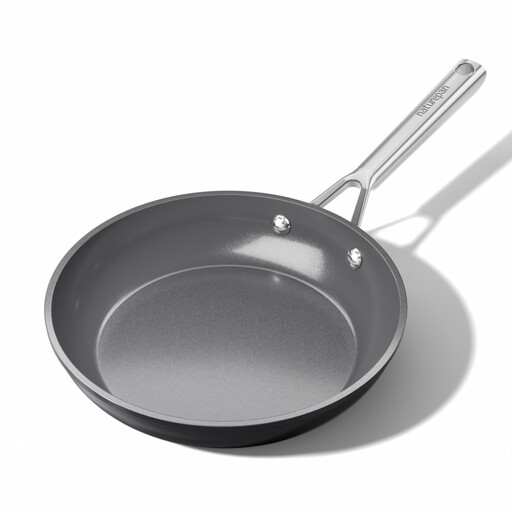
Why This Fits Their Persona: Ideal for daily use in households of 2-3 people. The 24cm size is versatile for everything from fried eggs to sautéed vegetables. Its high oven-safe temperature makes it flexible for recipes that start on the hob and finish in the oven.
The coating, reinforced with diamond and titanium particles, addresses the "short lifespan" trap by offering higher abrasion resistance than conventional ceramic coatings.
High Oven Safety: Suitable up to 260°C, allowing for more flexibility in cooking. Induction-Ready: The encapsulated base ensures fast and even heat distribution on all hob types.
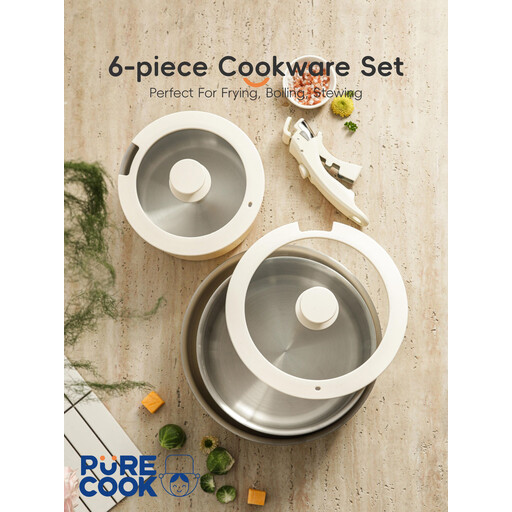
Why This Fits Their Persona: Perfect for kitchens with limited storage, RVs, or anyone looking for a multifunctional system. The set replaces multiple individual pans and pots and can be stacked compactly.
This set bypasses the "scratch-resistance" trap with a smart material combination: a robust 304 stainless steel interior (uncoated) and an easy-to-clean ceramic exterior.
Detachable Handle: Allows for stacking and use in the oven or as a serving dish. Material Combination: The stainless steel interior is extremely durable and non-reactive with food.
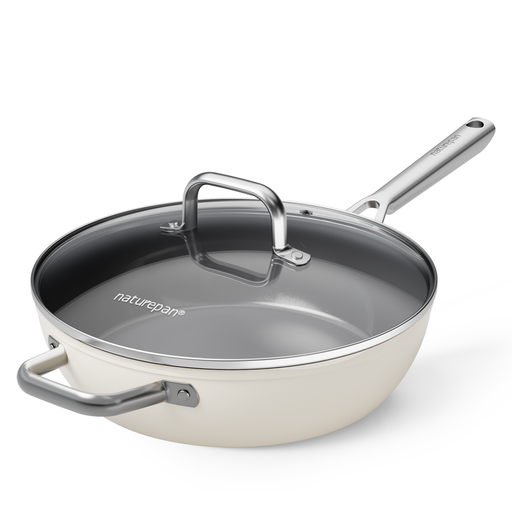
Why This Fits Their Persona: For families or cooks who enjoy making one-pot meals, braises, or larger portions. The high sides and included lid make it a versatile hybrid of a pan and a pot.
This model avoids the trap of uneven heat distribution with an optimised, encapsulated base that ensures consistent cooking results without hot spots, even across the large 28cm surface.
High Sides and Lid: Ideal for braising, steaming, and saucy dishes, as it prevents splattering. Large Capacity: The 28cm size is excellent for preparing meals for the whole family.
We've compiled a full, up-to-date list of products that fully meet these strict selection criteria and German safety regulations.
1. How long does a ceramic coating really last? The lifespan of a ceramic coating heavily depends on its care and use. With proper handling—avoiding metal utensils, preventing overheating when empty, and hand-washing with a soft sponge—a high-quality coating can retain its non-stick properties for several years.
2. Is a ceramic pan always suitable for induction? No. For a pan to work on an induction hob, its base must be magnetisable. When purchasing, explicitly look for the "suitable for induction" label or the internationally recognised induction symbol (a stylised coil). Pans made of pure aluminium or copper are not induction-compatible without a special base plate.
3. How do I clean a ceramic pan correctly to preserve the non-stick effect? Always let the pan cool down first after use. Then, clean it with warm water, a mild dish soap, and a soft cloth or sponge. Avoid abrasive scouring pads or steel wool, as they can damage the surface. Even if many pans are declared dishwasher-safe, gentle hand-washing is often recommended to maximise the coating's lifespan.