
Lieferung heute & morgen

Qualitätsgarantie

Willkommens-Angebote freischalten: KOSTENLOSE Lieferung | Bis zu 80 % RABATT | Kostenlose 30-Tage-JoyPlus-Testphase
App herunterladen
Choosing the first bed for a child is a major decision. The market offers a vast array of models, from classic slatted cribs to multifunctional systems. However, this variety can quickly become overwhelming. Certain product features advertised as benefits can sometimes prove impractical or even a poor investment in practice. This guide will help you identify the essential criteria and avoid common purchasing traps.
During their research, expectant parents often come across tempting offers. Two pitfalls are particularly common and frequently lead to unnecessary expenses or compromises on safety.
Pitfall 1: The "All-in-One Crib Set" Trap A set that includes the crib, mattress, canopy, and bedding seems practical and cost-effective at first glance. The reality is often different. The included mattresses are frequently of subpar quality—they lack the necessary point elasticity or breathability recommended for safe baby sleep. The textiles may also not meet desired standards. The result: the low-quality baby mattress and accessories soon need to be replaced, negating the initial savings.
Pitfall 2: Short-Term Planning Without Considering Longevity A small bassinet or a dedicated bedside sleeper is a charming solution for the first few months. But babies grow quickly. A bed that is not convertible often needs to be replaced by a larger model after just six to twelve months. A grow-with-me crib that can later be converted into a toddler bed is a more sustainable and economical investment in many cases.
To make an informed decision, you should focus on three objective core criteria. These ensure safety, functionality, and a long lifespan.
Your child's safety is the top priority. Ensure that the bed meets current European safety standards.
A functional bed adapts to your child's developmental stages.
The quality of the mattress is just as important as that of the bed frame. A good baby mattress should have the following characteristics:
Based on these objective criteria, we have identified several models that are suitable for different needs and life stages.
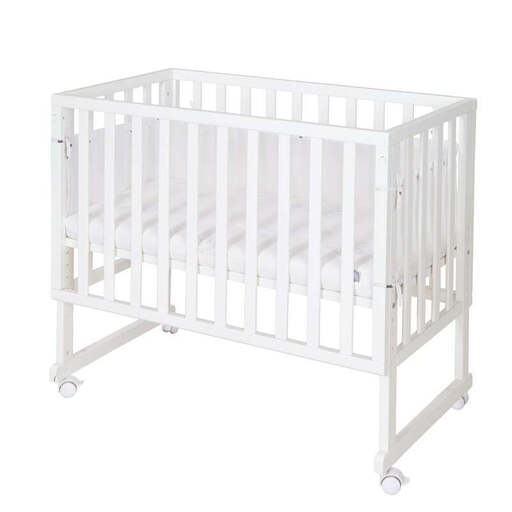
Why It's a Great Fit: Ideal for the first 6-12 months. It combines the function of a bedside sleeper for the night with the mobility of a bassinet for the day. The height adjustment allows for a seamless fit with the parents' bed.
Although designed for the first phase of life, this model avoids the short-lifespan trap through its later use as a bench. It also comes with a breathable mattress specifically designed for safety.
Meets safety standard EN 1130:2019. Includes a breathable mattress and a safety harness for securing to the parents' bed. 7-level height adjustment for a precise fit.
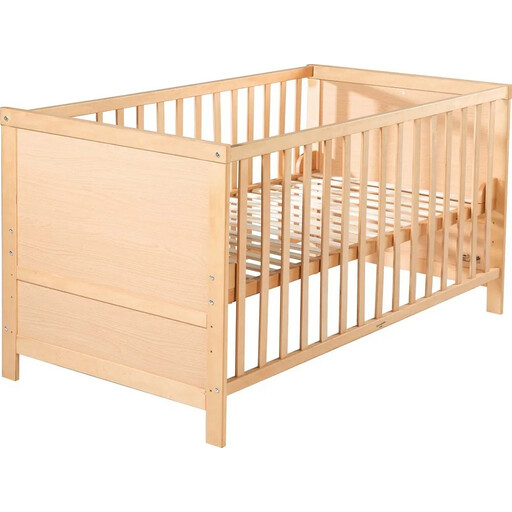
Why It's a Great Fit: A long-term solution for parents seeking a one-time purchase that will last from infancy until school age. The bed grows with your child, converting from a baby crib to a junior bed.
This is the direct answer to the short-term planning trap. By shipping as a frame-only unit, it bypasses the all-in-one set trap and gives parents the freedom to select a high-quality, separate mattress based on their own criteria.
Long lifespan (0-7 years). 3-level height adjustment and equipped with 3 removable bars. Converts to a toddler bed without additional conversion kits. Sleeping surface 70x140 cm.
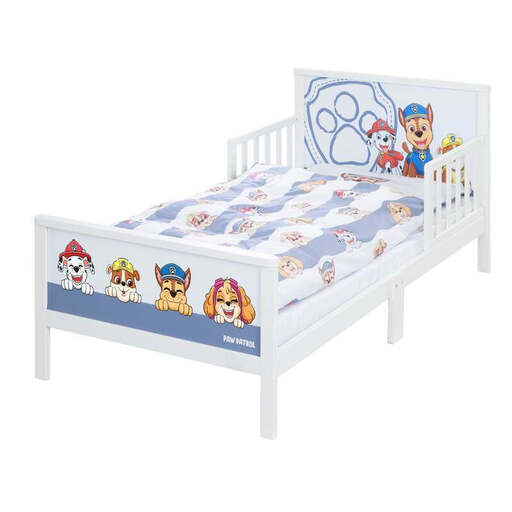
Why It's a Great Fit: This themed bed eases the transition from a crib to a first "big kid" bed. The low-profile, Montessori-inspired design promotes the child's independence, while the side safety barriers provide security.
This is not a jack-of-all-trades, but a targeted solution for a specific phase. It avoids the compromise of using a converted baby crib, instead offering a child-friendly design that makes the transition a positive experience.
Constructed according to safety standard EN 716. Two side safety barriers are already integrated as a bed rail. Includes a slatted frame and bedding in the matching design.
When your child moves from a crib to a converted junior bed or a new toddler bed, a bed rail is an important accessory for a safe transition period. It offers protection without limiting the child's independence.
For a safe transition to a junior bed, a sturdy bed rail is essential. We have compiled a selection of models that meet strict safety criteria.
1. At what height should a baby crib's mattress base be set? The setting depends on the child's age and mobility. For newborns, the highest level is ideal as it saves parents' backs. As soon as your child begins to sit up on their own, you should lower the mattress base to the middle position. When they can pull themselves up to a standing position, the lowest level is mandatory for safety to prevent them from falling out.
2. When does it make sense to convert the crib to a toddler bed? The right time is individual, but it's usually between the ages of two and three. A clear sign is when your child tries to climb out of the crib, which poses a significant safety risk. Many convertible cribs offer a good intermediate solution with removable bars before the slatted sides are completely removed.
3. What is more important: a high-quality baby crib or a good baby mattress? Both components are crucial for safe and healthy sleep, and one should not be prioritised at the expense of the other. The crib frame ensures structural safety (stability, standard-compliant slat spacing). The mattress is responsible for sleep safety (breathability to prevent heat build-up) and ergonomic support for the spine. A stable, standard-compliant crib frame is the foundation, but a high-quality baby mattress is of paramount importance for the child's immediate sleep environment.