
Lieferung heute & morgen

Qualitätsgarantie

Willkommens-Angebote freischalten: KOSTENLOSE Lieferung | Bis zu 80 % RABATT | Kostenlose 30-Tage-JoyPlus-Testphase
App herunterladen
Children’s toys should suit your child’s age, your home and their stage of development. In practice, however, eye-catching colours, claims of versatility and unclear age guidance often lead to unsuitable purchases. Parents, grandparents and carers should look beyond the design and focus on safety, dimensions, materials and how easy the toy is to clean and maintain.
A label saying ‘from 12 months’ doesn’t automatically mean that every child of that age can use the product safely. You should also consider your child’s size, motor skills and how the product will be used. The risks associated with climbing equipment, for example, may need to be assessed more carefully than those of a simple shape-sorting toy.
Small parts matter, too. A toy may be suitable for toddlers, while detachable accessories could still pose a choking risk. Read the age guidance, warnings and instructions together.
A baby playpen needs more room than its stated footprint alone. You’ll also need space to lock the castors, lift your child in comfortably and clean the area regularly. A foldable model is handy if you plan to put it away after use. A stationary model, on the other hand, may offer more room to play.
A children’s climbing frame also needs clearance from walls, windows, radiators and furniture. Check the room height and make sure there’s suitable impact-absorbing flooring before you buy.
A product with lots of features isn’t automatically more practical for everyday use. Electronic baby toys need batteries or a power supply, and must not be attached near a bed using cords or loose ribbons. With a baby play gym, removable toys, ease of cleaning and stability matter more than a long list of features.
Check these three details:
Never exceed the weight limit. When a playpen is stationary, its castors or brakes must be locked. A playpen is not a substitute for supervision.
With wooden toys, edges should be smooth and components securely joined. The product description should specify the type of wood, any applicable standards and care instructions. For plastic products, sturdy, easy-to-clean surfaces and removable water containers are practical features.
FSC-certified wood provides information about where the wood comes from. However, this alone doesn’t tell you whether a toy is suitable for every age. The safety information for the specific product remains essential.
Before ordering, compare the space available with the product’s dimensions and storage requirements. For a foldable playpen, its folded size may be important. Fabric covers should be removable and washable in line with the manufacturer’s instructions. Empty and dry a sand and water table after each use to prevent residue building up in tubes, stoppers or tubs.

Why this product suits this profile: This foldable model is a good choice for households that don’t want to leave a playpen set up all the time. It measures 75 × 100 cm, has castors and folds away compactly for storage.
The folding design takes up less storage space. The height-adjustable base can also reduce the need to bend down when lifting your child in and out.
Two base heights, castors and a folded size of 70 × 10 × 5 cm; according to the product details, suitable up to 15 kg or around 24 months.

Why this product suits this profile: Its square base gives your child more room than a smaller model. According to the supplier, this playpen is made from solid beechwood and comes with a fabric insert and four castors with brakes.
The product details specify three base positions, a washable insert and compliance with standard EN 12227:2010-12. This makes it easier to check important buying criteria.
100 × 100 cm sleeping and play area, three height positions and a fabric insert with care instructions for washing at 30 °C.
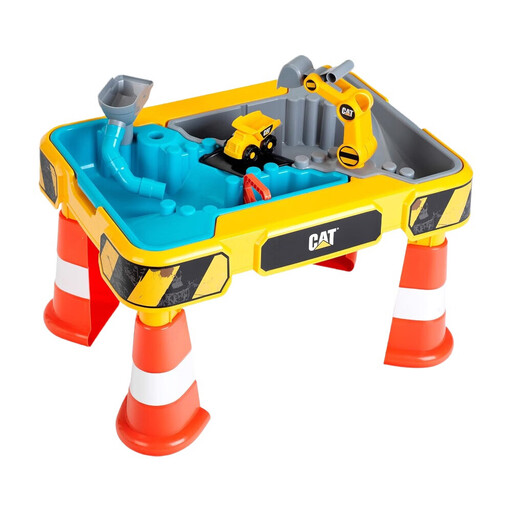
Why this product suits this profile: This play table is designed for children aged 18 months and over. It’s a good fit for families with outdoor space or an easy-to-clean play area.
The removable tubs make emptying and cleaning easier. After play, remove the sand and water, then dry all the parts thoroughly.
Measures 64 × 48 × 40 cm and includes an excavator arm, tipper truck, tubes and stoppers; according to the product details, it can be used without batteries.
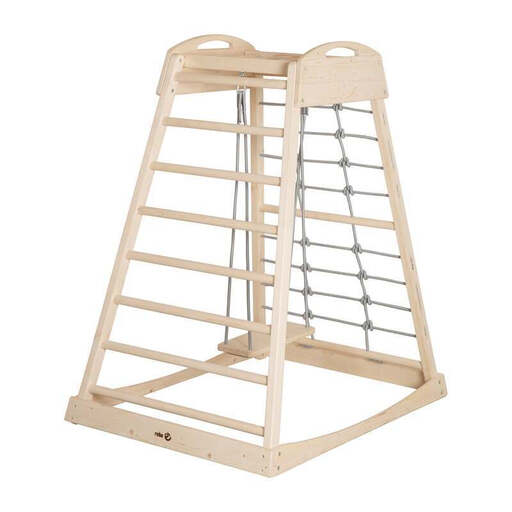
Why this product suits this profile: This indoor play tower needs a firm, level surface. The product description says it’s for children aged 24 months and over, but the safety information says it must not be used by children under 36 months. Follow the stricter age guidance.
The safety information highlights the need for impact-absorbing flooring, close supervision, regular checks and the recommended anchoring. Make sure to allow for a soft play mat.
127.5 × 83 × 110.5 cm, climbing ropes, gymnastic rings and a removable wooden swing; maximum load of 70 kg according to the supplier.
We’ve put together a complete, regularly updated list of products that meet these strict selection criteria and the safety regulations in force across the EU.
For babies up to around 12 months, options include a baby play gym, a soft play mat or simple grasping toys. Don’t choose a Montessori toy based on the educational label alone. Check what your child will actually do with it and whether all the parts are suitable for their age.
Toys to develop motor skills from age 1 can combine shapes, colours and posting activities, for example. The Hauck shape-sorting toy comes with eight blocks inside a wooden house. According to the product details, it’s suitable from 12 months; supervision is important because it contains small parts. For toys for ages 18 months and up, more involved options such as a sand and water table may also be suitable.
This depends on the model, its weight limit and your child’s development. Many products are designed for use up to around 24 months or 15 kg. Stop using the playpen as soon as your child can climb out, even if they haven’t reached the weight limit.
The playpen must be assembled fully and placed on a level floor. Lock the brakes, make sure height adjustments click securely into place and replace any damaged parts straight away. Only use extra cushions, mattresses or loose blankets if they’re specifically intended for the product.
Suitable options may include sturdy posting and sorting toys, simple wooden blocks, a sand and water table used under supervision, or motor skills toys labelled as suitable for their age. Always check the manufacturer’s guidance and the size of individual parts, and make sure your child can play without being exposed to risks while unsupervised.