
Lieferung heute & morgen

Qualitätsgarantie

Willkommens-Angebote freischalten: KOSTENLOSE Lieferung | Bis zu 80 % RABATT | Kostenlose 30-Tage-JoyPlus-Testphase
App herunterladen
As soon as children start to crawl or walk, they become little explorers. This newfound mobility is exciting, but it also brings new responsibilities—especially when it comes to home safety. Stairs, kitchens, and other potentially hazardous areas must be reliably secured. A stair gate or doorway gate is a fundamental safety measure for this purpose.
However, the variety of models available can be overwhelming. This guide is designed to help you understand the different types and features. We provide objective criteria so you can make an informed decision and choose a child safety gate that perfectly fits your needs and your home's layout.
Before you decide on a model, several key aspects should be considered. The mounting type, dimensions, and daily usability are crucial factors for both safety and convenience.
The installation method is one of the most important decisions. There are two main types:
Before purchasing, accurately measure the width of the opening you want to secure. Standard gates typically fit doorways from 75 to 85 cm. For wide openings, hallways, or open-plan living areas, there are two solutions:
In the hustle and bustle of family life, you rarely have both hands free. A gate that can be opened with one hand is therefore a significant convenience. Another practical feature is an auto-close mechanism. Such gates automatically swing shut and lock after you pass through. This provides extra peace of mind in case you forget to close the gate manually.
Here is a selection of different gate types that meet various requirements.
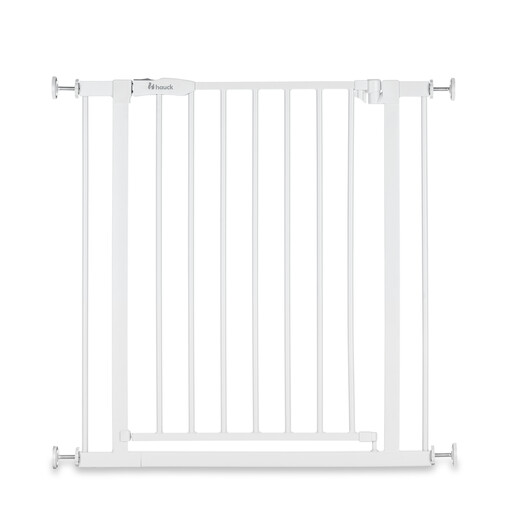
Why It Stands Out: A classic pressure-mounted gate that excels with its simple, drill-free installation and flexible expandability.
Pros:
Who It's For: Ideal for renters and families looking for a straightforward and flexible solution for standard doorways or the bottom of stairs.
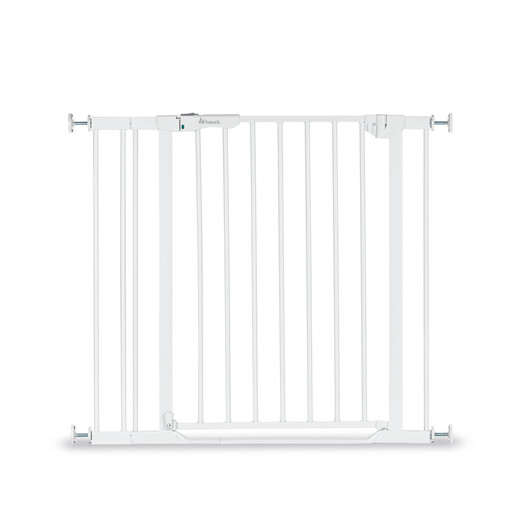
Why It Stands Out: This model combines an auto-close door with an extra-low threshold bar to reduce the risk of tripping.
Pros:
Who It's For: A great choice for high-traffic areas where an automatic lock and a minimized tripping hazard are top priorities.
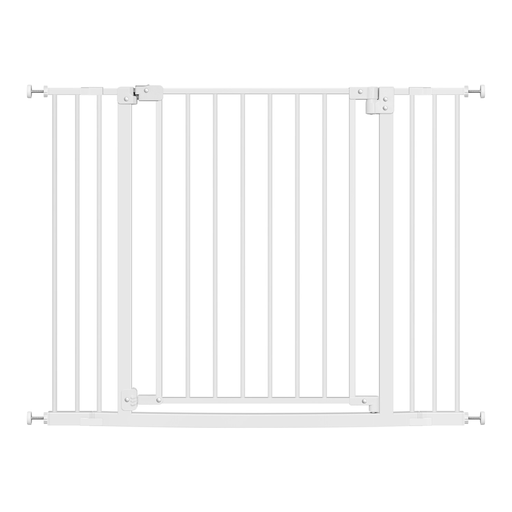
Why It Stands Out: A highly flexible gate that includes two extensions and can be either pressure-mounted or hardware-mounted.
Pros:
Who It's For: Users looking for an all-in-one solution for various opening widths who want the choice between pressure-mounted and hardware-mounted installation.
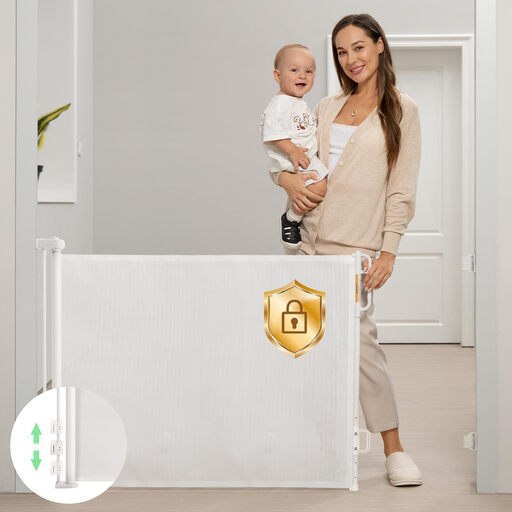
Why It Stands Out: A retractable gate with a roller-style design that is extremely space-saving and suitable for very wide openings, without leaving a tripping hazard on the floor.
Pros:
Who It's For: Perfect for modern, open-plan homes, wide hallways, or staircases where a conventional gate would be obtrusive.
The range of safety solutions is vast and depends heavily on the specific layout of your home. If you are looking for more options for different widths, materials, or special requirements, you can find more models in our comprehensive category.
A baby gate is recommended as soon as your child becomes mobile. This typically occurs between 6 and 9 months of age, when they begin to crawl, pull themselves up, or take their first steps. It is generally recommended to use them until your child is about 24 months old.
Yes, pressure-mounted gates are a secure solution for many locations. They create a firm hold through pressure and are well-suited for doorways or the bottom of stairs. However, for installation at the top of a staircase, most manufacturers and safety standards recommend a hardware-mounted gate. The reason is that a strong impact could potentially dislodge a pressure-mounted gate, which poses a significant risk in that location.
An auto-close gate provides an extra layer of security in hectic family life. It closes and locks by itself after you pass through, ensuring the barrier remains reliably closed even if you forget in a hurry or have your hands full. This minimizes the risk of a child using an unsupervised moment to enter an unsecured area.