
Lieferung heute & morgen

Qualitätsgarantie

Willkommens-Angebote freischalten: KOSTENLOSE Lieferung | Bis zu 80 % RABATT | Kostenlose 30-Tage-JoyPlus-Testphase
App herunterladen
For many coffee lovers, investing in a high-quality portafilter machine is the definitive step towards brewing café-quality coffee at home. However, the market is saturated with machines whose marketing promises often outpace their technical capabilities. This frequently leads to frustration and a poor investment. Before you make a decision, it's crucial to understand the most common pitfalls that can spoil your coffee experience.
A widespread issue is complexity. Many machines advertise professional features but require a steep learning curve and technical skill, which quickly becomes impractical for daily use. Another critical point is the quality of the milk foam. Numerous automatic systems produce little more than hot milk with large bubbles, instead of the fine-pored, silky microfoam required for latte art and an authentic cappuccino taste. Finally, long heat-up times are a common annoyance, making a quick morning espresso impossible.
To make an informed decision based on durability and consistent performance, you should focus on three core technical parameters. These features are the primary determinants of coffee quality and ease of use.
The heart of any espresso machine is its heating system. It is directly responsible for the extraction temperature, which has a major impact on the coffee's flavour.
Freshly ground beans are the foundation of a full-bodied aroma. An espresso machine with a grinder offers a decisive advantage here. Pay attention to the type of grinder:
For lovers of cappuccino or latte macchiato, the quality of the milk foam is crucial. There are two basic approaches here:
Based on these criteria, we have identified several models suitable for different user groups.

Why this model is a fit: Ideal for users who place the highest value on coffee quality and intuitive operation. The control via the touchscreen coffee machine allows for easy selection and personalisation of drinks without the need for a manual learning curve. Perfect for the modern household where convenience and results matter.
The intuitive touch display bypasses the complexity trap. The automatic milk frothing system delivers consistent microfoam, and the ThermoJet heating system eliminates long waiting times.
A combination of automation and individual customisation; heat-up time of just 3 seconds according to the manufacturer.
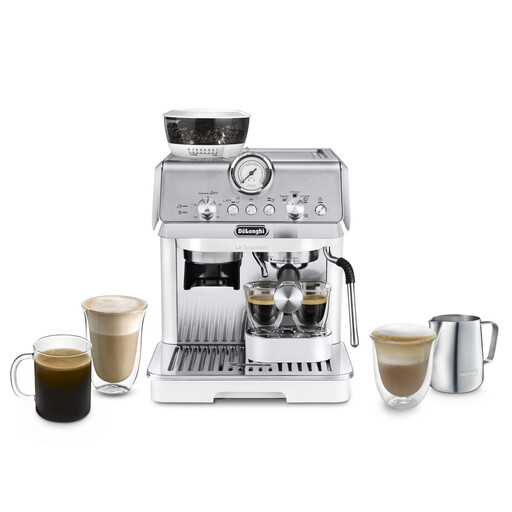
Why this model is a fit: Designed for coffee lovers who want to learn and control the craft of espresso making. The included barista kit and manual steam wand provide an authentic, hands-on experience on the path to perfect barista coffee at home.
Although manual, the dosing and tamping aids ease the learning process and reduce complexity. The manual steam wand gives the user full control to perfect the milk foam quality themselves.
Comprehensive barista kit included; offers full manual control over grind size, dose, and milk texture.
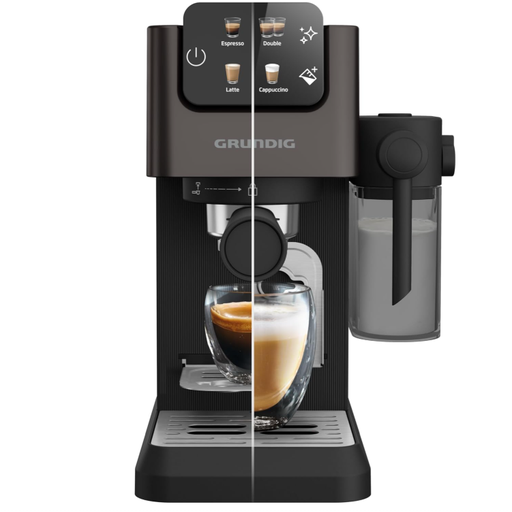
Why this model is a fit: This model is aimed at users who want to prepare espresso and milk-based drinks with minimal effort. The integrated milk container provides a "one-touch" solution for cappuccino, which is even simpler than an automatic steam wand.
The integrated milk system with CreamyPro technology is designed to deliver consistent results, thus avoiding the trap of inconsistent milk foam. The colour touch display simplifies operation.
Integrated milk container for fully automatic milk drinks at the touch of a button; simple operation via the touch display.
We have compiled a complete, up-to-date list of products that fully meet these strict selection criteria and German safety regulations.
1. How often does a Sage Barista Touch need to be descaled? The frequency of descaling depends on the water hardness in your area and how often you use the machine. The Sage Barista Touch has an automatic notification that appears on the display when a descaling cycle is required. As a general guideline, with average use and medium water hardness, this may be every 2 to 3 months.
2. What grind size should I use for the Sage Barista Touch? The ideal grind size depends on the coffee beans being used (roast date, variety). Start with a medium setting (e.g., 14-15 on the scale) and adjust from there. If the espresso flows too quickly (under 25 seconds), choose a finer grind size. If it flows too slowly (over 35 seconds), set the grinder a bit coarser. The machine provides a good starting point for a Sage Barista Touch test with different beans.
3. Is an automatic portafilter machine worth it compared to a super-automatic machine? An automatic portafilter machine like the Sage Barista Touch bridges the gap between the control and coffee quality of a traditional portafilter and the convenience of a super-automatic (bean-to-cup) machine. You have more influence over the process (e.g., tamping, puck preparation) and often achieve a more aromatic result, while at the same time, many steps like grinding, dosing, and milk frothing are automated. A super-automatic machine is generally even more convenient but offers fewer customisation options and a different, often less intense flavour extraction.