
Lieferung heute & morgen

Qualitätsgarantie

Willkommens-Angebote freischalten: KOSTENLOSE Lieferung | Bis zu 80 % RABATT | Kostenlose 30-Tage-JoyPlus-Testphase
App herunterladen
A Sake Set Gift Box is a thoughtful and stylish gift for friends, family, or a special present for enthusiasts of Japanese culture. However, the selection process has pitfalls that can quickly turn a well-intentioned gift into a disappointment. Before you buy a sake set, it's wise to pay attention to a few details that go beyond mere appearance.
This guide will help you avoid the most common mistakes and find a set that impresses both aesthetically and functionally.
Many sets available on the market look appealing but only reveal their weaknesses with use. Pay attention to these three points to avoid a poor investment.
To make the right choice, you should check three core parameters. These define the quality and utility of any sake set.
The material is the foundation of any good sake dinnerware. The choice between ceramic and porcelain affects both aesthetics and functionality.
Regardless of the material, a food-safe glaze is an absolute prerequisite.
A traditional Japanese sake set consists of at least one carafe and several cups. Knowing the correct terms is helpful here:
For social gatherings, a set with one carafe and at least four ochoko is a good choice.
A Japanese sake set directly from Japan is often more than just proof of origin. It represents traditional firing techniques, proven designs, and a cultural accuracy that enthusiasts appreciate. While design is subjective, a clear statement of origin guarantees a degree of authenticity that is particularly valued in gifts.
Here are some recommendations tailored to different needs and preferences.
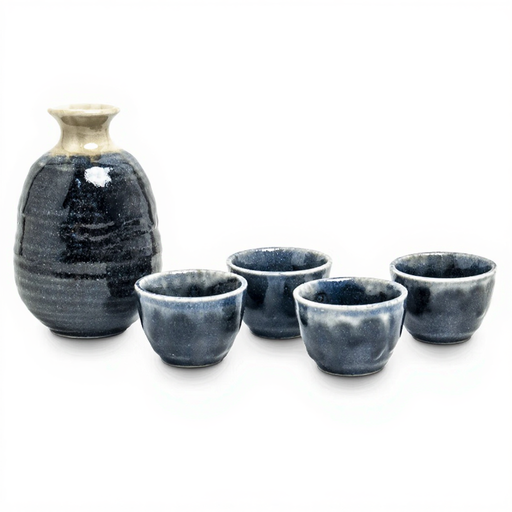
Why this set works: Ideal for those seeking an authentic drinking experience with traditional aesthetics. The dark blue ceramic design with black accents evokes classic Japanese craftsmanship and creates a special atmosphere.
The origin "from Japan" is clearly declared, ensuring authenticity. As a set for four people with a 250 ml carafe, it is practically sized, avoiding the trap of being too small.
Made from high-quality ceramic in Japan; comes in an elegant black gift box, making it a ready-to-give present.
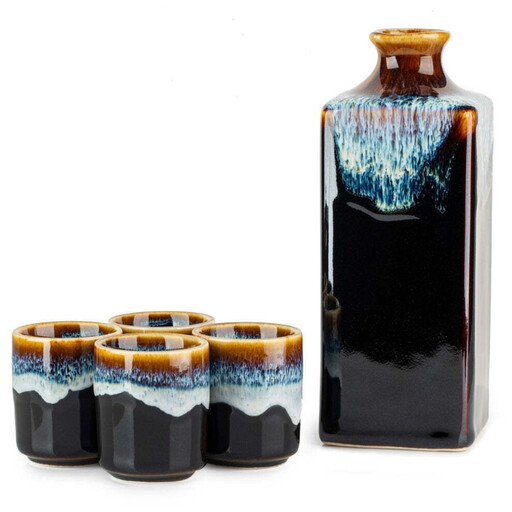
Why this set works: Perfect for hosts who value functionality and a modern, minimalist design. The black porcelain looks elegant, and the generous 0.45 L carafe (according to the description) is excellent for serving multiple guests.
This porcelain set is explicitly listed as dishwasher and refrigerator safe, which bypasses the trap of impractical materials. The clear indication of origin and material builds trust.
Being dishwasher-safe makes cleanup effortless. The set combines traditional Japanese craftsmanship with the demands of a modern household.
We have compiled a complete, up-to-date list of products that fully meet these strict selection criteria and safety regulations.
Whether a sake set is dishwasher-safe depends on the material. Sets made of porcelain are often suitable, while handmade ceramics or those with delicate glazes should be washed by hand. Always check the manufacturer's instructions included with the product to ensure the longevity of the surface.
Tokkuri is the term for the sake carafe, used for holding and pouring the beverage. Ochoko are the small, traditional drinking cups from which the sake is enjoyed. Together, they form the basic sake accessories for an authentic experience.
To warm sake, fill the Tokkuri and place it in a pot of hot, but not boiling, water. The water level should reach about halfway up the carafe. Let it stand for a few minutes until the sake reaches the desired temperature (typically 40–50 °C). Do not heat the carafe directly in the microwave unless the product is explicitly marked as microwave-safe.