
Lieferung heute & morgen

Qualitätsgarantie

Willkommens-Angebote freischalten: KOSTENLOSE Lieferung | Bis zu 80 % RABATT | Kostenlose 30-Tage-JoyPlus-Testphase
App herunterladen
A ready-made salad dressing saves time, but depending on the variety, it can differ considerably in terms of ingredients, nutritional values, allergens and shelf life. For households, families and working people, flavour is therefore not the only deciding factor. The intended portion size, preparation time and dietary requirements should also be taken into account when choosing.
A low-calorie salad dressing may contain less fat, but still include sugar or salt. When comparing products, the nutrition table per 100 millilitres is therefore what matters. One example is Kühne Garden Herbs Salad Dressing: according to the product details, it contains 25 kcal and less than 0.1 g of fat per 100 ml, but also 4.4 g of sugar and 2.7 g of salt.
It is also worth taking a closer look at yoghurt dressings. According to the product details, Kühne Light Yoghurt Salad Dressing contains 99 kcal and 6.6 g of fat per 100 ml. Here, the term “Light” describes a product characteristic compared with the regular version, but it does not replace an individual comparison of nutritional values.
With a dressing mix, the herbs and other ingredients initially come in a portion sachet. To prepare Knorr Salatkrönung, for example, 3 tablespoons of water and 3 tablespoons of oil are mixed with the contents of the sachet. The oil has a significant effect on the final fat and calorie content.
A ready-made salad dressing in a bottle, on the other hand, can be used straight away. However, it often requires more space in the fridge and should be refrigerated after opening and used promptly in accordance with the packaging instructions.
Allergens can be present even in seemingly simple products. Yoghurt and herb dressings often contain milk, while some varieties also contain egg or mustard. With a vegan salad dressing, the ingredients list and product labelling must match. The specific packaging information is also decisive for a gluten-free diet, as recipes and possible traces may vary depending on the product and production site.
Start by checking the ingredients list. In a herb dressing, for example, the herbs used, oil, vinegar, sugar and thickening agents are relevant. Kühne Natürlich Gut Wild Herb Yoghurt Dressing contains, among other ingredients, 20% low-fat yoghurt, rapeseed oil, watercress, wild garlic and sorrel. It contains milk and egg.
A honey mustard dressing is ideal for sweet and savoury salads, but is not suitable for people with a mustard allergy. According to the product details, Kühne Honey Mustard Salad Dressing contains 7% mustard and 3% blossom honey. If you want to avoid honey, look for a variety that is explicitly labelled vegan instead.
Compare fat, saturates, sugar and salt. Classic vinaigrettes and oil-based varieties often contain more fat than dressings without oil. That does not automatically mean a product is unsuitable; the amount used is what matters.
When choosing for a family, the bottle size can also be important. 250 ml is suitable for occasional use or smaller households. 500 ml may be more practical for regular salads, side dishes and dips, provided the dressing is used within the stated period after opening.
A dressing for salad should fit in with your usual kitchen routine. Bottled dressings are generally shaken and poured straight over the salad. A mix also requires water and oil, but comes in pre-portioned sachets and can be stored dry.
Also remember to:
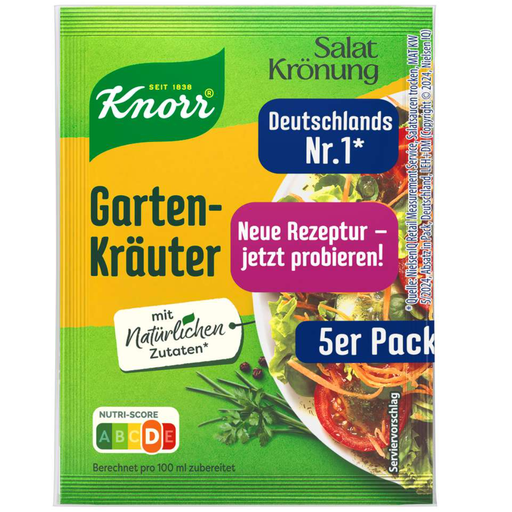
Why this product suits this profile: Five portion sachets provide predictable supplies for classic salads. Preparation requires water and oil.
The portion format makes it clear that extra oil is required. This makes it easier to plan the actual preparation quantity.
5 x 90 ml, dried herbs and preparation in just a few steps. According to the product details, contains milk and mustard.
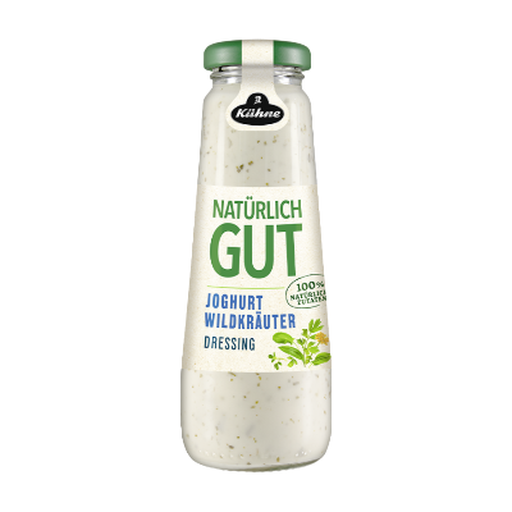
Why this product suits this profile: The recipe combines yoghurt with watercress, wild garlic, sorrel and lovage, making it a good choice for shoppers looking for a distinctly herb-led flavour.
The ingredients list identifies the herbs and allergens included. Milk and egg are clearly stated and can be checked before purchase.
250 ml bottle, 20% low-fat yoghurt and several specifically named wild herbs. According to the product details, 235 kcal per 100 ml.
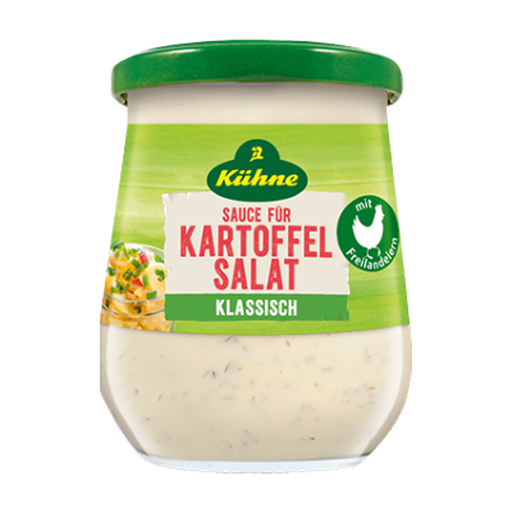
Why this product suits this profile: If you regularly prepare potato salad as a side dish, you get a ready-to-use sauce for around 600 g of cooked potatoes, according to the product description.
The recommended quantity of potatoes makes portion planning easier. Milk and gluten information should nevertheless be checked against the current label.
250 ml, vegetarian and, according to the product details, lactose-free and gluten-free. Contains egg and mustard and should be refrigerated after opening.
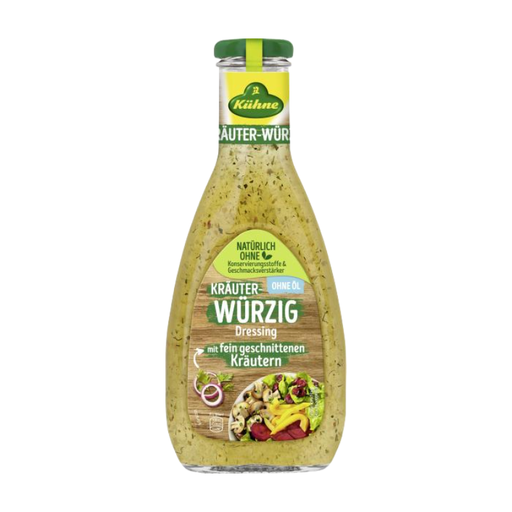
Why this product suits this profile: The large bottle is ideal for regular salads. According to the product description, the dressing is made without oil.
The low fat value can be verified directly in the nutrition table. However, sugar and salt levels should also be considered when making your personal choice.
500 ml, 25 kcal and less than 0.1 g of fat per 100 ml. According to the product details, gluten-free and lactose-free.
We have put together a complete, regularly updated list of products that fully meet these strict selection criteria and the safety regulations applicable in the EU.
A vinaigrette made with vinegar and oil is often a good match for leafy salads and can be enhanced with herbs, mustard or fruity notes. A Caesar dressing is usually creamier and, depending on the recipe, may contain mustard, celery or other seasonings. For a sweet and savoury flavour, honey mustard varieties are worth considering.
If you are looking for a vegan salad dressing, you could consider a variety based on vinegar, oil or onion. According to the product details, Kühne Sweet Onion Salad Dressing is labelled vegan and lactose-free. For fruit salads, rocket or lamb’s lettuce, a raspberry vinaigrette such as Kühne Enjoy Raspberry Vinaigrette Dressing offers a fruity alternative.
A special potato salad dressing is designed to complement the consistency and flavour of cooked potatoes. According to the product description, Kühne Potato Salad Dressing Classic is intended for around 600 g of potatoes. If you have allergies, check the egg and mustard information.
Not necessarily. Water and often oil are added to the mix. For a meaningful comparison, look at the nutritional information for the prepared mixture, rather than just the dry powder. With a bottled dressing, the value per 100 ml is stated directly on the label.
This depends on the recipe, packaging and manufacturer’s instructions. Many products must be refrigerated after opening and used within a few days or the specified period. Always check the particular label and look out for changes in smell, appearance or consistency.