Slicing cold cuts regularly on weekdays
If you often portion salami for lunchboxes, the cutting thickness setting and the blade actually included are important points to compare.


For consistently even slices of salami, choose an electric food slicer with a cutting thickness setting and blade to suit the result you want. Also check whether the carriage and blade are accessible for cleaning, and whether the appliance has a safe place to operate; folding models save space only when stored. A slicer is no substitute for good hygiene or keeping sliced meat properly chilled.
If you often portion salami for lunchboxes, the cutting thickness setting and the blade actually included are important points to compare.
If you use the slicer regularly for ready-to-eat cold cuts, check how easily the carriage, blade and surfaces that come into contact with food can be cleaned, as set out in the instructions.
If you also want to slice smaller pieces of salami, relevant features include the way the food is guided, the finger guard and the end-piece holder.
First decide how you want your slices to look for your lunchboxes, then consider handling, cleaning and how much space the slicer takes up in use.
| Priority | What to check before buying | Who is this important to? |
|---|---|---|
| The right slice | Compare the cutting thickness setting and the blades included with the exact model variant. | If I want to cut salami into even, suitably thin slices for lunchboxes, the result is crucial. Around 36% of consumers put this at the top of their list when buying. |
| Cleaning | Check which parts are removable or easy to reach, and what the instructions say about cleaning. | If I slice regularly, I want to be able to reach the blade and surfaces that come into contact with food easily. Around 29% of consumers prioritise a practical cleaning routine. |
| Guiding small pieces of sausage | Check the carriage, finger guard, end-piece holder and switch against the product details and instructions. | As I get to the last piece of salami, I want to guide it using the protective parts provided. Around 21% of consumers prioritise safe handling. |
| Counter space and storage | Consider the appliance’s dimensions in use, how it is stored and whether it will stand securely on your worktop. | If I need to put the appliance away between weekdays, I care about more than just cupboard space: I also need room on the worktop while slicing. Around 14% of consumers focus on storage space. |
The additional smooth blade is specifically listed for the Graef G52 TWIN. You can’t assume the G52 includes the same items based on its name alone.
Before buying, compare the full variant name and the blades listed.
Sliced cold cuts still need to be stored and chilled appropriately for the particular sausage.
Slice only what you need and follow the storage instructions on the salami. For transport, the consumer advice centres recommend using a cool bag.
The folding feature of the Severin AS 3912 is for storage. The food slicer still needs a suitable, safe place while it is in use.
Check both your storage space and the worktop where you plan to use the appliance.
The SKS110 and G52 TWIN models offer different features in a food slicer.
The E 16 is an example of an angled metal food slicer with a removable carriage.
The AS 3915 and AS 3912 cater for different space and handling needs.
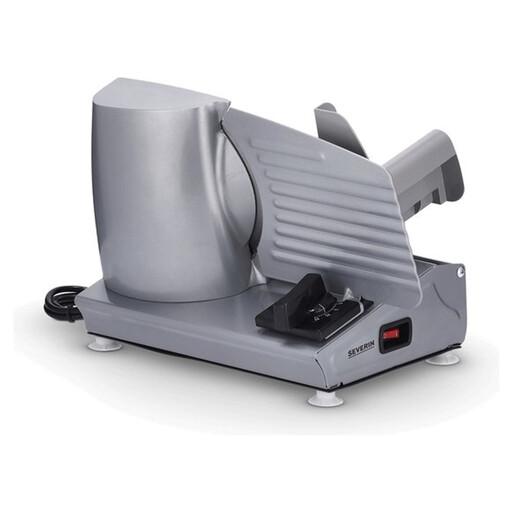
This selection of Joybuy products includes electric food slicers for preparing salami for lunchboxes, including a foldable model.
 No image available
For slicing salami regularly, the adjustable cutting thickness and the way smaller pieces are guided are useful features to consider.
The cutting thickness is listed as 0 to 15 mm; a finger guard and end-piece holder are specified for the AS 3915. The product name lists 180 W and a ham blade. According to the product details, the appliance is not intended for frozen food or bones.
 No image available
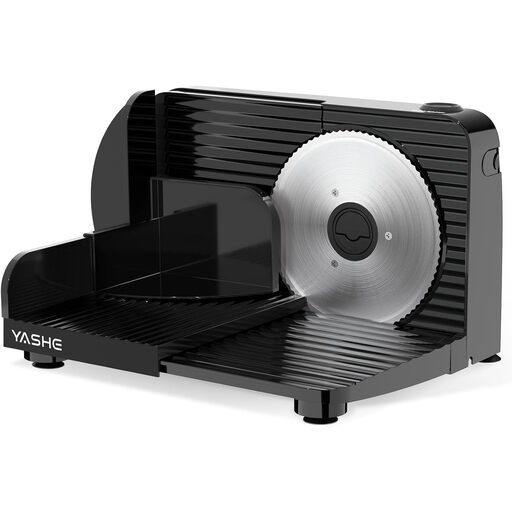
If you need to put the appliance away after slicing, its foldable design is a useful feature; just make sure you still have enough space to use it safely.
The product name lists 180 W, a cutting thickness setting of 0 to 15 mm and a 17-cm stainless steel blade. Removable parts are also specified for this model.
 No image available
The adjustable cutting thickness is useful if you want slices of different thicknesses; the foldable design is intended to make storage easier.
The product name lists a setting of 0 to 15 mm, a stainless steel blade and a foldable design. A food holder and safety cover are also specified. According to the product details, the appliance is not intended for frozen food or bones.
Check the cutting thickness setting and the blades included with the exact model variant. Graef describes the G52 TWIN as coming with an additional smooth blade for particularly thin cold cuts; this does not tell you what is included with another G52 variant.
Unplug the appliance before taking it apart or cleaning it, and follow the operating instructions. Clean any utensils and surfaces that have come into contact with cold cuts. Before buying, check whether the blade or carriage on your chosen model is accessible or removable.
There is no single answer that applies to every type of salami and journey time. Follow the storage instructions for the specific product: consumer advice centres recommend storing sausage and cold cuts in the fridge and using a cool bag for transport. The German Federal Institute for Risk Assessment stresses that perishable food should be kept as cold as possible until it is eaten or prepared.
Compare the full model number, the blades and end-piece holder included, and the availability of suitable spare parts for that exact variant. An additional smooth blade is specifically listed for the Graef G52 TWIN; don’t assume that a basic model includes the same items based on its name alone.
Yes, if the appliance falls within the scope of the Low Voltage Directive. The European Commission gives a rated voltage of 50 to 1,000 V AC for this purpose. A new appliance covered by the directive and placed on the market in Germany must meet the applicable conformity requirements, including CE marking. This does not confirm that a particular product listing is compliant, nor is it an independent quality mark for slicing performance.