
Lieferung heute & morgen

Qualitätsgarantie

Willkommens-Angebote freischalten: KOSTENLOSE Lieferung | Bis zu 80 % RABATT | Kostenlose 30-Tage-JoyPlus-Testphase
App herunterladen
As a Joybuy Product Recommendation Officer, I see cat owners trying to make the right choice for their pets every day. The market for salmon wet cat food is particularly vast, and product descriptions can be confusing. Many well-intentioned purchases later turn out to be unsuitable or are simply rejected by the cat. This guide is designed to help you navigate the common pitfalls and make an informed decision.
Before you decide on a product, you should be aware of the common marketing traps that often lead to poor purchasing decisions.
To ensure you select a suitable food for cats with salmon, you should check three key aspects.
A transparent declaration is a mark of quality. An "open declaration" lists all ingredients individually (e.g., "20% chicken, 4% salmon"), while a "closed declaration" groups ingredients (e.g., "meat and animal derivatives"). An open declaration gives you more control over what your cat eats. Pay attention to the actual salmon content and the total meat or fish percentage.
The texture of the food is often a matter of your cat's preference. Whether it's wet food with salmon in gravy or wet food with salmon in jelly, either can be a good choice. What's more important is what's inside. Check the ingredients list for:
For daily use, salmon cat food pouches or trays are practical as they guarantee freshness. Once you've found a variety your cat loves, a salmon cat food multipack can be a cost-effective and convenient solution to always have a supply on hand.
Here are some products tailored to the different requirements of cat owners in the UK.
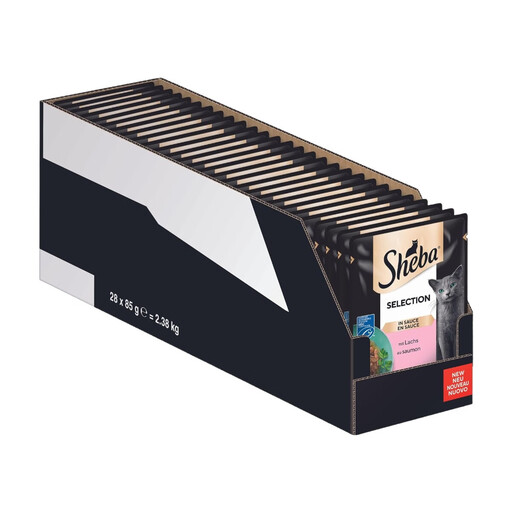
Why it's a good fit: Ideal for households that want a reliable brand and wish to save on costs and shopping trips by buying a large multipack. The 28 pouches can cover your needs for several weeks.
As a declared complete food, it ensures your cat receives all the necessary nutrients for their daily diet, preventing you from accidentally feeding them just a snack.
Uses MSC-certified salmon, which indicates sustainable fishing. According to the manufacturer, the recipe is free from artificial colours and preservatives.
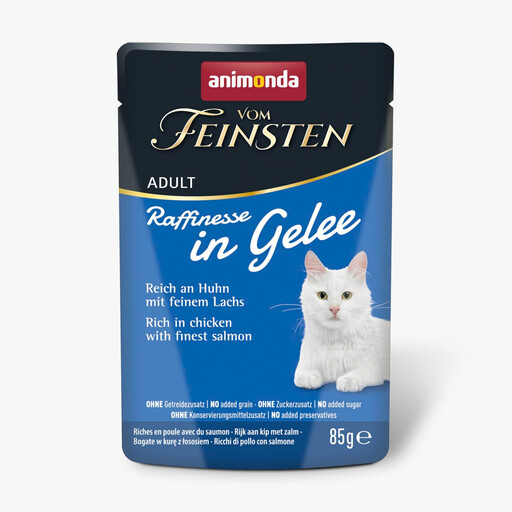
Why it's a good fit: Fulfills the desire for a recipe without unnecessary fillers. It is aimed at owners who place special value on a transparent and species-appropriate diet.
The recipe is explicitly declared as grain-free, sugar-free, and soy-free. This avoids the trap of hidden and unwanted additives.
Clear, open declaration of meat and fish components (35% meat and animal derivatives, 4% ASC-certified salmon) and no artificial additives.
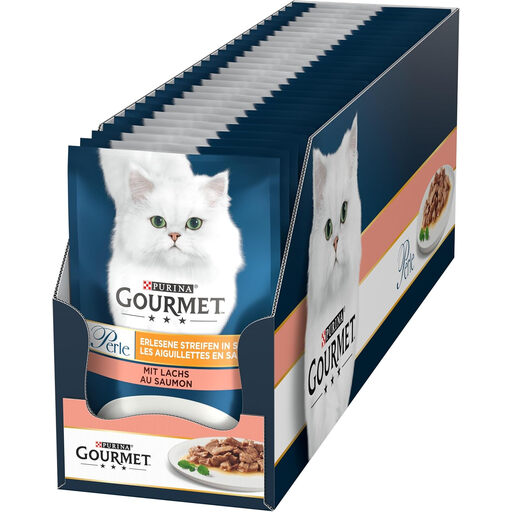
Why it's a good fit: The texture of fine fillets in gravy is specially designed for the preferences of demanding cats and can increase food acceptance in fussy eaters.
Offers a tasty alternative to standard p?tés, which are often rejected. This helps ensure that the cat actually eats its meal and gets enough nutrients.
A balanced recipe as a complete food that, according to the manufacturer, contains no artificial colours, preservatives, or flavourings and is packaged in convenient pouches.
We have compiled a complete, up-to-date list of products that fully meet these strict selection criteria and UK regulations.
1. How do I recognise high-quality wet cat food with salmon? Look for an open declaration where the ingredients are clearly named. A high meat and fish content, the absence of sugar, grain, and artificial additives, and the designation as a "complete food" are good indicators of a high-quality product.
2. Is wet food in gravy or jelly better for my cat? From a nutritional standpoint, there is no fundamental advantage or disadvantage. The decision depends almost exclusively on your cat's preference. Some prefer the more liquid consistency of gravy, while others prefer the firmer texture of jelly. Both versions contribute to fluid intake.
3. How much wet food with salmon does an adult cat need per day? The required amount depends on your cat's weight, age, and activity level. As a rough guideline, an average-active, 4 kg cat needs about 200 to 250 grams of wet food per day, divided into at least two meals. However, always follow the manufacturer's feeding recommendations on the packaging, as this can vary from product to product.