
Lieferung heute & morgen

Qualitätsgarantie

Willkommens-Angebote freischalten: KOSTENLOSE Lieferung | Bis zu 80 % RABATT | Kostenlose 30-Tage-JoyPlus-Testphase
App herunterladen
Freshly ground spices can make it easier to season food at the table and give you a choice of grind sizes. But when buying salt and pepper mills, design isn’t the only thing to consider. Some products look high-quality but offer no clear way to adjust the grind, are difficult to clean or are designed to be filled just once.
Glass, stainless steel, bamboo and clear acrylic can all look at home in a kitchen or on a dining table. But the material alone says little about how durable the grinding mechanism is. The construction, care instructions and suitability for dry spices are all important factors.
A glass salt mill lets you see how much is left and can help protect salt from moisture. However, glass is more fragile than many plastic housings. When choosing a stainless steel salt mill, check whether the housing is actually made from stainless steel and which parts come into contact with the contents.
An adjustable grind is only useful if the setting is easy to understand and stays in place during use. Ideally, you can choose between fine and coarse settings for fine table salt, coarse salt crystals or peppercorns. Some mills are less precise by design, even if the product description says the grind is adjustable.
An electric spice mill needs batteries and should be kept away from moisture. Models with LED lighting use extra power, but make it easier to see where the seasoning is coming out in dim light. Check the information about battery type, cleaning and suitability for dry spices. Wet ingredients or damp salt can affect the grinding mechanism and, in electric models, the motor too.
A ceramic grinding mechanism is common in many spice mills designed for the kitchen and dining table. It may be suitable for salt, pepper and dry spices, and is often associated with corrosion resistance. Even so, check the specific product description: not every grinding mechanism is suitable for every type of spice.
When choosing a spice mill with a ceramic grinding mechanism, look out for the following:
A pre-filled iodised salt mill or Himalayan salt mill is convenient for immediate use. However, the type of salt, the quantity and whether the mill can be refilled will vary.
Capacity affects how often you’ll need to refill the mill. A compact manual salt mill fits neatly on a small table, while larger models may need refilling less often in households where they’re used frequently. Check the height and diameter too: an electric mill that’s 23 centimetres tall needs more storage space than a model measuring 14.5 centimetres.
Salt absorbs moisture and can clump. That’s why a salt mill should be stored in a dry place and not cleaned under running water unless the manufacturer explicitly says it’s safe to do so. Glass and plastic containers can often be wiped with a damp cloth; electric models must not be submerged. If you’re buying a salt shaker set with separate containers, check whether lids are included and whether the containers should be washed by hand.
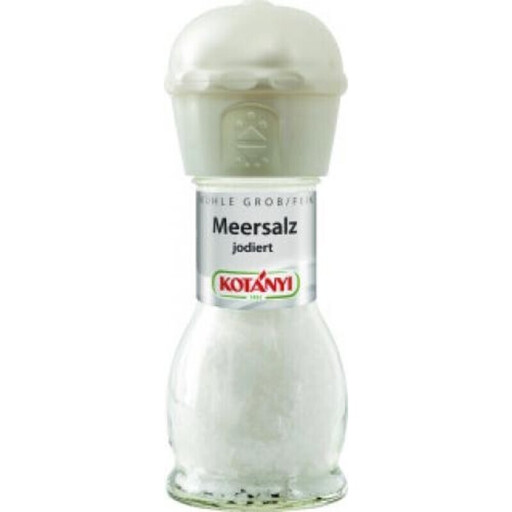
Why it’s a good fit: This pre-filled salt mill is ideal if you want to start seasoning straight away, without filling it yourself. It contains 92 g of iodised sea salt and has a glass housing and ceramic grinding mechanism.
The capacity and material are clearly stated. This lets you plan for one-time use before buying; according to the product information, the mill can’t be refilled.
92 g capacity, approx. 14.5 cm tall, glass housing and ceramic grinding mechanism; designed for dry storage and hand cleaning.
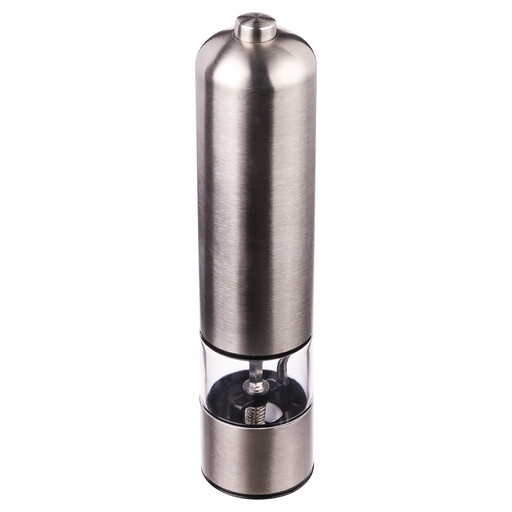
Why it’s a good fit: One-touch electric operation, LED lighting and an adjustable grind make this a good choice if you season food regularly at the hob or dining table and prefer features that are easy to see and use.
The specifications state that it takes four AA batteries, has an adjustable grind and is only suitable for dry ingredients. This makes its power requirements and limitations clear before you buy.
304 stainless steel housing, ceramic grinding mechanism, LED light at the outlet and a 60 g capacity for salt.
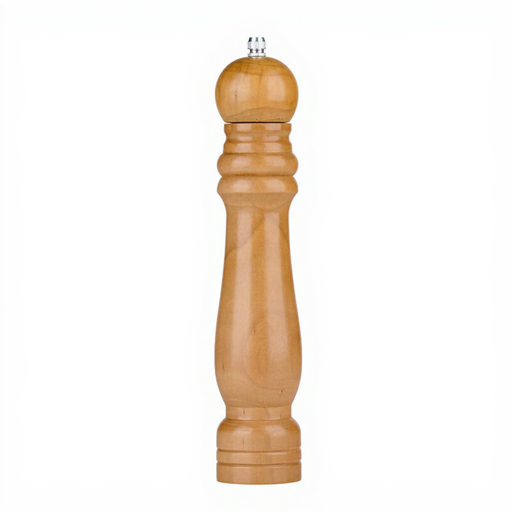
Why it’s a good fit: At 25 cm tall, this salt and pepper mill set is suited to households that want to store salt and pepper separately and use them regularly in the kitchen or at the dining table.
The set includes two mills, with a grind that can be adjusted from fine to coarse according to the product description. That saves you having to find two different individual models.
Two mills in one set, 25 cm tall, with a manual twist mechanism and adjustable grind.
We’ve put together a complete, regularly updated list of products that meet these strict selection criteria and fully comply with the safety regulations in force in the EU.
For coarse salt crystals, the product description should explicitly state that salt is suitable. A ceramic grinding mechanism and adjustable grind can help you choose the right mill. Damp salt isn’t suitable for many mills, as it can clump and block the mechanism.
As well as the purchase price, you’ll need to factor in the ongoing cost of batteries. For a model that takes four AA batteries, battery life depends on the motor’s power, how often you use it and how long you grind each time. A manual salt mill doesn’t need a power source, but does take more effort to turn.
There’s no reliable way to give a set lifespan without specific information from the manufacturer. Storing the mill in a dry place, using suitable spices and following the cleaning instructions can help keep it working properly. With pre-filled, single-use models, you can use the mill until the contents run out; refillable mills are designed for a different kind of use.