Breakfast shoppers keeping an eye on salt
You want to choose a variety for Easter breakfast or brunch based on its stated salt content. As well as the figure per 100 g, you want to know whether salt is listed as an ingredient.


If keeping salt low is important at your Easter breakfast, compare the salt content per 100 g and the ingredients list for the specific porridge variety, rather than relying on a protein or recipe claim. Peter Kölln lists 0.04 g of salt per 100 g for its Fruit Oat Porridge, while Seitenbacher lists 0.2 g per 100 g for its Strawberry Protein Porridge. Taste, allergens and how you want to prepare it also matter. The figures for these two varieties do not apply to other products from those brands.
You want to choose a variety for Easter breakfast or brunch based on its stated salt content. As well as the figure per 100 g, you want to know whether salt is listed as an ingredient.
You’re looking for a quick-to-prepare, protein-rich portion to enjoy on the go or at work. Even with these mixes, the salt content and ingredients need to suit your preferences.
You want to serve porridge with your choice of fruit, spices or seeds. That makes the base’s ingredients and allergen information just as important as whether you can prepare it the way you like.
For an Easter breakfast, it’s worth deciding what matters most to you first: salt content, suitable ingredients or a quick-to-prepare protein mix. Then you can compare the details of specific varieties without assuming that one claim on the pack tells you everything about the recipe.
| Criterion | What to check when buying | Who it matters most to |
|---|---|---|
| Salt content | Compare salt per 100 g across similar products and check the ingredients list for added salt. | For my Easter breakfast, I want to choose varieties based on a specific salt figure, not a general claim on the pack. This is the main priority for around 42% of consumers. |
| Ingredients and allergens | Read the ingredients, allergen information and, where relevant, the vegan claim for the variety you’ve chosen. | When guests avoid different ingredients, I want to know exactly what’s in the base before serving it. Ingredients and dietary requirements are the top buying priority for around 33% of consumers. |
| Protein and preparation | Check the protein figure and preparation instructions for the specific mix, and compare its salt content separately. | For a breakfast with little time to prepare, I’m looking for a protein-rich mix that fits my routine. This is the main reason to buy for around 25% of consumers. |
The varieties checked differ in their salt content: Peter Kölln lists 0.04 g per 100 g for its Fruit Oat Porridge, while Seitenbacher lists 0.2 g per 100 g for its Strawberry Protein Porridge. A protein claim doesn’t tell you how much salt a product contains.
Compare the salt figures for the varieties you’re considering first, then treat protein content as a separate criterion.
Peter Kölln describes its Fruit Oat Porridge as having a recipe with no added salt, yet lists 0.04 g of salt per 100 g. A recipe claim and a nutritional value are not the same thing.
For the variety you choose, check both the ingredients list and the ‘salt’ nutritional value per 100 g.
The ingredients can vary between porridge varieties. Seitenbacher lists milk protein and flaked almonds in its Strawberry Protein Porridge; Kölln’s Fruit Oat Porridge may contain traces of nuts and milk.
For every variety you serve, check the ingredients and allergen information on the specific pack.
For comparing salt content, information about the specific variety is more useful than the brand name. The following examples can help you understand how recipes differ.
Kölln makes oat porridge in fruit, nut and plain varieties, as well as a High Protein range.
Seitenbacher offers, among other things, protein-focused porridge mixes.
H. & J. Brüggen KG describes its production of oat products and own-label ranges for retail chains.
This selection includes oats and a porridge variety for a breakfast with toppings of your choice. To make a salt-conscious choice, check the nutritional information and ingredients list on the specific pack for each product.
 No image available
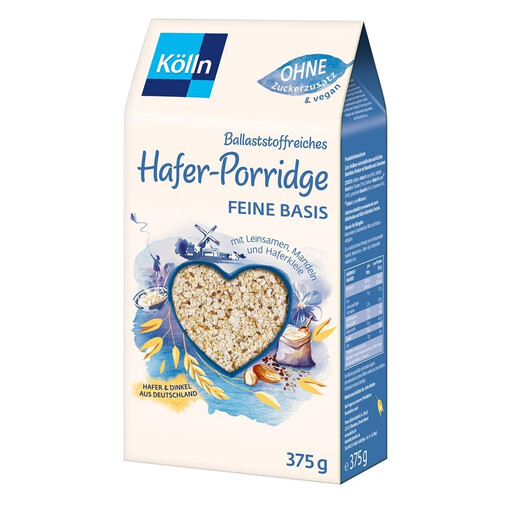
A fine oat base for making your own porridge for Easter breakfast.
To decide whether it suits your salt preferences, compare the nutritional information and ingredients list on this pack.
 No image available
A porridge option for anyone who wants to add their own toppings to Easter breakfast.
The salt and ingredients information for Kölln Fruit Oat Porridge doesn’t automatically apply to this variety; check the details on the specific pack.
 No image available
Fine rolled oats as a base for porridge with ingredients of your choice.
If your guests avoid certain ingredients, check the allergen information on this pack as well as the salt content.
 No image available
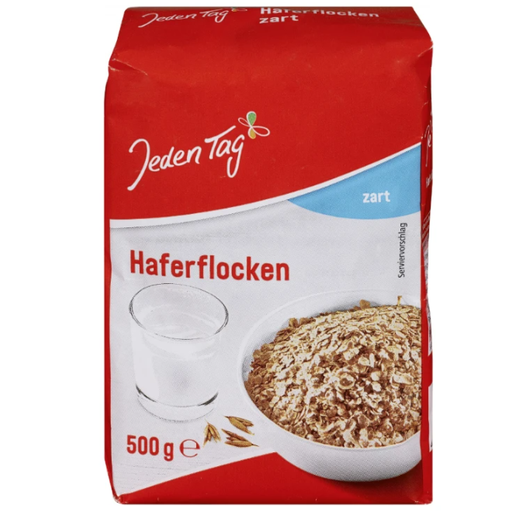
Fine rolled oats for porridge with toppings you choose yourself.
The nutritional information, ingredients and allergen details on the pack will help you decide whether this variety suits your salt preferences and guests.
 No image available
Choose coarse rather than fine rolled oats if you prefer this type for your homemade porridge.
Compare salt per 100 g and the allergen information on the specific pack rather than assuming the details for the fine variety apply.
No. Peter Kölln describes its Fruit Oat Porridge as having a recipe with no added salt, but lists 0.04 g of salt per 100 g. Check both the recipe claim and the ‘salt’ nutritional value for the variety you choose.
Yes. A protein claim is no substitute for comparing salt content or checking the ingredients. Seitenbacher lists 0.2 g of salt per 100 g for its Strawberry Protein Porridge, along with milk protein, flaked almonds and sea salt. Other varieties have their own pack information.
Check the details for the specific variety on the product page, then compare them with the pack before serving. The Verbraucherzentrale recommends checking ingredients and allergen information on packaged foods, especially when guests avoid certain ingredients.
For its Fruit Oat Porridge, Kölln describes preparation as warm, cold or overnight. For a different mix, check its preparation instructions. Ingredients, salt content and allergen information remain important whichever way you serve it.