Small-batch makers
You mainly want to make a small amount of salted caramel ice cream at a time, so you compare the permitted fill level rather than looking at the bowl size alone.


For occasional small portions, an ice cream maker with a freezer bowl is a good choice if you have space in your freezer and can plan ahead. A compressor ice cream maker is more convenient if you want to make ice cream on a whim or prepare several batches without refreezing the bowl. When comparing models, check the permitted ice cream mixture fill level, not just the bowl capacity. Any heated salted caramel base must be completely cool before churning.
You mainly want to make a small amount of salted caramel ice cream at a time, so you compare the permitted fill level rather than looking at the bowl size alone.
You want to get started without a pre-frozen bowl or occasionally make several batches. You’ll need space for a self-cooling machine.
You cook a caramel base or want to add mix-ins, and pay attention to when the mixture has cooled sufficiently and how easy the machine’s parts are to clean.
A good fit if: You plan to make small batches and have room in your freezer for the bowl.
The trade-off: The bowl needs to be frozen in advance, so you can’t necessarily make a second batch straight away.
A good fit if: You want to churn without a pre-frozen bowl or plan to make several batches in a row.
The trade-off: TÜV SÜD notes that compressor models generally need more worktop space. You’ll still need to let any heated caramel mixture cool before churning.
| What to consider | What to look for | Who should pay particular attention |
|---|---|---|
| Amount per batch | Check the permitted fill level for the ice cream mixture separately from the bowl capacity and the stated quantity of finished ice cream. | If I’m only churning a small amount of salted caramel ice cream, I want to know how much mixture I can actually put in. Around 33% of consumers put finding the right portion size first. |
| Cooling system and preparation time | Compare compressor models with machines that use a pre-frozen bowl, and check the freezing instructions for each model. | If you want to get started spontaneously or make several batches without refreezing the bowl, pay particular attention to how quickly the machine is ready to use. This is a priority for around 27% of consumers. |
| Caramel base and mix-ins | Check the instructions for the temperature, timing and quantity of caramel or other mix-ins. | If I’m using a cooked caramel base or mix-ins, I want to plan the process around the recipe. Around 20% of consumers put recipe options first. |
| Space and cleaning | Check the space needed on your worktop and in your freezer, as well as which parts are removable and the specific cleaning instructions. | If you have limited space or often clean the machine after making small batches, consider storage and maintenance. Around 20% of consumers put these factors first. |
The size of the freezer bowl doesn’t automatically tell you how much liquid ice cream mixture it can hold. Rommelsbacher specifies a 1.5-l freezer bowl and a fill level of up to 500 ml for the IM 12; MEDION gives a fill level of 800 ml for the MD 18387, with a capacity for 1.5 l of ice cream.
Look in the instructions for the stated fill level for the ice cream mixture, and adjust your recipe accordingly.
You may not be able to make the recipe as planned in a single batch if you prepare too much mixture.
A heated base needs to cool before churning. With machines that use a freezer bowl, you’ll also need to allow time for the bowl to freeze.
Plan the caramel preparation, cooling, any freezing time and churning as separate steps.
An opening can make it easier to add mix-ins while churning, but it won’t cool a hot base or guarantee a particular consistency.
Let the caramel base cool, and follow the recipe and machine instructions for when and how much to add.
The KÜCHENminis 3-in-1 ice cream maker is an option for small, planned portions.
The IM 12 Kurt uses a pre-frozen bowl.
The LIFE MD 18387 is a self-cooling compressor ice cream maker.
The EZ 7407 combines a compressor ice cream maker with a yoghurt function.
The Freeze Ease ICE90E is a self-cooling ice cream maker.
This selection features self-cooling compressor ice cream makers for making ice cream without a pre-frozen bowl.
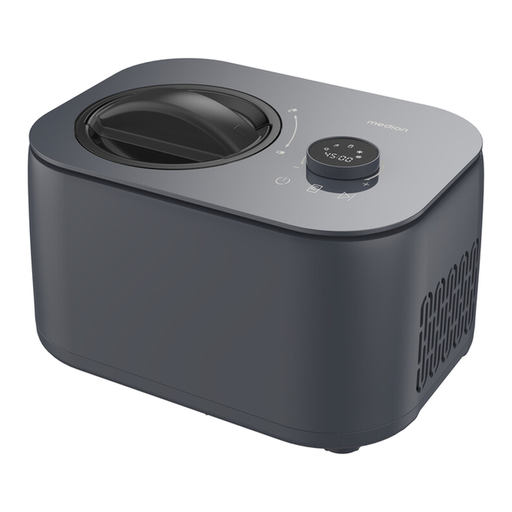 No image available
According to the product details, the compressor lets you make ice cream without a pre-frozen bowl.
The product details specify a 1-l capacity, 100 W, a removable bowl, a digital timer and automatic shut-off.
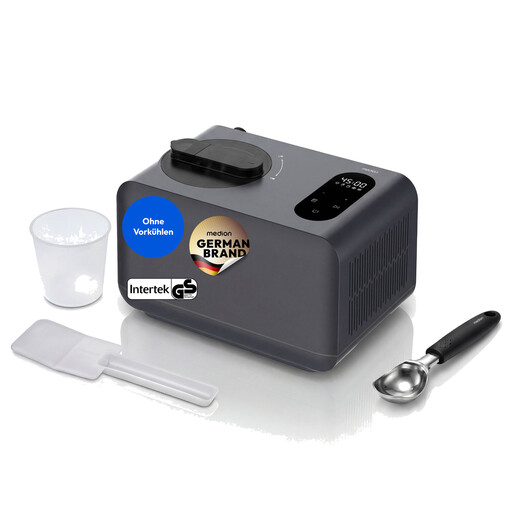 No image available
The compressor is designed to make ice cream without having to pre-freeze the bowl.
The product details specify a 1.5-l capacity and 150 W. The instructions give a running time of around 45–60 minutes; this isn’t the same as the total preparation time for a recipe.
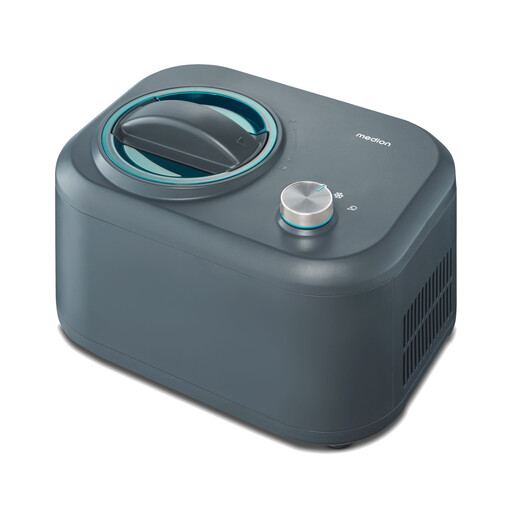 No image available
The self-cooling design is intended for making ice cream without a pre-frozen bowl.
The product details specify a 1-l capacity, 100 W and an aluminium bowl. Ice cream, frozen yoghurt and sorbet are listed as options.
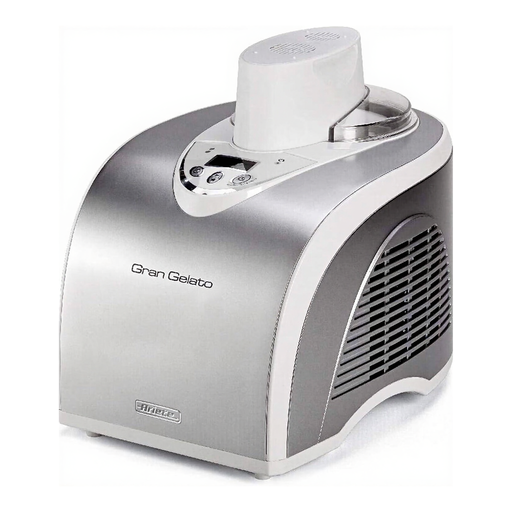 No image available
The built-in compressor means there’s no need to pre-freeze the bowl. The machine then keeps the ice cream cool for up to an hour.
The product details specify a 1-l capacity, a removable bowl, a digital timer and automatic shut-off.
No. Let the prepared base cool completely before churning. A WMF recipe recommends cooling heated ice cream mixture in the fridge; Cuisinart also cools the base for one of its recipes before adding it to the machine. Always follow the specific recipe and the machine instructions.
If your recipe contains egg, good hygiene and thorough chilling are important. The German Federal Institute for Risk Assessment classifies ice cream made with unpasteurised egg as a high-risk food. You don’t need egg for every salted caramel recipe. If you do use it, follow the guidance on handling perishable ingredients safely.
You shouldn’t assume that they are. Rommelsbacher lists a second freezer bowl for the IM 12 specifically as an accessory, so check what’s included and which accessories are available for the model you’re considering. The Verbraucherzentrale also distinguishes between your statutory rights against the seller and a voluntary manufacturer’s guarantee.
The CE marking is relevant for electrical appliances covered by applicable EU rules. According to the European Union, the manufacturer uses it to declare that the product meets the relevant requirements; it isn’t a quality mark awarded by a central EU body. Appliances covered by the Low Voltage Directive must meet its requirements.