
Lieferung heute & morgen

Qualitätsgarantie

Willkommens-Angebote freischalten: KOSTENLOSE Lieferung | Bis zu 80 % RABATT | Kostenlose 30-Tage-JoyPlus-Testphase
App herunterladen
An unprotected display can quickly show signs of everyday wear: keys in your pocket, dust trapped between the smartphone and its case, or a drop onto a hard surface may be all it takes. However, anyone looking to buy a Samsung Galaxy S25 screen protector will find a wide range of materials, coverage options and hardness ratings. Not every protector is automatically compatible with the Galaxy S25—and some marketing claims offer less substance than they initially suggest.
This buying guide explains what Samsung Galaxy S25 owners should look for and which products suit different usage profiles.
The model designation is crucial. A protector for the Samsung Galaxy S25 Ultra or Galaxy S25+ is not automatically compatible with the Galaxy S25. Differences in display dimensions, camera areas and edges may cause the protector to overhang, fail to adhere fully or interfere with a case.
Before buying, check the smartphone’s exact model designation. This guide only includes products listed as compatible with the Samsung Galaxy S25.
Ratings such as 7H or 9H primarily refer to scratch resistance according to the testing method used. They do not mean that a screen protector is unbreakable or will absorb every impact. Even hybrid glass can be damaged by significant force.
A Samsung Galaxy S25 tempered-glass or hybrid-glass solution should therefore be viewed as an additional layer of protection—not as a guarantee against display damage.
Bubble-free installation is not determined by the material alone. Dust particles, fingerprints and imprecise alignment can create visible imperfections. Incorrect positioning is particularly noticeable with a full-cover protector.
A cleaning cloth, dust-removal tool and alignment aid can make installation much easier. Some models are supplied with a complete installation kit.
A classic Samsung Galaxy S25 screen protector made from TPU is thin, flexible and can conform evenly to the display surface. It is well suited to users who prefer a discreet protective layer against scratches, dust and everyday grime. TPU Nano is often offered with a transparent finish and dirt-repellent properties.
Samsung Galaxy S25 hybrid glass, by contrast, combines a more rigid glass layer with a flexible backing layer. According to the respective brands’ product specifications, this construction is designed to balance scratch resistance, flexibility and impact absorption. Actual durability depends, among other factors, on material thickness, coating and manufacturing quality.
A standard protector covers the central display area. According to the product description, a Samsung Galaxy S25 full-cover protector extends to the edges of the display or is designed to provide the broadest possible coverage. This can be useful for users who frequently use their smartphone without a case.
When a phone case is involved, the edge design is especially important. A case-friendly screen protector should not extend so far beyond the usable display area that the case edge lifts it. After installation, check that the combination of protector and case is securely seated on all sides.
A very thick or poorly fitted protective layer can affect usability. Look for a transparent surface, precise cut-outs and clear information about touch compatibility. After installation, test swiping, tapping and, where applicable, the fingerprint sensor.
With a scratch-resistant screen protector, the surface coating and cleaning instructions are also important. A soft microfibre cloth is generally more suitable than abrasive cleaning products.
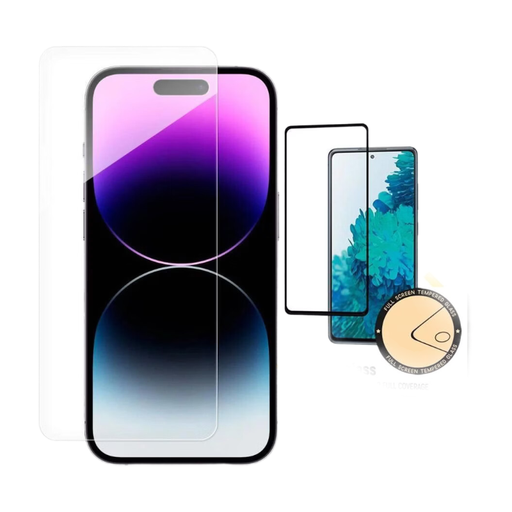
Why this pick is a good fit: The flexible TPU Nano film is designed for everyday use while remaining comparatively unobtrusive. It may appeal to users who primarily want to reduce scratches, dirt and fingerprints.
According to the product specifications, it is explicitly compatible with the Galaxy S25 and comes with a cleaning cloth, dust remover and installation card.
TPU Nano material, transparent finish and, according to the supplier, high resistance to scratches and dirt.
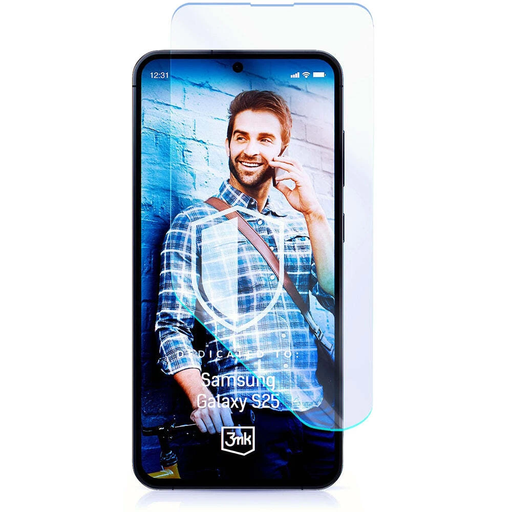
Why this pick is a good fit: This hybrid glass is aimed at users who want a more substantial protective layer without giving up a flexible construction and slim profile.
The product specifications list the Galaxy S25 as a compatible model and include an alignment aid and installation kit for bubble-free application.
According to the manufacturer, it is 0.3 mm thick and features a ceramic 7H layer, antimicrobial coating and flexible hybrid construction.
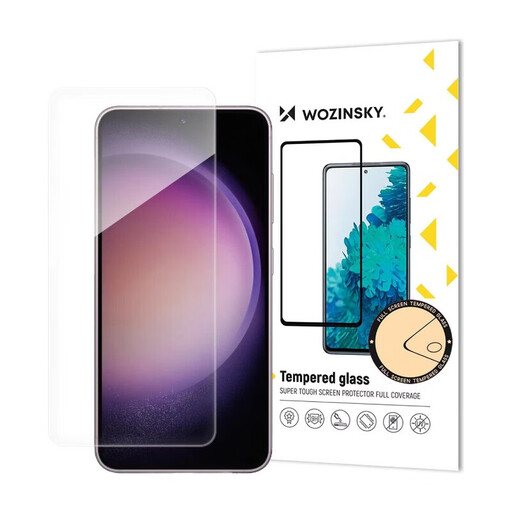
Why this pick is a good fit: Designed for edge-to-edge coverage, this protector is intended for people who want to cover as much of the display as possible and frequently use their smartphone on the go.
The product description explicitly highlights full-cover protection, dust-free installation and replacement in the event of damaged edges.
According to the product specifications, it offers edge-to-edge coverage, self-healing properties and protection against scratches and dirt.
The full category features a current selection of flexible screen protectors for different models and requirements.
For the cleanest possible installation, follow these steps:
A protector that has already been removed should generally not be reused, as its adhesion and fit may be compromised.
A case-friendly hybrid glass protector or a film that leaves a small margin around the edges is often a better choice than a full-cover protector that extends too far. The manufacturer’s specifications and the specific case design remain decisive.
Service life depends on usage, friction, cleaning and damage. The Samsung Galaxy S25 screen protector should be replaced if it develops visible cracks, lifting edges, deep scratches or trapped dirt.
TPU is suitable for a flexible, slim layer of protection against everyday scratches and dirt. According to the respective product specifications, hybrid glass provides a firmer surface and may appeal to users with higher protection requirements. The right choice depends on coverage, case compatibility and installation preferences.