
Lieferung heute & morgen

Qualitätsgarantie

Willkommens-Angebote freischalten: KOSTENLOSE Lieferung | Bis zu 80 % RABATT | Kostenlose 30-Tage-JoyPlus-Testphase
App herunterladen
A screen protector for the Samsung Galaxy S25 should help protect the display from scratches, knocks and fingerprints without affecting how you use your phone. But there’s more to consider than simply looking for “tempered glass”. The material, coverage, installation aid and compatibility with your case all affect whether a screen protector is genuinely suitable for everyday use.
If you own a Galaxy S25 or Galaxy S25 Edge, make sure you check the exact device model. A screen protector for the Galaxy S25 won’t necessarily fit the Galaxy S25 Edge.
The 9H tempered glass rating describes a standardised surface hardness test. It can give you an indication of scratch resistance, but it doesn’t guarantee that your phone will remain undamaged in every fall. No screen protector is unbreakable, and it doesn’t replace a protective case.
A full-cover screen protector extends as close as possible to the edges of the display. This improves coverage, but with a very snug case, the edges may lift. If you use your phone with a case, look specifically for terms such as “case-friendly” or “case compatible”.
A privacy screen protector for the Samsung Galaxy S25 Edge or Galaxy S25 limits visibility from the sides. This can be handy on the train, in a café or at the office, but it may make the screen harder for people next to you to see. Depending on the design, the display may also look darker when viewed at an angle. It’s worth deciding how you’ll use it before you buy.
First, check the exact model name:
A Samsung Galaxy S25 screen protector film is usually thin and flexible. It’s a good option if you prefer something lightweight. Traditional Samsung Galaxy S25 tempered glass has a firm glass surface and is often given a hardness rating such as 9H.
Samsung Galaxy S25 hybrid glass combines a hard top layer with more flexible material layers. This may suit you if you want a flat glass surface with a degree of flexibility. The exact construction, thickness and coating vary from one product to another.
Also look for:
A bubble-free installation depends on more than just the screen protector. Dust, grease and fine particles on the display can affect adhesion. A cleaning kit, dust-removal stickers, an alignment frame and a smoothing card can all come in handy.
For best results:
Don’t bend the glass by force. If it cracks or the edges chip, it’s best to replace it, as sharp edges can cause injury.
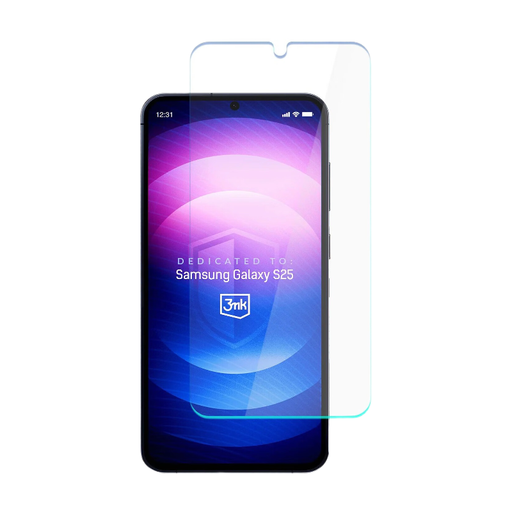
Why it suits this profile: This hybrid glass is designed for the Samsung Galaxy S25 and combines a flexible construction with a stated thickness of 0.3 mm. It comes with an installation kit that includes alignment aids and cleaning accessories.
Its flexible design reduces the risk of misaligning rigid glass at the edges. The stated 7H ceramic layer is also a more specific claim than a general promise of protection.
A 0.3 mm profile, flexible hybrid construction and installation accessories included.
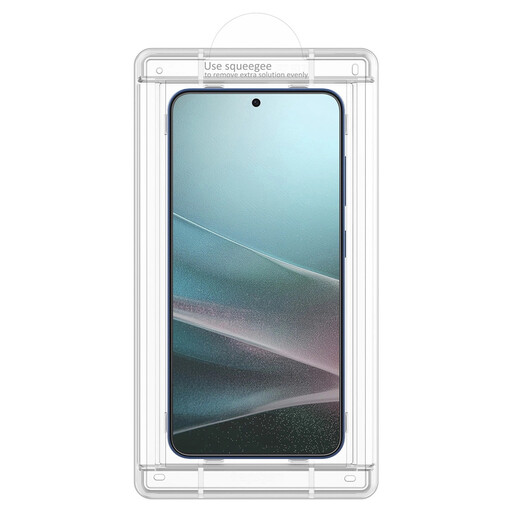
Why it suits this profile: This model is made for the Galaxy S25 and, according to the product details, offers 9H hardness, a glossy transparent surface and an EZ-Fit alignment aid.
The included alignment frame helps tackle the common problem of fitting a screen protector at an angle. The product description also makes clear that the screen protector doesn’t guarantee complete protection for your device.
A 9H hardness rating, EZ-Fit technology and a slim, transparent design.
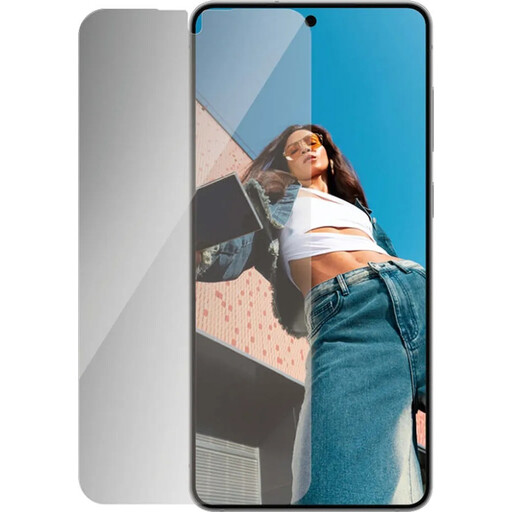
Why it suits this profile: For commuters and people who use their phone in public spaces, the built-in privacy filter limits visibility from the sides. This product is designed for the Samsung Galaxy S25 Edge.
The privacy filter’s viewing angle is specified as 30 degrees. This makes it easier to understand how it works than an unclear label such as “discreet privacy protection”.
A privacy filter, oleophobic coating, stated thickness of 0.35 mm and an application kit.
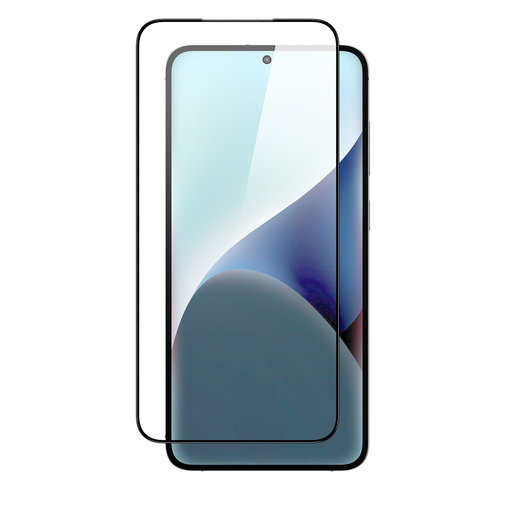
Why it suits this profile: This version for the Galaxy S25 is described as Full Glass and has an oleophobic coating. It’s designed to be installed at home.
The product details specifically mention the oleophobic surface and an installation aid. They also state a drop height of up to 1.2 metres; this is a product specification, not a guarantee for every fall.
Full-glass design, HD clarity, oleophobic coating and an installation process described as producing few bubbles.
We’ve put together a complete, regularly updated list of products that meet these strict selection criteria and fully comply with the safety regulations in force in the EU.
Even a scratch-resistant screen protector needs cleaning from time to time. A soft microfibre cloth is usually all you need. Abrasive cleaners, hard objects and harsh chemicals can damage the coatings. Replace the screen protector if you notice cracks, chipped corners or a loss of adhesion.
For a longer-lasting screen protector, keep these three points in mind:
It depends on how you plan to use it. Tempered glass with a 9H rating is aimed at users who prefer a firm, scratch-resistant surface. Hybrid glass is more flexible and can be a practical alternative for certain display shapes or cases. The key things to check are exact model compatibility and whether it fits your case.
The display must be completely clean, dry and dust-free. Once aligned, lower the screen protector slowly, starting from one side or the centre. An installation kit with an alignment frame and smoothing card makes the process easier. You can often gently push small bubbles towards the edge; if dust gets trapped underneath, avoid repeatedly peeling the protector back.
There’s no single answer. It depends on how you carry your phone, knocks, friction and whether you use it with a case. Replace the screen protector as soon as scratches interfere with use or you notice cracks or chips.