
Lieferung heute & morgen

Qualitätsgarantie

Willkommens-Angebote freischalten: KOSTENLOSE Lieferung | Bis zu 80 % RABATT | Kostenlose 30-Tage-JoyPlus-Testphase
App herunterladen
A suitable screen protector is an essential accessory for many Samsung Galaxy S25 owners. Yet choosing one can easily lead to a costly mistake: a protector may fit the standard model but not your Galaxy S25 Ultra, its edges may start lifting after a short time, or the fingerprint sensor may become less reliable.
The term ‘tempered glass’ alone tells you little about how well a screen protector will perform in everyday use. What matters is the material, coverage, fitting method and, above all, whether it’s genuinely compatible with your phone and case.
The Samsung Galaxy S25, Galaxy S25 Ultra and Galaxy S25 Edge differ in their screen shape, dimensions and, in some cases, sensors. A Samsung Galaxy S25 screen protector won’t necessarily fit the Ultra model. Before you buy, check the exact model name in your phone’s technical specifications.
Terms such as ‘universal’ or ‘for Samsung Galaxy’ aren’t a substitute for a specific model name. A protector that doesn’t fit properly may lift at the edges, particularly on the curved display of the Galaxy S25 Ultra.
The 9H rating usually describes scratch resistance according to a particular hardness scale. It doesn’t mean your phone will come through every drop unscathed. A glass screen protector can help protect the display from scratches and everyday contact, but it’s no substitute for careful handling or a suitable case.
A full-coverage screen protector covers the visible area right up to the edges. This is a good choice if you want to protect as much of the screen as possible. However, a very snug-fitting case may lift the edges. A case-friendly screen protector is designed to leave a little room around the case.
First, check that the protector is made for your exact model:
Also look out for terms such as full coverage, Ultra-Wide Fit, edge-to-edge or case compatibility. Screen protectors are available in clear designs, with black borders or as flexible hybrid options.
Tempered glass for the Samsung Galaxy S25 usually feels closer to the original display and has a smooth surface. It can break on impact and should be replaced if it cracks.
A flexible TPU screen protector is easier to adapt to curved surfaces and is often thinner. It’s particularly suitable if you want to keep changes to the screen’s feel and appearance to a minimum.
Hybrid glass combines a glass-like surface with more flexible layers. Products such as FlexibleGlass or Nano Glass can be a good alternative if you want both scratch protection and flexibility. Check the product details for the exact material composition and thickness.
A bubble-free fit depends not only on the product but also on preparing the screen in a dust-free environment. Fitting aids such as alignment frames, positioning stickers or squeegees can help prevent the protector from being applied crookedly.
If your phone has an ultrasonic fingerprint sensor, check whether the screen protector is compatible with it. If recognition becomes less reliable after fitting, it may help to register your fingerprints again. An oleophobic coating can reduce fingerprints and smudges, but won’t prevent them entirely.
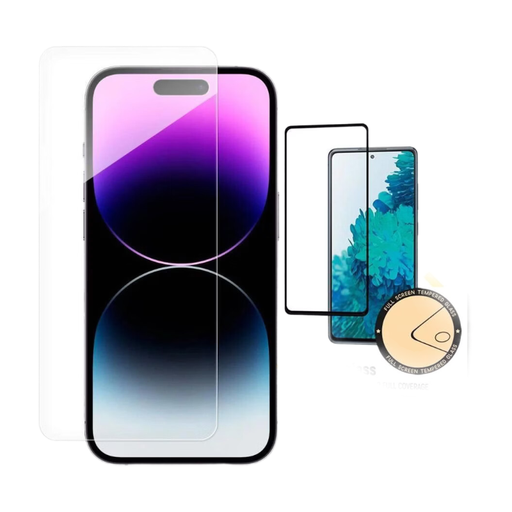
Why it suits this user: This TPU film is a good choice if you’re looking for a thin, clear Samsung Galaxy S25 screen protector with simple accessories.
Its stated compatibility with the Galaxy S25 reduces the risk of choosing a universal protector with the wrong shape. The fitting accessories also help with alignment.
TPU Nano material, clear finish, cleaning kit and installation card.
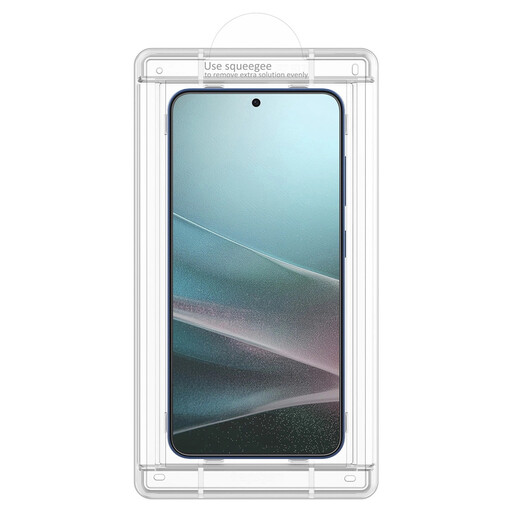
Why it suits this user: This model is for anyone who wants to combine tempered glass, a clear display and a guided fitting process.
The EZ Fit alignment frame helps address the common problem of a crooked or bubbly fit. The 9H rating should be understood as a measure of scratch hardness, not a guarantee against breakage.
Tempered glass, a 9H hardness rating, a clear surface and automatic alignment for easy fitting.
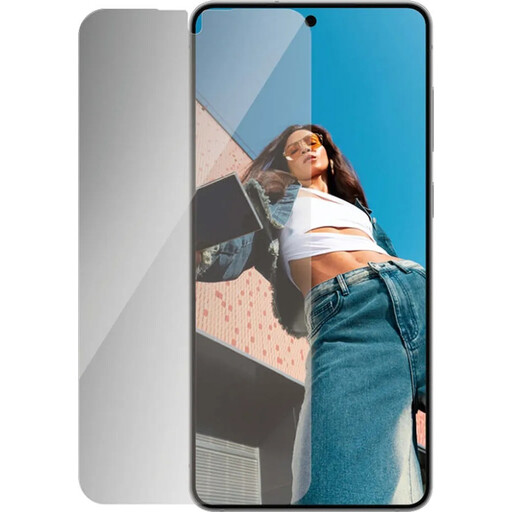
Why it suits this user: The built-in privacy filter is designed for anyone who wants to keep their screen less visible to others on the train, in a café or at the office.
The product is specifically listed for the Galaxy S25 Edge, helping you avoid confusing it with a Samsung Galaxy S25 screen protector made for the standard model.
Privacy filter, Ultra-Wide Fit, oleophobic coating and, according to the product details, compatibility with ultrasonic fingerprint sensors.
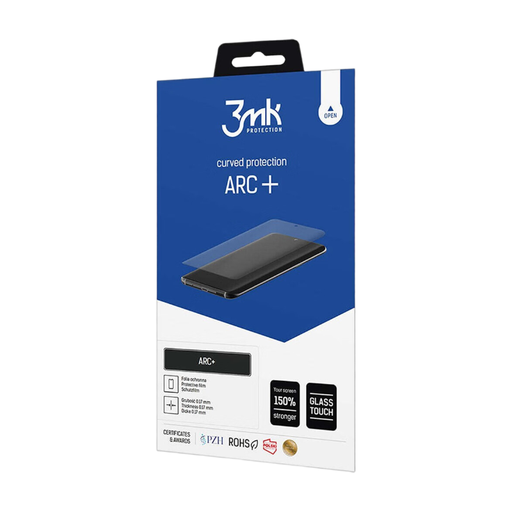
Why it suits this user: This flexible film is made for the Galaxy S25 Ultra and is a good option if you prefer a thin solution for a curved display.
Its stated compatibility with the S25 Ultra reduces the risk of choosing an unsuitable protector made for the standard model. The semi-wet fitting method can help with alignment on curved surfaces.
An ultra-thin 0.17 mm profile according to the product details, flexible ARC+ film and full touchscreen compatibility according to the manufacturer.
We’ve put together a complete, regularly updated list of products that meet these strict selection criteria and the applicable EU safety regulations.
Where possible, fit the protector in a low-dust room, and avoid pressing too hard or bending tempered glass. Replace the screen protector if it cracks, develops sharp edges or starts to come away at the sides.
Choose a product whose specifications explicitly state that it’s compatible with the ultrasonic fingerprint sensor. You may need to register your fingerprints again after fitting. However, this doesn’t guarantee compatibility with every combination of screen protector, phone and software.
Its lifespan depends on scratches, impacts, cleaning products and how well it stays attached around the edges. Replace the glass if you notice cracks, chips or lifted edges. There’s no reliable way to give a set lifespan that applies to everyone.
It depends on how you plan to use it. Tempered glass provides a hard, smooth surface that many people find comfortable for everyday use. A flexible film may fit curved displays better and often makes less difference to how the screen feels. The key factors are model compatibility, coverage, fitting and how well it works with your case.