
Lieferung heute & morgen

Qualitätsgarantie

Willkommens-Angebote freischalten: KOSTENLOSE Lieferung | Bis zu 80 % RABATT | Kostenlose 30-Tage-JoyPlus-Testphase
App herunterladen
A sand and water play table promises hours of creative outdoor engagement and supports the sensory development of toddlers. However, the sheer number of options can be overwhelming. Many models look promising at first glance but prove to be a poor investment after only a short time. Before you make a decision, it's helpful to understand the most common weaknesses, which often only become apparent after the purchase.
The 3 Most Common Problems with Sand and Water Play Tables:
To avoid a bad buy, focus your attention on a few fundamental yet crucial product features. These define the durability, safety, and practical everyday use of a play table.
The most critical factor for any outdoor toy for toddlers is the material. Look for specifications mentioning high-quality, UV-stabilised plastic. This material is designed to withstand the elements without becoming brittle or fading. A clean finish with no sharp edges or burrs is equally important. Rounded corners are a must to ensure safety during play. A good outdoor play table should be sturdy enough to withstand the energetic play of children aged 18 months and up.
A safe sandbox table stands firmly on the ground. Examine the construction of the table legs: are they splayed wide to ensure a low centre of gravity and thus high tip-over resistance? A stable frame is crucial so the table doesn't buckle even when fully loaded with wet sand. Models specifically designed as toys for ages 18 months and up typically take into account the motor skills and behaviour of this age group.
A well-thought-out design often reveals itself in the details. Removable sand and water basins are a key advantage. They not only allow for quick and easy replacement of sand or water but also make thorough cleaning significantly easier. A mud table with a digger or other attachments should be designed so that these elements are also easy to clean to maintain hygiene.
Instead of presenting a confusing list, we have matched a few products based on different user profiles.
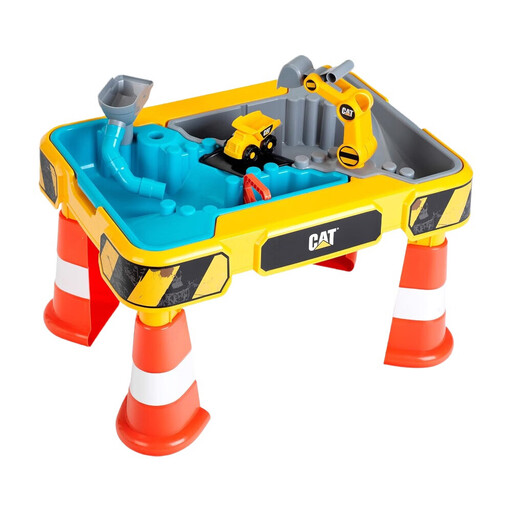
Why This Fits Their Persona: Ideal for children fascinated by construction sites. The design and accessories, like the digger arm and dump truck, specifically cater to this interest and encourage themed role-playing. This CAT sand play table transforms the garden into a mini construction site.
The high-quality plastic construction is designed for durability. The two basins are removable, which greatly simplifies cleaning and changing the sand and water, counteracting the problem of cumbersome maintenance.
Official CAT licensed product with themed accessories (digger arm, dump truck, pipes). Specifically promotes motor skills and creativity through realistic play scenarios.
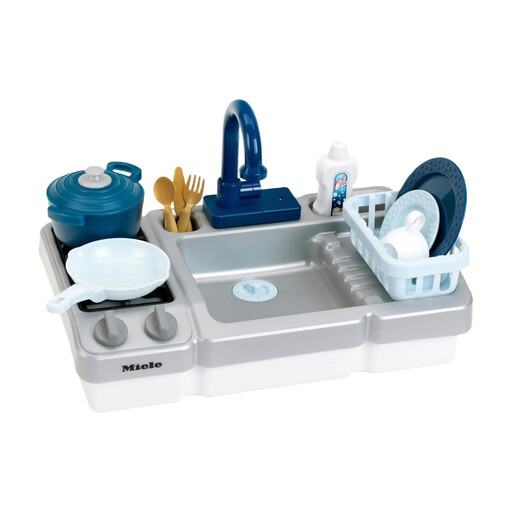
Why This Fits Their Persona: Perfect for families looking for a flexible solution for water toys in the garden and indoors. This Theo Klein water table, shaped like a sink, offers focused water play with a real pump function, without the large footprint of a full-sized table.
The compact and stable design is intended for both indoor and outdoor use. As a product from an established manufacturer, it is built for long-term use and avoids the typical material weaknesses of cheaper alternatives.
The battery-powered water pump function provides an especially realistic play experience. The included accessories, such as dishes and a pot, encourage role-playing in the "kids' kitchen".
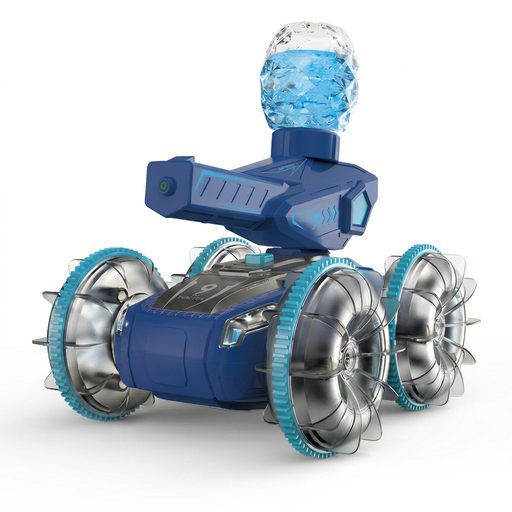
Why This Fits Their Persona: An excellent addition to any water table or pool. This remote-controlled amphibious vehicle brings action to water play and appeals to children who are enthusiastic about technology and interactive toys.
Instead of an unstable table, here you get a robust, waterproof vehicle. It is made from shock-resistant ABS plastic and specifically designed for use in water, which prevents material fatigue from moisture.
Amphibious design for use on land and in water. Two control modes (remote control and gesture control via a watch) ensure high interactivity and varied fun.
We have compiled a complete, up-to-date list of products that fully meet these strict selection criteria and European safety standards.
Most manufacturers recommend their models as toys for ages 18 months and up. At this age, most toddlers can stand securely and are beginning to grasp and explore with purpose. It is important that the child is stable enough to stand at the table without losing their balance. Regardless of age, play involving water should always be supervised by an adult.
Models with removable basins offer the easiest cleaning. Rinse them with clean water after each use. For heavier soiling, you can use a mild soap solution. It is important to let all parts dry thoroughly afterwards before storing the table to prevent mould growth.
For an outdoor play table, UV-stabilised plastic is the most practical choice. It is weather-resistant, easy to clean, and doesn't splinter like wood. Look for certification marks (e.g., CE marking) that confirm compliance with European toy safety standards. A robust, thick-walled construction is an indicator of a longer lifespan.