
Lieferung heute & morgen

Qualitätsgarantie

Willkommens-Angebote freischalten: KOSTENLOSE Lieferung | Bis zu 80 % RABATT | Kostenlose 30-Tage-JoyPlus-Testphase
App herunterladen
A sand and water table for children brings sand, water and creative play together in a relatively small space. For a garden, patio or balcony, a sand and water play table can be a practical alternative to a large sandpit. To make sure it’s a good long-term choice, parents and grandparents should look beyond colours, accessories and familiar themes.
A label saying ‘from 18 months’ doesn’t automatically mean that every child can use the table without supervision. You should also check warnings about small parts that could be swallowed, water levels, assembly and supervision. For some products, the advertised age recommendation may differ from the safety warning. Always check the full manufacturer’s information.
Wood, plastic and coated surfaces need different types of care. ‘Suitable for outdoor use’ doesn’t mean an outdoor play table for children should be left unprotected in the rain or direct sunshine all the time. Using a cover, storing it somewhere dry and carrying out regular checks can all affect how long it lasts.
An excavator arm, bucket or tap can add to the fun. But the essentials still matter: a stable base, rounded edges, easy-to-reach play areas and simple cleaning. A mud table for children with lots of separate parts can be impractical if the accessories are difficult to store or fiddly to clean after play.
If you’re looking for a sandpit for children aged 18 months and over, consider the following:
After water and mud play, empty the water every time. This helps reduce dirt and stops the tray from becoming a place where water is left standing for long periods.
A compact sand play table will often fit on a patio or larger balcony. Before buying, consider not only the product dimensions but also how much room there is around it. Children scoop, carry and tip sand or water, so a table in a cramped spot can be harder to use.
For example, the CAT table from Theo Klein measures 64 × 48 × 40 cm. The roba ‘Tiny’ is even more compact at 50 × 38,5 × 32 cm. Larger models with an integrated mud kitchen need considerably more space. Also check whether the table can be lifted for storage or covered completely.
Plastic can usually be cleaned with water and a mild detergent. With wooden tables, the surface treatment, cover and regular checks are more important. Look for:
Combining sand and water encourages hands-on, creative play: children can pour, dig, sort, transport and create simple water channels. The educational benefits, however, depend greatly on the child’s age, the level of supervision and their own ideas for play.
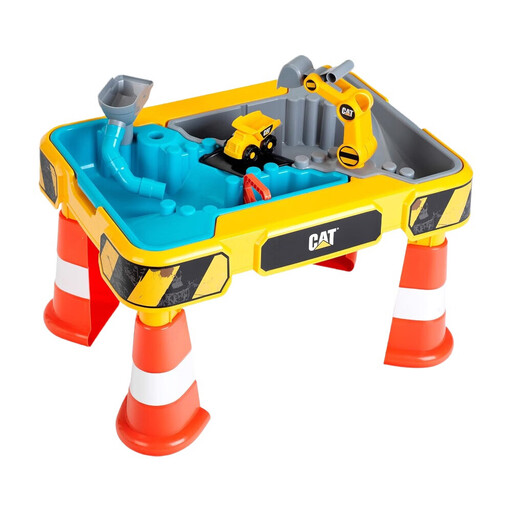
Why this product suits this profile: This compact plastic table is recommended for children aged 18 months and over. It’s a good fit for families who want to try sand and water play in a smaller space to start with.
The removable water tray makes emptying and cleaning easier. The product description also specifies assembly according to the instructions and use on a stable surface.
64 × 48 × 40 cm, 3,3 kg, plastic, excavator arm, tipper, two pipes and stopper; no batteries required.

Why this product suits this profile: The combination of solid wood, a removable tray and a shelf is suited to families who value clear material specifications, tidy storage and versatile use.
The integrated plastic tray can be removed. The product is described as having weather-resistant surfaces for outdoor use, but storing it somewhere sheltered is still recommended.
Solid wood, shelf beneath the tray, 50 × 38,5 × 32 cm and, according to the product information, suitable for ages 18 months to 8 years. Be sure to check the safety warning before buying.
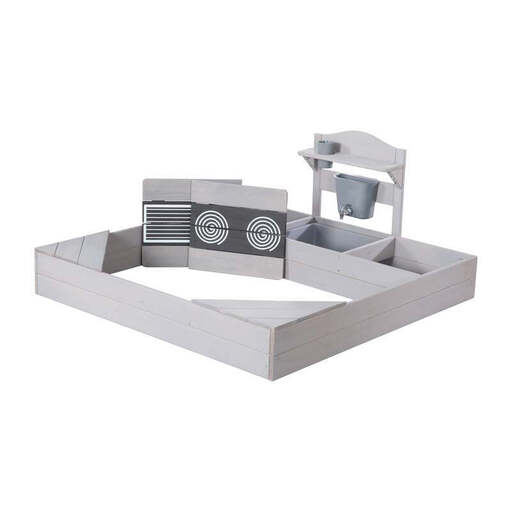
Why this product suits this profile: This larger model is designed for families who want a sandpit with a mud kitchen, seating and extra storage space in the garden.
The included cover protects the sand area when it’s not in use. Two storage compartments and removable boards help keep accessories organised.
113 × 113 × 54 cm, water container with tap, two seats and a water-repellent fabric cover. The product information states that it can be used from 12 months under supervision.
We’ve put together a complete, regularly updated list of products that meet these strict selection criteria and fully comply with the safety regulations in force in the EU.
The ongoing costs of a sand and water table for children are usually manageable. You may need to budget for play sand, replacement parts, cleaning products or a suitable cover. Only small amounts of household water are needed; for hygiene reasons, don’t leave it in the tray after play.
For easy care:
Many models are labelled as suitable from 18 months, while others have different recommendations. Always follow the information provided by the manufacturer of the specific product. Small accessories and water mean that an adult should supervise children at all times.
Its lifespan depends on the material, how heavily it’s used, how it’s cared for and where it’s stored. A plastic model may be easy to clean, while a wooden table needs particular attention to its coating, moisture and cover. Storing the table somewhere dry over winter and checking it regularly can help extend its useful life.
Not necessarily. Depending on their weight, compact models can be moved around. However, the play area should be level and stable, with no trip hazards. If you’re buying a larger children’s garden play table, it’s worth planning a permanent, easy-to-reach spot before assembly.