
Lieferung heute & morgen

Qualitätsgarantie

Willkommens-Angebote freischalten: KOSTENLOSE Lieferung | Bis zu 80 % RABATT | Kostenlose 30-Tage-JoyPlus-Testphase
App herunterladen
Sand and water toys for children should be durable, age-appropriate and easy to clean. In practice, disappointing purchases are often caused not by the price, but by unclear age guidance, hard-to-reach water containers or accessories that are easily lost during everyday use. So before buying, parents, grandparents and carers should look beyond colours and play features.
A large set can offer plenty of ways to play, but it needs enough space, a level surface and somewhere practical to store it. A large water track for children may be ideal for the garden, but awkward to use on a small balcony. Before buying, consider how easy it will be to clean and dry every component thoroughly.
“Suitable for toddlers” isn’t enough information. Check the specific age recommendation, whether the set contains small parts and how it is intended to be used. For example, a sand toy set for children aged 12 months and over should only be used under supervision if any parts could be swallowed. Older children may enjoy more complex features such as cranks, lifts or moving digger arms.
Water left in bowls, tubes or containers can encourage deposits to form. Sand in moving parts can affect how well they work. Products with removable water trays, smooth plastic surfaces or a suitable cover are often easier to care for day to day. Wooden components also need to be stored somewhere dry.
Check the manufacturer’s age recommendation and read the safety information on the packaging. For toys for children aged 12 months and over, sturdy parts that are easy to grip and a manageable number of accessories are a sensible choice. A sandpit for children should be placed on a level surface and covered when not in use. Adult supervision is still essential, even with age-appropriate products.
Plastic is easy to wipe clean and resistant to moisture, making it a practical choice for a sand and water table or sand mill. Look for details such as durable plastic, good build quality and cleaning instructions. Harsh cleaning products, scouring pads and prolonged exposure to direct sunlight can damage surfaces and colours.
For a wooden mud kitchen for children, regular visual checks, emptying the water containers and storing it in a sheltered place are important. General claims such as “non-toxic” shouldn’t replace checking the specific material and safety information.
Measure the space where you plan to set up the toy before buying. A compact toy such as a sand mill can be used in the garden, on the balcony or at the beach. A large water play set, on the other hand, needs a level surface and enough room for several children. Wide feet or a sturdy construction can make it easier to use, but they’re no substitute for setting it up safely.

Why it suits this type of buyer: This compact sand and water mill is listed as suitable for children aged 12 months to 6 years. It’s a good fit for small outdoor spaces, the sandpit or water play in the bath.
The wide feet are designed to keep the mill stable. The play activity is simple, with no batteries or assembly required.
22 × 14 × 43 cm, 390 g, plastic, for use with fine sand or water.
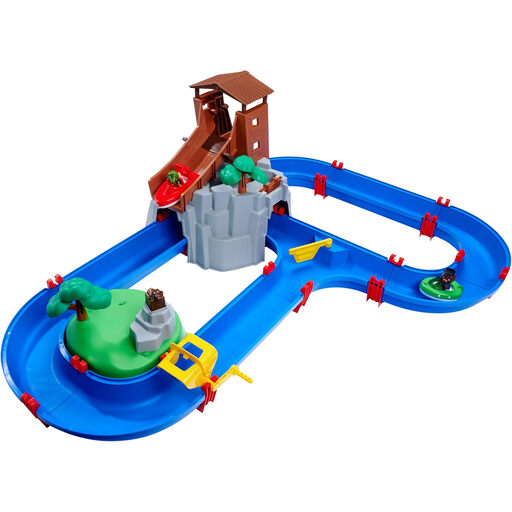
Why it suits this type of buyer: According to the product information, this extensive water toy for the garden is designed for children aged 3 to 7. It features several water functions that children can control.
The water track comes as a complete set with a reservoir, crank, lift and slide. This makes choosing easier than putting together a random selection of separate parts.
138 × 88 × 47 cm, 4,6 kg, two boats and two figures, no batteries required.
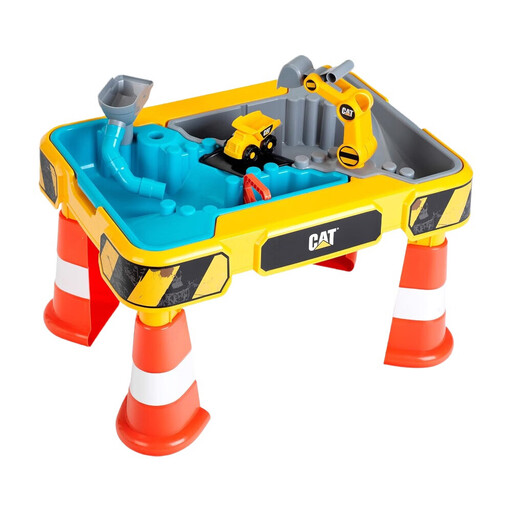
Why it suits this type of buyer: This sand and water table lets children dig, move things around and experiment with water. It’s listed as suitable for children aged 18 months and over, and is ideal for the garden or a sheltered patio.
The water tray can be removed, making it easier to empty and clean the sand and water areas separately after play.
64 × 48 × 40 cm, 3,3 kg, includes a digger arm, tipper truck, pipes, stopper and bridge.

Why it suits this type of buyer: Designed for children aged 18 months and over, this play kitchen creates a dedicated outdoor play station, complete with a water container, sink, hob and accessories.
The product information specifically recommends emptying the water container after play and storing the kitchen in a dry place when not in use.
124 × 89 × 34 cm, 10,4 kg, plastic basin, water container with tap and accessories.
We’ve put together a complete, regularly updated list of products that meet these strict selection criteria and the safety regulations applicable in the EU.
Look for simple products with easy-to-grip parts, a stable base and a clear age recommendation. A sand mill or a simple sand toy set could be a good choice. If a set contains small parts, follow the manufacturer’s warning and always supervise play.
It depends on the product’s dimensions. Compact models need an area of around 64 × 48 cm, while larger water tracks take up considerably more room. You should also leave space around the table so children can move about and play safely.
There’s no reliable way to give a fixed lifespan. It depends on the materials, how often the toys are used, UV exposure, frost, cleaning and storage. Regular checks, completely emptying out the water and storing toys in a sheltered place can help keep them in good condition for longer.