
Lieferung heute & morgen

Qualitätsgarantie

Willkommens-Angebote freischalten: KOSTENLOSE Lieferung | Bis zu 80 % RABATT | Kostenlose 30-Tage-JoyPlus-Testphase
App herunterladen
A sander can save you a lot of manual effort when smoothing, stripping paint and preparing surfaces. But not every tool will give you the right result. Choosing the wrong design, unsuitable sandpaper or a motor that’s more powerful than you need can all lead to unnecessary costs.
This buying guide explains what DIYers, renovators and tradespeople should look out for before buying.
A detail sander has a triangular sanding pad. This makes it ideal for reaching corners, edges and narrow gaps, but it’s less time-efficient on large, flat surfaces. A random orbital sander uses a round sanding disc and is better suited to larger areas of wood and creating smooth transitions.
A multi-sander often uses rectangular or triangular sanding sheets, making it a versatile choice for smaller renovation jobs. However, the name alone won’t tell you whether its size, fastening system and dust extraction are right for your project.
Figures such as 13,000 or 14,000 revolutions or oscillations per minute may seem impressive at first. In practice, the sanding stroke, pressure applied, abrasive and surface condition all affect the result. On delicate wood, a high speed can leave visible sanding marks if you don’t use the right sanding sheet or guide the tool properly.
A low-cost electric sander can lead to ongoing expenses if compatible sanding sheets are only available in small packs. Before buying, check that the sandpaper, sanding sheets or sanding discs match the tool in size, hole pattern, grit and fastening system. Hook-and-loop systems make it quick to change abrasives, but you’ll need compatible sanding pads.
Start by comparing the size and shape of the sanding pad:
If your sander has a 125 mm backing pad with an 8-hole pattern, make sure the accessories you buy match both the size and hole pattern. Otherwise, dust extraction may be less effective.
Grit is usually shown using P numbers. Lower numbers remove more material, while higher numbers produce a finer finish.
When sanding wood, it’s usually best to work through the grits gradually. A coarse grit may be needed to remove paint or remove rust. Remember to change the abrasive regularly when it becomes clogged or worn.
A cordless sander gives you freedom to move around and is handy for smaller projects. Actual runtime depends on battery capacity, material and workload. The Black+Decker model in this selection is listed with an integrated 12-V-MAX battery rated at 1.5 Ah and a runtime of over 30 minutes per charge.
Corded tools are a good choice for longer jobs without a break to recharge. Look for a dust bag, a vacuum cleaner connection or both. Dust extraction won’t eliminate all exposure, but it can improve visibility of the work surface. Safety goggles and suitable respiratory protection are still important when sanding.
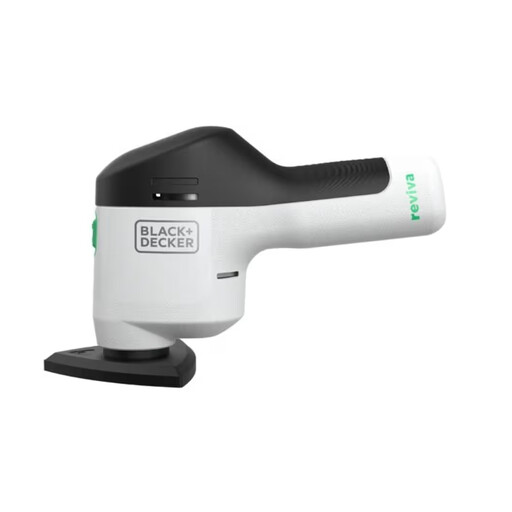
Why this product suits this user: This cordless 12-V-MAX detail sander is designed for smaller jobs involving furniture, edges and touch-ups. Its triangular sanding pad reaches into tight spaces, while the integrated battery means you can use it without a mains cable.
Its design is clearly intended for detail work, not for removing material from large surfaces. This makes it easier to assess whether it’s right for your needs before you buy.
Integrated battery, triangular sanding base and a stated runtime of over 30 minutes per charge.
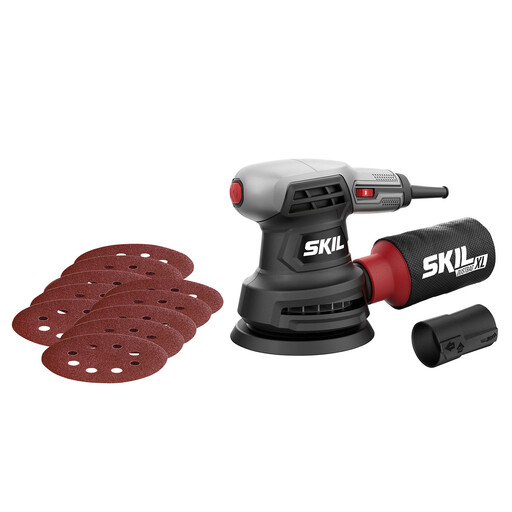
Why this product suits this user: This random orbital sander has variable speed control, an integrated dust collector and an adaptor for a vacuum cleaner. It’s a good fit if you want to work on different materials and larger surfaces.
Variable speed lets you adjust the tool to suit the material and stage of work, rather than relying on a single fixed speed.
125 mm sanding pad, hook-and-loop system, dust bag and vacuum adaptor, according to the product description.
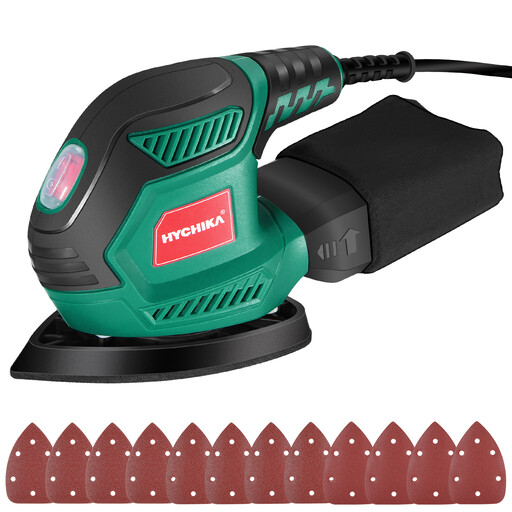
Why this product suits this user: This corded electric detail sander is described as having a 200 W motor, a stated speed of 14,000 rpm and a triangular base plate. It’s designed for wood, furniture and detail work on metal and plastic.
The dust container and 6-hole extraction system address dust management, which is often overlooked. The package is listed as including 12 sanding sheets in three grits.
200 W motor, hook-and-loop fastening, integrated dust collector and P80, P120 and P240 sandpaper.
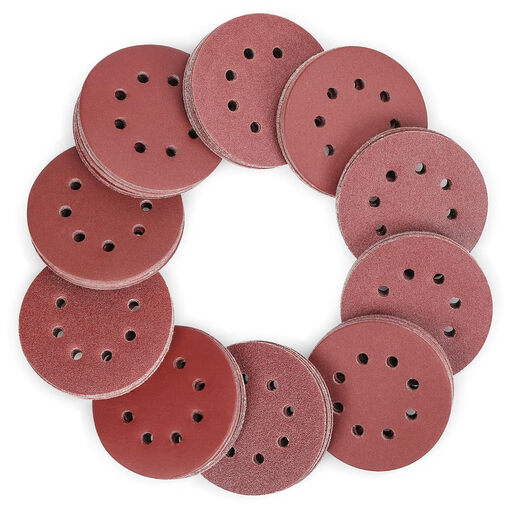
Why this product suits this user: This set is for users with a 125 mm random orbital sander who need abrasives for different stages of work. It includes 150 sanding discs in grits from P60 to P600.
The stated 125 mm size and 8-hole design make it easy to check compatibility before ordering.
150 pieces, nine stated grits and hook-and-loop fastening for quick abrasive changes.
We’ve put together a complete, regularly updated list of products that meet these strict selection criteria and the safety regulations applicable in the EU.
When removing rust or working on old paint, take the material, coating and any potential hazardous substances into account. Ensure good ventilation and use suitable protective equipment.
A detail sander is handy for edges, profiles and tight corners. For larger, flat furniture surfaces, a random orbital sander is often a good choice. The sanding pad size, grit and how well you can control the tool are all important.
Its lifespan depends on how often you use it, dust protection, maintenance and workload. Don’t run the tool continuously under heavy pressure. Clean the dust container and ventilation slots, and store it somewhere dry. For cordless models, follow the manufacturer’s advice on charging and storage too.
As well as the purchase price, you’ll need to budget for sandpaper, sanding sheets or sanding discs. Corded tools also use electricity, while cordless sanders may require replacement or additional batteries. A set of accessories with several grits can make it easier to plan the running costs for each project.