
Lieferung heute & morgen

Qualitätsgarantie

Willkommens-Angebote freischalten: KOSTENLOSE Lieferung | Bis zu 80 % RABATT | Kostenlose 30-Tage-JoyPlus-Testphase
App herunterladen
A sander can make renovation jobs much easier – provided its design, power and accessories are suited to the task. Many disappointing purchases aren’t down to a low price, but to the wrong expectations. A compact detail sander, for example, isn’t designed to remove material from large areas, while an angle grinder is generally unsuitable for delicate paintwork.
Figures such as 13,000 OPM or 8,500 rpm may seem clear at first. But they don’t tell you on their own how quickly a tool will work. Motor power, sanding action, sanding pad size, pressure applied and the abrasive used all matter too.
A detail sander with a high oscillation rate, for example, is suited to edges, furniture profiles and hard-to-reach spots. For large areas of wood, a random orbital sander with a larger pad may be the more practical choice.
When choosing a cordless sander, check the battery voltage, capacity, charging time and what’s included separately. An integrated battery keeps the tool compact, but depending on the design, you may not be able to swap it during a break. If the tool is supplied without a battery and charger, remember to factor in the cost of these separately.
Also check whether the stated running time is based on realistic conditions. Actual usage time depends on factors such as the material, pressure applied and speed setting.
A sander with dust extraction can reduce dust in your workspace, but it doesn’t replace other protective measures. Check whether the tool is designed for use with a dust bag, dust container, adapter or compatible workshop vacuum. The number and position of the dust extraction holes in the sandpaper also matter.
For corded tools, power consumption is given in watts. This helps you compare their electrical energy use, but doesn’t give a complete picture of working performance. For example, the HYCHIKA detail sander with 140 W and 13,000 OPM is designed for detail work. Another HYCHIKA model offers 200 W and 14,000 rpm.
A random orbital sander combines rotary and oscillating movements. This can help create an even finish over larger areas. With a cordless polisher, low speeds and precise control are also important, so the polish and pad are suited to the surface.
Before you buy, check:
For corded and cordless power tools, you should also check the instructions, manufacturer’s details, CE marking and information about the responsible person in the EU. Wear safety glasses and hearing protection, and use suitable respiratory protection when working in dusty conditions. Workpieces must be securely fixed in place.
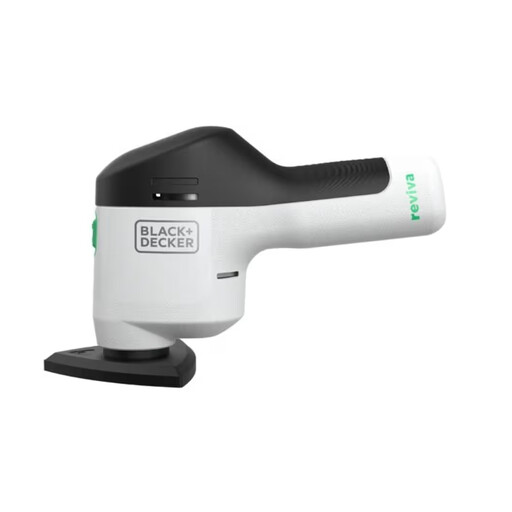
Why this product suits this user: Its compact cordless design, with 12 V MAX and an integrated 1.5-Ah battery, is made for smaller sanding and renovation jobs without a mains cable.
The triangular sanding pad makes it clear that this tool is intended for corners and detail work. The stated running time is more than 30 minutes per charge.
Integrated battery, triangular base and sanding sheets in a range of grits.
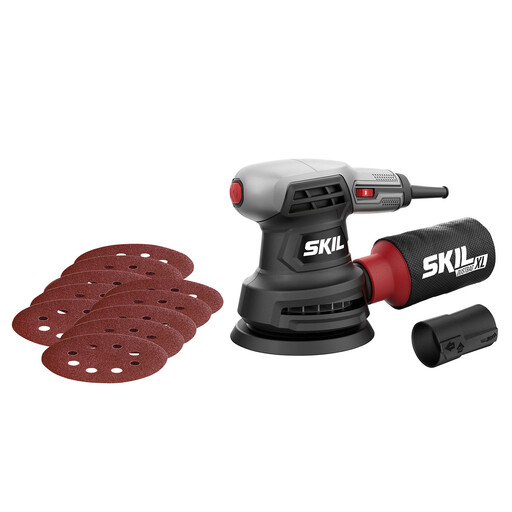
Why this product suits this user: For regular work on flat or curved surfaces, this random orbital sander offers variable speed control and integrated dust extraction.
A dust bag and vacuum adapter are specifically provided for. Variable speed means you don’t have to rely on a single setting.
Integrated dust extraction, large dust bag, hook-and-loop attachment and dual-material grip.
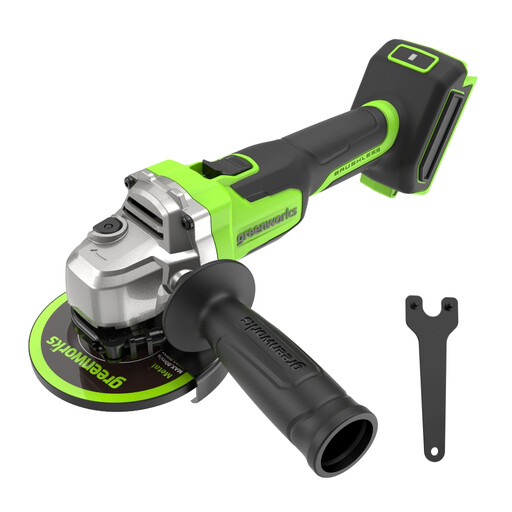
Why this product suits this user: This cordless angle grinder is designed for mobile work on metal or stone, with a 125 mm disc fitting and a brushless motor.
The product details clearly state that the battery and charger aren’t included, so you can factor in any additional costs before buying.
Up to 8,500 rpm, 125 mm disc fitting, spindle lock and adjustable auxiliary handle.
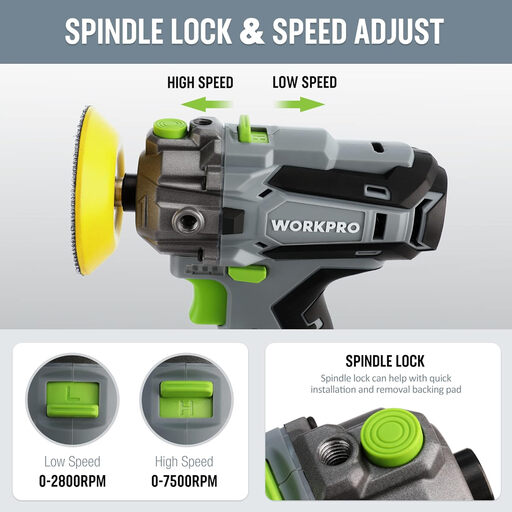
Why this product suits this user: This compact cordless polisher is for anyone looking to work on cars, furniture or smaller metal surfaces on the go.
Two batteries and a charger are included in the stated package contents, so you’re not reliant on a single battery.
Two speed settings, 2,600 to 7,000 rpm, two 2.0-Ah batteries and 75 mm polishing attachments.
We’ve put together a complete, regularly updated list of products that meet these strict selection criteria and the safety regulations in force in the EU.
A detail sander or corner and edge sander with a triangular sanding pad is suitable for narrow profiles, furniture edges and corners. For larger areas, a random orbital sander is usually more efficient.
It depends on the size of the area. A detail sander is good for detailed work and hard-to-reach spots. A random orbital sander is better suited to doors, tabletops and other larger surfaces. For both types of tool, make sure the grit, dust extraction and paper attachment suit the job.
Before you buy, check the availability and prices of compatible sanding sheets, polishing pads or discs. With cordless models, replacement batteries and chargers can also add to the cost. A vacuum adapter can reduce the use of disposable dust bags, provided the tool is designed to work with one.