
Lieferung heute & morgen

Qualitätsgarantie

Willkommens-Angebote freischalten: KOSTENLOSE Lieferung | Bis zu 80 % RABATT | Kostenlose 30-Tage-JoyPlus-Testphase
App herunterladen
Whether you are renovating furniture, removing paint, treating rust or detailing a vehicle, sanding and polishing tools vary considerably in design, performance, accessories and intended use. An inexpensive tool can prove impractical if the sandpaper does not fit, dust extraction is inadequate or the speed is unsuitable for the surface.
Before buying, DIYers, home improvement enthusiasts and professional users should therefore look beyond wattage or the number of accessories included. What matters is the combination of tool, abrasive, attachment system and the material being worked on.
A high speed can be useful for certain sanding tasks, but it also increases the risk of heat build-up, deep sanding marks or damaged paintwork. For delicate surfaces and polishing work, variable speed control is usually more practical than a tool with just one fixed setting.
When polishing a car, you should also distinguish between a dual-action polisher and a traditional rotary machine. A dual-action polisher moves the pad in an offset motion as well as rotating it. This makes it possible to work on larger areas with greater control. Even so, the polishing pad, pressure and speed must be suitable for the surface.
Sanding discs, hook-and-loop sandpaper and polishing sponges require the correct dimensions and a suitable attachment system. A 125 mm sanding disc with eight holes is not automatically compatible with every electric sander. Check the hole pattern, backing pad diameter and hook-and-loop surface before buying.
With a detail sander, the triangular base plate is crucial. Suitable delta sanding sheets are essential, particularly for corners, edges and narrow areas of furniture. A round sanding pad cannot reach these areas equally well.
A high piece count may sound appealing, but it offers little benefit if you only need a few grits or the paper clogs quickly. Different grit ranges are suitable for sanding wood, sanding metal and paintwork. The type of backing material also affects tear resistance, flexibility and service life.
Grit indicates how coarsely or finely an abrasive works. As a practical guide:
When moving from coarse to fine grit, first remove dust and sanding residue from the surface. For an even result, it is generally best to avoid making overly large jumps between grits.
Hook-and-loop sandpaper can be changed quickly and is ideal when switching grits frequently. However, the extraction holes must line up with those on the sanding pad. An eight-hole sheet can only support effective dust extraction if the openings on the tool are arranged accordingly.
An integrated dust box is practical for smaller jobs. During longer sanding sessions, connecting a vacuum cleaner can further reduce the amount of dust in the working area. Regardless of the extraction system, safety goggles, respiratory protection and good ventilation are essential for safe working. When removing paint or rust, particles and coating residue may be produced, with their properties depending on the material in question.
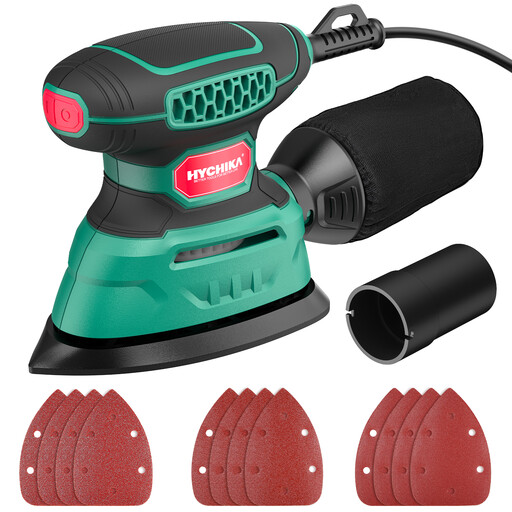
Why this product suits this profile: This compact detail sander is designed for smaller jobs involving wood, metal and plastic, as well as hard-to-reach areas. According to the manufacturer's specifications, it delivers 140 W and 13,000 OPM, and comes with 12 sanding sheets.
The included P80, P120 and P240 grits cover everything from coarse material removal to fine sanding. According to the product information, a dust box and adapter are included.
Triangular sanding surface, hook-and-loop attachment and two dust collection options.
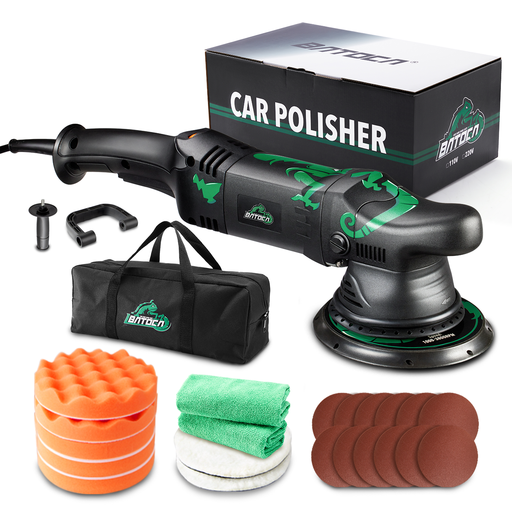
Why this product suits this profile: According to the manufacturer's specifications, this corded car polisher delivers 1100 W and offers six speed settings from 2500 to 5500 rpm, along with an adjustable side handle and D-handle.
The six settings allow you to adjust the tool for waxing, polishing, cleaning and certain sanding tasks. Nevertheless, the speed must be matched to the pad, polishing compound and surface.
Variable speed control, a constant corded power supply and several handle options.
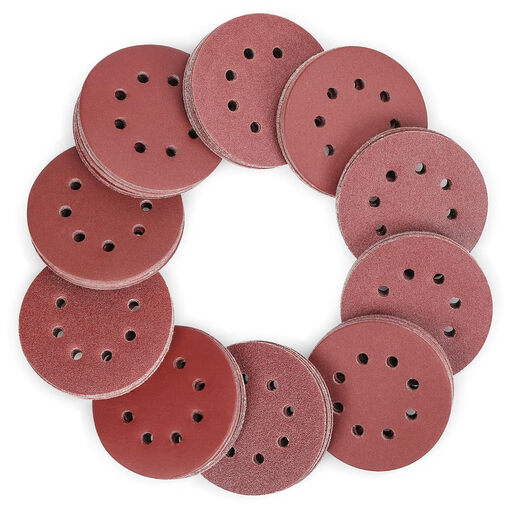
Why this product suits this profile: The set contains 150 round sanding discs with a diameter of 125 mm, eight holes and nine grits ranging from 60 to 600. It is aimed at users who regularly switch between coarse material removal and fine surface finishing.
The diameter and hole pattern are clearly specified. Before ordering, you should still check whether your random orbital sander is designed for 125 mm discs with eight holes.
Nine grits, aluminium oxide abrasive and hook-and-loop attachment for quick changes.
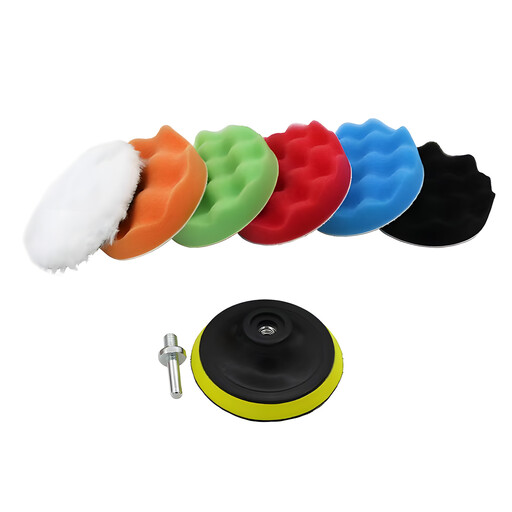
Why this product suits this profile: According to the product information, the set includes five foam pads, one synthetic wool pad, an M10 drill adapter, a hook-and-loop backing plate and a screw. This allows it to be used with compatible polishers or drills.
The different pad types support separate use for heavier cutting and finer polishing work. Pads should be clean, undamaged and used within the permitted speed range.
Several pad materials, hook-and-loop changes and adapters for different compatible tools.
We have put together a complete, regularly updated list of products that fully meet these strict selection criteria and the safety regulations applicable in the EU.
For longer projects, keeping a supply of sanding paper rolls can be useful. According to the product information, the WORKPRO rolls are 93 mm wide, 5 m long each and available in grits 60, 120, 180 and 240. They can be cut to size for hand-sanding or adapted for compatible sanding tools.
If you need a smaller set, WORKPRO also offers 100 sanding sheets measuring 93 × 185 mm, with a hook-and-loop backing and eight holes. For furniture, wooden mouldings or preparatory paintwork, choosing the right grits is more important than simply opting for the highest possible piece count.
You should also check the following before buying:
Coarse grits such as 40 to 80 are often used for the initial material removal. Grits around 100 to 180 are commonly used for intermediate sanding, while finer grits from 240 onwards can smooth the surface. The exact choice depends on the type of wood, coating and desired finish.
In addition to the diameter, the hook-and-loop attachment, number of holes and hole positions must match the random orbital sander. With eight-hole discs, you should also take the tool’s dust extraction system into account. Damaged or heavily clogged discs should be replaced.
It is not possible to give a general service-life estimate. Longevity depends on the material, pressure, speed, dust extraction and working surface. Sandpaper should be changed when material removal noticeably decreases or the abrasive becomes clogged. Polishing pads should be cleaned after use and allowed to dry completely; cracks, deformation or heavy wear indicate that they should be replaced.