
Lieferung heute & morgen

Qualitätsgarantie

Willkommens-Angebote freischalten: KOSTENLOSE Lieferung | Bis zu 80 % RABATT | Kostenlose 30-Tage-JoyPlus-Testphase
App herunterladen
A sandpit with an integrated mud kitchen is more than just a garden toy; it's a creative play space that sparks children's imaginations. However, the vast selection can be overwhelming and lead to purchases you later regret. Many models show defects after a short time, spoiling the fun. This guide highlights the most common pitfalls and explains the objective criteria you should consider to create a durable and safe play environment for your children.
When purchasing an all-in-one sandpit and kitchen model, recurring problems often arise. If you know what they are, you can specifically look for products that don't have these weaknesses.
To avoid a bad buy, you should base your decision on verifiable product features. The following three parameters are crucial for durability, safety, and play value.
A high-quality wooden sandpit is made from solid, robust wood such as cedar, larch, or pressure-treated pine. These types of wood are naturally more resistant to weathering and pests. Look for the term "weatherproof" in the product description. A thick stain or varnish, preferably in neutral colours like a grey sandpit, offers additional protection. All wooden parts should be sanded smooth and the edges rounded to prevent splinters and injuries.
A good outdoor play kitchen is more than just decoration. Check if the following elements are present and well-designed:
Safety is the top priority. A sandpit for children should ideally carry the GS mark (Geprüfte Sicherheit / Tested Safety) or comply with the European standard for toy safety, EN 71. A sturdy sandpit with seating not only offers comfort but also prevents children from having to balance on a narrow, unsafe edge. A robust sandpit with a cover is essential. A solid tarp with eyelets or a lowerable roof protects the sand from moisture, leaves, and animals, keeping it hygienically clean.
Based on the quality features mentioned, we have identified products that are suitable for different needs and circumstances.
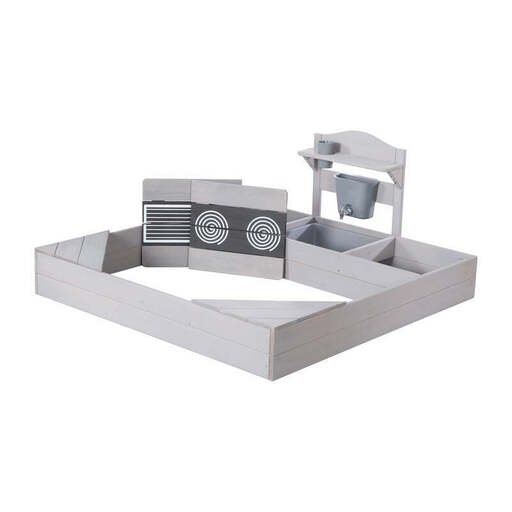
Why This Fits Their Persona: This model combines a sandpit, water play, and a fully-featured mud kitchen in one compact design. It's ideal for families looking to create a versatile and space-saving play area in the garden that caters to various play interests.
The construction of grey-stained, weatherproof solid wood prevents rot and splintering. The mud kitchen includes a water container with a working tap and two storage compartments, setting it apart from purely decorative solutions.
The combination of integrated seats, storage compartments under the removable hobs, and an included water-repellent cover offers a well-thought-out complete package.
Why This Fits Their Persona: For parents who value material quality, durability, and safe construction. The manufacturer, roba, is known for children's furniture and, according to the product description, uses solid wood from sustainable forestry.
Addresses the material pitfall by using stained solid wood. The included sturdy cover with metal eyelets solves the problem of low-quality covers that blow away in the wind or tear easily.
The sturdy construction with an 18 cm side height and integrated corner seats provides a safe play environment. Its suitability for children from 12 months onwards highlights the focus on safety for toddlers.
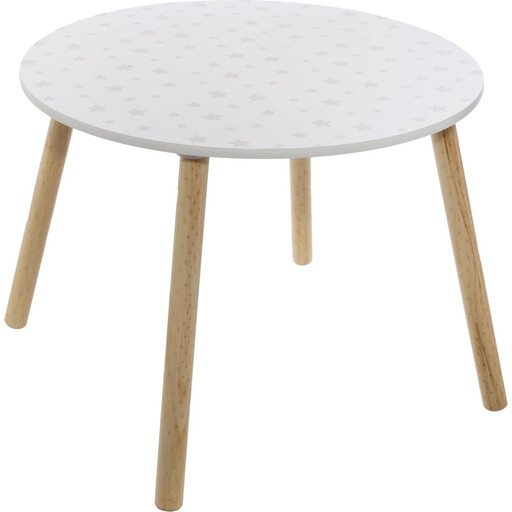
Why This Fits Their Persona: An alternative for families without a garden who still want to create a dedicated creative space. On the balcony or in the playroom, this table provides a stable surface for kinetic sand, modelling clay, or painting projects.
As a piece of furniture for indoor or sheltered outdoor use, it completely bypasses the issue of weather resistance. The construction of an MDF top and wooden legs offers a stable and safe base for play.
Compact dimensions (60 cm diameter) and an easy-to-clean surface that can be simply wiped with a damp cloth. Versatile for use as a play, craft, or drawing table.
If you're planning your own project or need spare parts, our range of high-quality wooden panels might be of interest. Discover materials that meet strict quality criteria.
1. How much sand is needed for a sandpit with a mud kitchen? The amount of sand required depends on the dimensions of the sandpit. As a rule of thumb: Length (in m) × Width (in m) × Desired Fill Depth (in m) = Required Volume in cubic metres. For a recommended fill depth of about 15-20 cm, most standard models require between 150 and 250 kg of play sand. The exact specifications can often be found in the manufacturer's product description.
2. How do I keep the sand in a wooden sandpit clean? The most important step is to consistently use a well-fitting and sturdy cover after every play session. This protects the sand from leaves, animals, and rain. It is recommended to regularly rake the sand to aerate it and remove any debris. Depending on usage and location, the play sand should be completely replaced every one to two years.
3. Is a sandpit made of stained wood truly weatherproof? A wood stain provides good basic protection against moisture and UV radiation, but it is not indefinitely durable. To maximise the lifespan of a stained wooden sandpit, the stain should be reapplied every one to two years, depending on weather exposure. Models made from pressure-treated (KDI) wood or particularly resilient wood species like larch are lower-maintenance in this regard.