
Lieferung heute & morgen

Qualitätsgarantie

Willkommens-Angebote freischalten: KOSTENLOSE Lieferung | Bis zu 80 % RABATT | Kostenlose 30-Tage-JoyPlus-Testphase
App herunterladen
A warm, golden-brown toasted sandwich is a simple and quick meal. But the path to perfection can be rocky if the kitchen appliance doesn't live up to its promises. Many buyers get frustrated with devices that become unusable after just a short time. As your Joybuy Product Recommendation Officer, I'll help you identify the common pitfalls and find a model that truly meets your needs.
The most common problems with a new sandwich toaster often stem from poorly designed features that are rarely mentioned in advertisements.
To avoid buyer's remorse, don't be swayed by marketing promises. Instead, focus on objective, technical specifications. Three features are of central importance.
The size and shape of the heating plates determine what you can prepare. Before buying, consider what you will primarily use the appliance for.
A high-quality non-stick sandwich maker is not a luxury, but a necessity. It not only prevents food from sticking but is also crucial for quick and hygienic cleaning. Look for a durable, multi-layer coating. Cheap, single-layer coatings tend to peel off quickly with frequent use and contact with acidic foods (e.g., tomatoes). An appliance without an intact coating is practically useless.
The wattage provides an indication of the heat-up time and the appliance's ability to maintain a consistent temperature.
Some appliances also offer interchangeable plates and function as a 3-in-1 sandwich maker (e.g., for sandwiches, waffles, and grilling). Such models save space, but be sure to check the stability of the plate-swapping mechanism.
Here are some models that represent a considered choice for specific user profiles based on their objective features.
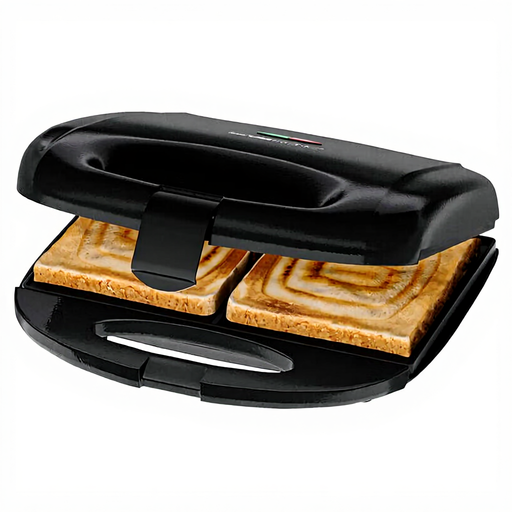
Why This Fits Their Persona: Ideal for students or small households looking for a straightforward, space-saving appliance for classic sandwiches. The square shape offers more room for filling than the traditional triangle shape.
The variable two-stage locking system prevents the latch from breaking with thicker sandwiches. The non-stick coating is designed for easy cleaning.
820 watts of power ensure a quick heat-up time. The automatic temperature control and indicator light simplify operation.
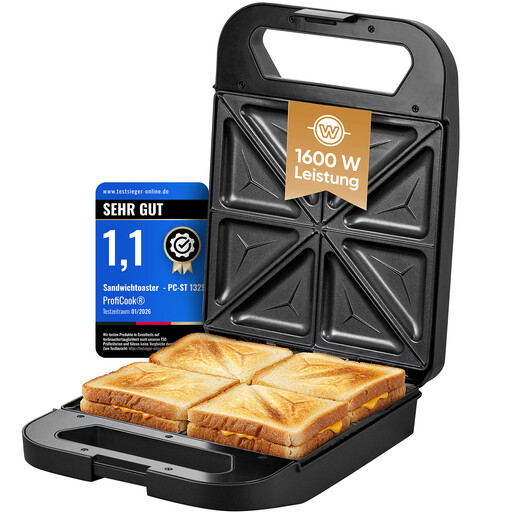
Why This Fits Their Persona: Perfect for parents or shared living spaces. Preparing four sandwiches at once saves valuable time in a hectic daily routine and ensures everyone can eat together.
With 1600 watts of power, it ensures even and rapid browning of all four sandwiches, bypassing the problem of uneven heat distribution common in larger appliances.
Large capacity for efficiency. The appliance can be stored upright for space-saving storage, a practical detail for tidy kitchens.
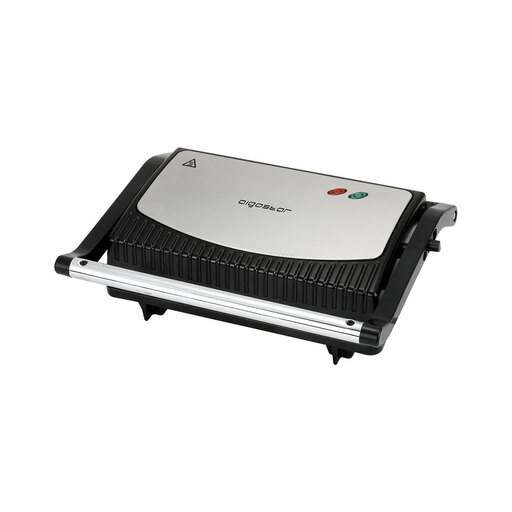
Why This Fits Their Persona: For anyone who wants to make more than just a grilled cheese. This contact grill is suitable for paninis, grilled vegetables, or flatbread, offering more culinary freedom thanks to its flexible design.
The plates can be opened 180°, turning the appliance into an open tabletop grill. This bypasses the limitation of a fixed hinge and allows for more versatile applications.
The ribbed non-stick coating is ideal for creating classic panini marks and simplifies cleaning. The cool-touch handle ensures safe handling.
We've compiled a complete, up-to-date list of products that fully meet these strict selection criteria and safety regulations.
Let the appliance cool down completely after use. Then, wipe the plates with a damp cloth or paper towel. For stubborn residue, a soft dish brush with a little dish soap can help. Never use metallic or abrasive objects, as they will permanently damage the non-stick coating.
For a standard sandwich toaster that prepares two sandwiches, 700 to 900 watts are generally sufficient for good browning and a reasonable heat-up time. Larger models, such as a sandwich maker for 4 sandwiches or a multifunctional contact grill, benefit from higher power, from 1200 to 2000 watts, to heat the larger surface area quickly and evenly.
Yes, a contact grill is very versatile and works excellently as a sandwich grill. The result is often even better, as the top plate is usually hinged to float and can adapt to thicker sandwiches without squeezing out the filling. The ribbed surface also provides an appealing look.