
Lieferung heute & morgen

Qualitätsgarantie
App herunterladen
Kategorien
Choosing a sandwich maker involves analysing technical specifications that determine its practical, everyday use. Factors like power, plate material, cleaning effort, and safety features are crucial for making an informed decision. This article highlights the essential parameters and presents a selection of models with different functional specialisations.
The functionality of a sandwich maker is defined by the interplay of several technical components. Evaluating these criteria allows you to find an appliance that meets your individual needs.
The power, measured in watts (W), affects the appliance's heating speed and browning performance. Models typically range from 700 to over 800 watts. A higher wattage generally results in a shorter heat-up time. An integrated thermostat is standard and ensures a consistent operating temperature, contributing to even results. Indicator lights usually signal when the optimal cooking temperature has been reached.
The heating plates are the heart of any sandwich maker. Their properties determine both the cooking result and the cleaning effort.
The cleaning effort is a central aspect of user-friendliness. Models where the sandwich maker is dishwasher-safe—or more specifically, its plates—offer the ultimate convenience. With fixed plates, cleaning must be done manually with a soft cloth after the appliance has completely cooled down. A high-quality non-stick coating makes this process much easier.
Modern appliances have various features that make handling safer and easier:
The following models have been selected based on their technical specifications and functional design.
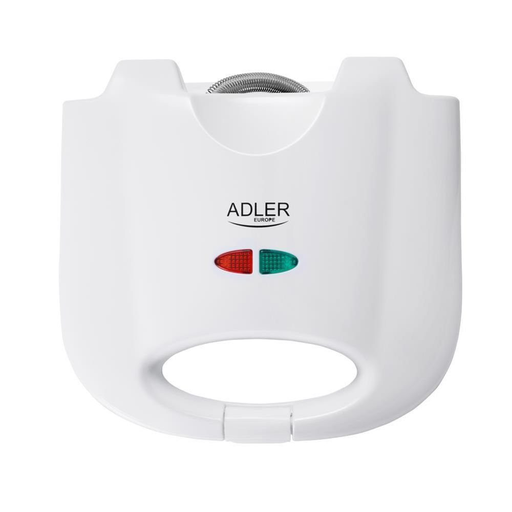
Why We Recommend This Product The ADLER AD 301 focuses on the core function of a classic sandwich maker. With 750 watts of power and plates for four triangular sandwiches, it is designed for efficiency and ease of use. The appliance is a pragmatic solution for the quick preparation of standard toasted sandwiches.
Advantages:
Who It's For: This model is suitable for users and small households looking for a straightforward, compact appliance primarily for making classic, triangular toasted sandwiches.
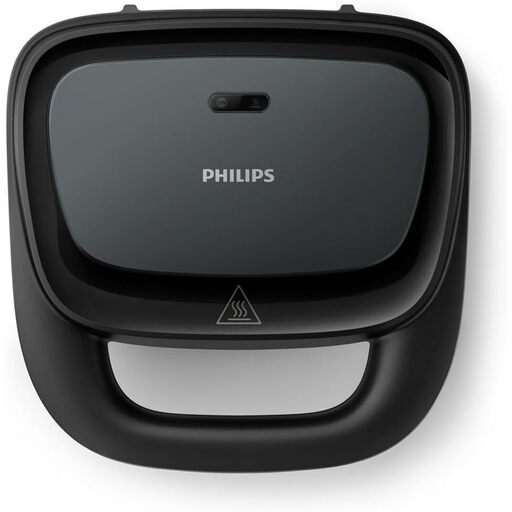
Why We Recommend This Product The Philips HD2330/90 stands out with its robust phenolic resin (PF) housing and versatile applications. In addition to classic sandwiches, its plate design makes it suitable for paninis or toasting bread rolls. Safety features like an on/off switch and a locking system enhance operational safety.
Advantages:
Who It's For: This appliance is aimed at users who are looking for a versatile device for various snack options and who value additional safety features and tidy storage.
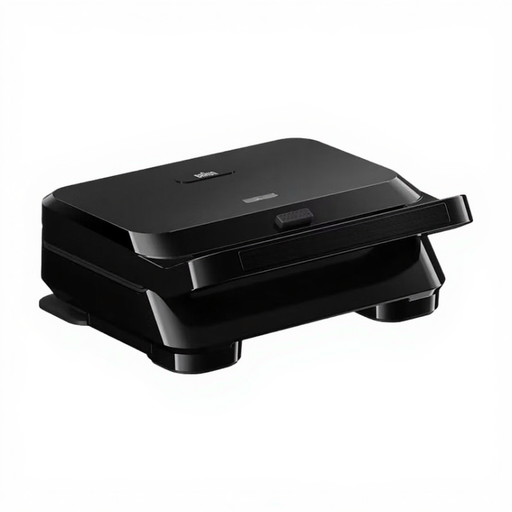
Why We Recommend This Product The Braun SnackMaker 5 SM5000 sets itself apart with its removable plates made of die-cast aluminium. This feature fundamentally simplifies cleaning, as the plates are dishwasher-safe. With 800 watts, the appliance offers high performance for fast and even browning results.
Advantages:
Who It's For: Ideal for households and individuals for whom effortless and thorough cleaning is a top priority. The higher power and robust materials appeal to users who value durability and consistent results.
If none of the models presented here exactly meet your requirements, the market offers a wide variety of other appliances with different specifications. You can find a broader selection of devices, including multifunctional models with interchangeable plates, in our Toasters and Sandwich Makers category.
1. What is the difference between a sandwich maker and a contact grill? A classic sandwich maker typically has pre-formed moulds that cut sandwiches into triangles and seal their edges. A contact grill or Panini maker usually has flat or ridged plates and applies even pressure from the top and bottom. It is more versatile and also suitable for grilling meat, vegetables, or for various types of bread, but it does not seal the sandwiches in the same way.
2. What is the most effective way to clean a sandwich maker with fixed plates? Allow the appliance to cool completely after use. Remove large food residue with a soft paper towel. Then, wipe the non-stick coated plates with a soft, damp cloth and, if necessary, a mild washing-up liquid. Wipe again with a clean, damp cloth to remove any detergent residue. The appliance itself must not be immersed in water.
3. How many watts should a good sandwich toaster have? A power output between 700 and 800 watts is sufficient for most household appliances. This power range ensures a reasonable heat-up time and provides even browning for the sandwiches. Appliances with a higher wattage tend to heat up faster, which can be an advantage with frequent use.