
Lieferung heute & morgen

Qualitätsgarantie

Willkommens-Angebote freischalten: KOSTENLOSE Lieferung | Bis zu 80 % RABATT | Kostenlose 30-Tage-JoyPlus-Testphase
App herunterladen
A sandwich maker can make breakfast, dinner and quick snacks easier. However, there are clear differences between a classic sandwich toaster, contact grill and multifunction appliance. If you focus only on wattage or an eye-catching product description, it is easy to overlook important details such as plates that are too small, hard-to-reach grooves or a coating that cannot be cleaned properly.
This guide explains what households, families, professionals and students should look out for before buying. The focus is on clear, verifiable technical specifications rather than advertising claims.
A power rating of 2,000 or 2,400 watts may indicate faster heating. On its own, however, it does not tell you how evenly the heat is distributed. For two classic sandwiches, appliances in the region of around 600 to 1,000 watts are often sufficient. A larger contact grill with several temperature settings usually needs more power because it heats a larger surface.
You should therefore also consider:
A non-stick coating can make it easier to remove food. It does not replace a well-designed construction, however. Permanently fitted plates generally need to be cleaned carefully with a damp cloth. Melted cheese or fat can collect around the edges.
Removable plates are more practical. If the product specifications also state that they are dishwasher-safe plates, cleaning is easier to manage once they have cooled down. Metal utensils and abrasive cleaning products should always be avoided on coated surfaces.
A 3-in-1 sandwich maker with grill, sandwich and waffle plates can replace several individual appliances. However, interchangeable plates need storage space and should be easy to remove. If you only prepare toasties, you may be paying for features that you rarely use.
For panini, steaks and vegetables, a panini press or contact grill with ridged plates is often more practical. A waffle maker is particularly worthwhile if sweet or savoury waffles regularly feature on your menu.
For individuals or small kitchens, a compact sandwich maker with a grilling surface of around 22 × 14 cm can be a sensible choice. For families or larger slices of toast, check the internal dimensions carefully. An XXL sandwich maker, for example, can accommodate slices of toast measuring approximately 14.5 × 15 cm, provided this is explicitly stated.
The shape also affects the result:
A fixed temperature with indicator lights is sufficient for simple toasties. If you want to prepare different types of food, an adjustable thermostat is beneficial. Several power levels make it easier to adapt the heat to bread, meat or vegetables.
Not every appliance has a timer. Without one, you will need to monitor the cooking process yourself. An automatic switch-off function can provide additional safety, but it does not replace reading the instructions or unplugging the appliance after use.
Before buying, check whether the plates and drip tray can be removed. A fat drainage system is useful on a contact grill when cooking fatty foods. For small kitchens, cable storage and the ability to store the appliance upright are also important.
You should also look for:
The grilling surfaces become very hot during use. The housing must not be immersed in water; electrical appliances should be allowed to cool completely and disconnected from the mains before cleaning.
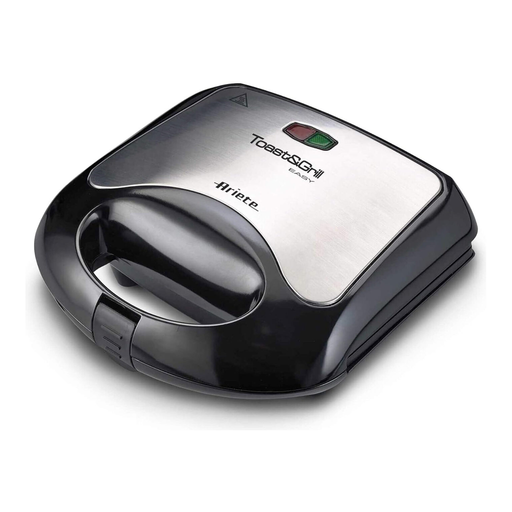
Why this product suits this profile: This appliance combines a sandwich maker and a small contact grill on a 22 × 14 cm surface, while taking up comparatively little space with its 750-watt output.
The product specifications mention a non-stick coating, indicator lights, a locking mechanism and upright storage. This makes the basic functions easier to use and saves storage space.
750 watts, 22 × 14 cm grilling surface, heat-resistant handle and cable storage.
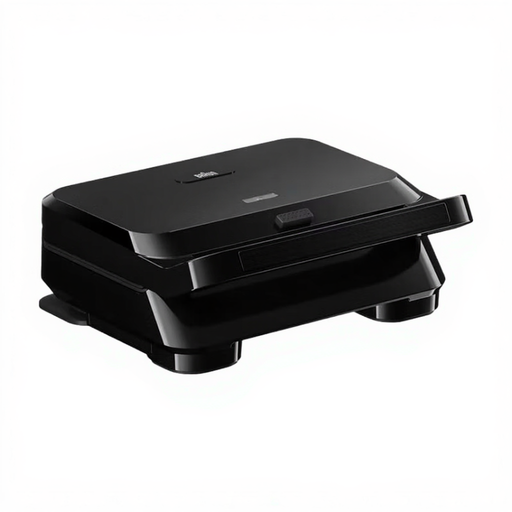
Why this product suits this profile: For households that regularly prepare sandwiches and value convenient cleaning, the removable plates are a significant advantage.
According to the product description, the sandwich plates are removable and dishwasher-safe. This means cleaning is not limited to wiping down permanently fitted surfaces.
800 watts, removable aluminium plates, PTFE non-stick coating and a stated preparation time of 2–4 minutes.
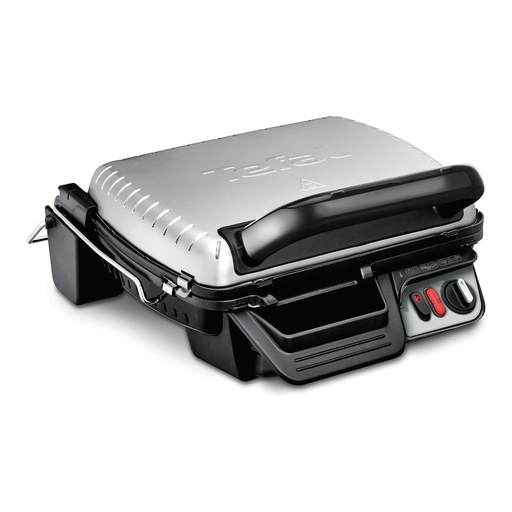
Why this product suits this profile: This appliance is designed for frequent users who want to prepare sandwiches, panini, meat or vegetables either between two plates or on a flat, open grilling surface.
The three-stage temperature control reduces reliance on a single fixed heat setting. According to the product specifications, the plates and drip tray are removable and dishwasher-safe.
2,000 watts, contact grill and table grill functions, three thermostat settings and removable grill plates.
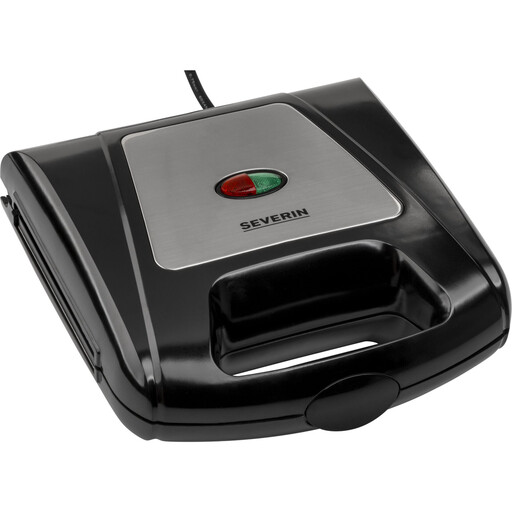
Why this product suits this profile: Three interchangeable plate sets cover sandwiches, grilled dishes and Brussels waffles. This suits households looking for one appliance to prepare a variety of snacks.
The interchangeable plates are designed for the three applications mentioned. Ready and operating indicators help you judge when the appliance has heated up, rather than relying solely on guesswork.
1,000 watts, three plate sets, heat-insulated handles, locking mechanism and upright storage.
We have put together a complete, regularly updated list of products that fully meet these strict selection criteria and the safety regulations applicable in the EU.
Around 600 to 1,000 watts is often sufficient for classic toasties. For a larger contact grill or an open table grill function, 1,600 to 2,400 watts may be suitable. Plate size, temperature control and heat distribution remain the key factors.
Its lifespan depends on how often it is used, how it is cleaned and how the coating is treated. Do not use metal utensils, remove food residue once the appliance has cooled and store it in a dry place. If you use it every day, removable plates and a sturdy locking mechanism are particularly practical.
Electricity consumption depends on the power rating and actual running time. An appliance rated at 1,000 watts uses approximately 0.167 kilowatt-hours over ten minutes of operation, calculated on the basis that the heating element does not necessarily run continuously at full power. To calculate your individual cost, multiply this consumption by the price per kilowatt-hour on your electricity tariff.