
Lieferung heute & morgen

Qualitätsgarantie

Willkommens-Angebote freischalten: KOSTENLOSE Lieferung | Bis zu 80 % RABATT | Kostenlose 30-Tage-JoyPlus-Testphase
App herunterladen
A sandwich maker should brown bread evenly, seal fillings securely, and be easy to clean after use. In practice, appliances often disappoint not because of missing features, but due to unclear information about plates, heating power or cleaning. If you check a few technical details before buying, you can avoid a bad purchase and choose a device that suits your household.
A high power rating sounds convincing at first. However, on its own it tells you little about how evenly the heat is distributed across the sandwich plates. What also matters are the design of the heating elements, the size of the plates, and the contact between the upper and lower surfaces.
For a small household, a device with around 800 watts can be sufficient. Families or those who also want to prepare burgers, paninis and vegetables will benefit more from larger plates and a higher power reserve. So you should always consider the wattage together with your intended use.
A non-stick coating can make it easier to remove your sandwiches. However, it doesn't prevent cheese or sauce from escaping at the edges and collecting in the housing. What's important, therefore, is whether the plates are removable and whether the manufacturer states they are dishwasher-safe.
Fixed plates can usually only be cleaned with a damp cloth once they have cooled down. With removable plates, you can more easily reach the gaps. You should never use metal cutlery on coated surfaces, as it can damage them.
A sandwich toaster, a contact grill, a panini press and a snack maker overlap in function, but they are not identical. A device with a waffle and sandwich maker function, for example, requires suitable interchangeable plates. If these aren't included, the advertised versatility may only be achievable with additional accessories.
So before you buy, you should check the following points:
For classic toast sandwiches, smaller plates are often sufficient. If you want to prepare several portions or larger slices of bread, you should pay attention to the usable area in centimetres. The external dimensions of the device are not the same as the actual grilling surface.
A ridged surface is better suited for paninis and grilled snacks. Triangular shapes divide the sandwich while toasting and can help keep the filling inside. For burgers, vegetables or meat, a flatter contact grill is usually more versatile.
Power is given in watts. It influences, among other things, how quickly the device heats up and how much heat is available when you add cold ingredients. For everyday use, a clear ready indicator, a stable lid and even pressure are also important.
You shouldn't confuse the manufacturer's specifications with a guarantee of a particular browning result. Bread thickness, filling amount and moisture also affect the outcome.
For non-stick coated plates, the cleaning method prescribed by the manufacturer is key. PTFE-coated surfaces should not be treated with sharp or metallic objects. Removable sandwich plates make cleaning easier; if the product says "dishwasher-safe", you should follow the instructions regarding temperature and the dishwasher programme used.
The main unit itself should not be placed in water. Before cleaning, you must unplug the device and let it cool down completely. A heat-resistant, stable surface is required during use.

Why this product fits the profile: This compact device combines a sandwich maker, contact grill and panini press in one model. The plates measure 22.5 × 14 cm and are suitable for single portions in everyday use.
The product specifications clearly state the plate size, double-sided heating and non-stick coating. This makes it easier to assess compared to vague marketing claims.
800 watts, double-sided heating surfaces and a food-grade non-stick coating. According to the product description, cleaning is done with a damp cloth after cooling down.
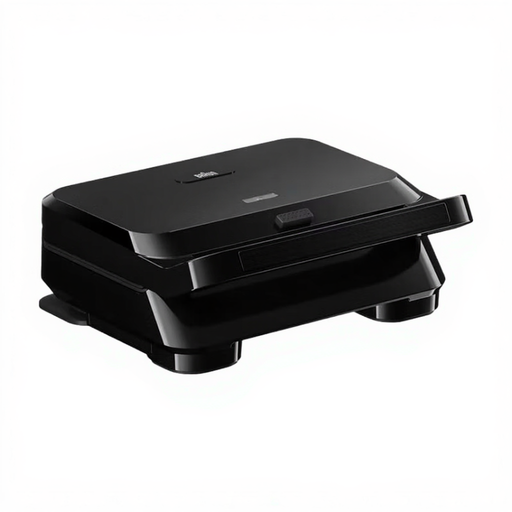
Why this product fits the profile: For households that value predictable care and space-saving storage, this model offers 800 watts, die-cast aluminium sandwich plates and a locking system.
The sandwich plates are removable and, according to the product information, dishwasher-safe. This means cleaning isn't limited to just wiping down the fixed unit.
PTFE non-stick coating, removable plates, device dimensions of 25 × 27.5 × 10.5 cm and integrated cord storage.

Why this product fits the profile: The 28 × 22 cm plates are aimed at families and heavy users who want to prepare not only sandwiches but also paninis, burgers or grilled vegetables.
The large grilling surface is specifically stated, not just described as "family-friendly". This makes it easier to assess the space requirements before buying.
2000 watts, double-sided heating and 28 × 22 cm non-stick coated plates. The device is designed for several types of food.
We've put together a complete, regularly updated list of products that fully meet these strict selection criteria and the safety regulations in force in the EU.
For even results, the bread should not extend significantly beyond the edges of the plates. Too much filling can escape when closing the lid and get into the hinges. So use cheese, sauces and moist ingredients sparingly.
Before first use, read the manufacturer's instructions on preheating time and plate care. After making sandwiches, you should unplug the device and let it cool down. Baked-on residue can usually be removed more easily with a soft, damp cloth. Abrasive cleaners and sharp tools are unsuitable for coated surfaces.
For occasional toast sandwiches, 800 watts can be enough. If you prepare several portions in a row or use the device as a contact grill, you should also pay attention to the plate size and heat distribution. A high wattage alone does not guarantee even results.
The lifespan depends on how often you use it, how you clean it and how you treat the coating. Non-metallic kitchen utensils, dry storage and following the manufacturer's instructions can help protect the plates. With removable plates, you should also check whether they are suitable for the dishwasher.
Electricity consumption depends on the power and the actual running time. A device with 800 watts theoretically uses 0.8 kilowatt-hours for one hour of operation; in practice, the usage time per sandwich is much shorter. So for ongoing costs, short heating times and a suitable portion size are what matter.